

spread by empires over the centuries, which takes place in both Europe and Asia, Istanbul is one of the great metropolises of the world.Established around 1000 BC, the Byzantine Colony grew in the great capital of the Byzantine Empire and after the Ottoman conquest of the city retained its glorious place as the heart of the empire.
About
Best period
The best months for good weather in Istanbul are April, May, June, July, August, September, October and November
On average the hottest months are June, July and August
January is the coldest month of the year
Tourist Attractions
 It is said that when the Byzantine emperor Justinian entered the church completed for the first time in 536 AD, he cried: "Glory to God that I was judged by such a work. Solomon, I surpassed you!Tradition claimed that the area around the emperor's throne in the Church was the official center of the world. It was transformed into a mosque, after the Ottoman armies conquered Constantinople, to its subsequent transformation into a twentieth-century museum, Aya Sofya remained one of the most valuable benchmarks in Istanbul.
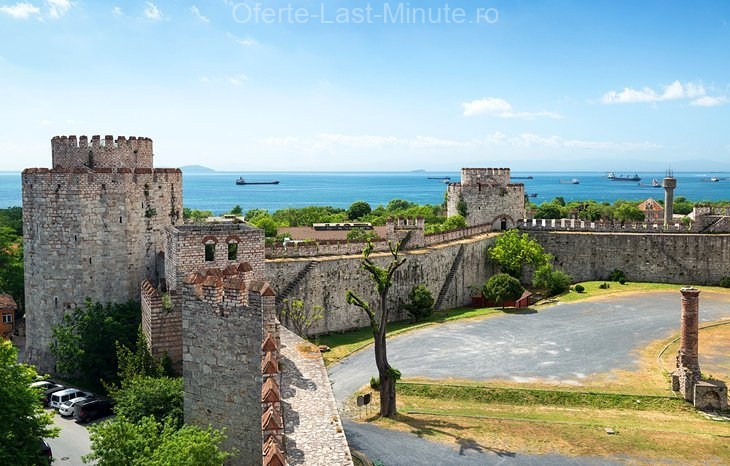 Although it is a bit of Schlep on the suburban train to exit the Yedikule, this commanding fort is well worth it.Built in the 5th century by Emperor Theodosius II, the fortress was the southern part of the defensive walls of Constantinople.The mammoth arc (blocked in the late Byzantine period) was known as Porta Aurea (the Golden Gate), with the doors plated in gold.When the Ottomans conquered the city, they used the fortress for defense and later as a place of imprisonment and execution.Yedikule has been restored in recent years, and you can climb to the top of the cemeteries for beautiful views at the Marmara Sea.
 The old Hippodrome started Septimius Severus in 203 AD.and was completed by Constantin the Great in 330 AD.This was the center of Byzantine public life and the scene of splendid games and car races, but also facial conflicts.Today, it is not a large part of the racecourse left to see, except for a small section of the walls on the southern side, but at Meydanı (Park), which is now on this land, hosts a variety of monuments.In the northwest part is the fountain, presented to the Ottoman Sultan by the German emperor William II in 1898. Then, in the southwest direction there are three old monuments: a height of 20 meters Egyptian Obelisc (from Heliopolis);The spine of the column brought here from Delphi by Constantin;and the stone obelisk that was originally dressed in gold covered bronze plates until they were stolen by the IV Crosade soldiers.
 Fatih district hosts this important mosque built by Sultan Mehmet the conqueror, who eventually pierced the walls of Constantinople, ending the Byzantine era.Built on a hill, so that its multiple dome and minarets rise above the district, it is an imposing building.Being the first of the great imperial mosques in Istanbul, as well as the hosting of Sultan Mehmet's grave, is an important historical building and a popular pilgrimage place for locals.
 Pedestrian ̇stiklal Caddesi (Independence Street) is a lively modern commercial street, with a lot of restaurants and cafes.The lower end of the street can be reached by the closest underground railway in the world Galata bridge, tunnel, built in 1875. There is also an old-fashioned tram, which takes place along the length to the Taksim Square at the top of the hill.From Taksim Square, busy Cumhuriyet Caddesi is lined with hotels, shops, restaurants and high heights.In the eastern part of the road, immediately after the market, is the Maçka Park, which is interesting at home the military museum.Also nearby is Orhan Pamuk 's Museum of Innocence.Pamuk is the most famous author of Turkey and the winner of the Nobel Prize for Literature.This conceptual-art museum is based on the theme of its novel "The" Innocence Museum "and is a fairly bizarre experience, full of joy and wonderful atmospheric.
 For many visitors, visiting Istanbul tourist attractions is just as important for shopping as monumental museums and attractions, and Grand Bazaar is the place where everyone comes.This massive covered market is, in principle, the first shopping center in the world;Taking an entire city neighborhood, surrounded by thick walls, between Nure Osmanıye Mosque and Beyazıt Mosque.The Beyazıt Mosque (built in 1498-1505) occupies the place of Theodosius I and has an architecture inspired by Aya Sofya.Imagine, cover the area.The different trades are largely segregated in certain sections, which facilitates navigation.Near the entry of Divanyolu Caddesi of the bazaar is the burning of the column.This hammer (40 meters high) of a porphyry column was established by Constantin the Great in his forum.Until 1105 he wore a bronze statue of Constantin.
 Before building Emperor Justinian Aya Sofya, he had to test if the building was working structurally, so he built the first miniature version.His original name was the church of Sergei and Bacchus, but obvious architectural parallels with Aya Sofya led to his long -term nickname becoming the official title of the building.During the Ottoman era, the church was transformed into a mosque and still works as a work mosque.Although its proportions are not as great as others in Istanbul, the building has been beautifully restored and worth a visit.Walking, on narrow alleys, lined up with tall buildings from the Ottoman era - some generously restored and others drooping their way to Dărăpănation - is a quiet break from the Sultanahmet center.Take time to have a glass of tea in the quiet garden of that Sofya, to support you for more explosions to visit the tourist attractions.
 Sultan Ahmet I offered a great architectural to his capital to this beautiful mosque, known today as the Blue Mosque.Constructed between 1609 and 1616, the mosque caused a rage throughout the Muslim world when it was completed, with six minarets (the same number as the Great Mosque in Mecca).A seventh minaret was finally endowed in Mecca to stop dissent.The mosque takes over the interior decoration of tens of thousands of ̇znik plates.The entire space and color effect of the interior makes the mosques one of the best achievements of the Ottoman architecture.A great joy of visiting a trip to Istanbul is wandering in the middle of the sandwich gardens between the Blue Mosque and Aya Sofya to experience the twisted dueling.Come to the west, when the call to prayer resume from the minaret of the blue mosque for an extraordinary environment.
 Located on the hill above the Sultanahmet district, the Süleymaniye Mosque is one of the most recognized benchmarks of Istanbul.It was built for Süleyman the Magnificent by the famous Ottoman architect, Sinan, between 1549 and 75. The interior, dominated by his 53 -meter high dome, is notable for his harmonious proportions and the design unit.Outside in the quiet area of the garden, the Ottoman cemetery is also interesting, which also hosts Türbe (the graves) of Sultan Süleyman and his wife Haseki Hürrem Sultan (known in the west as Roxelana).
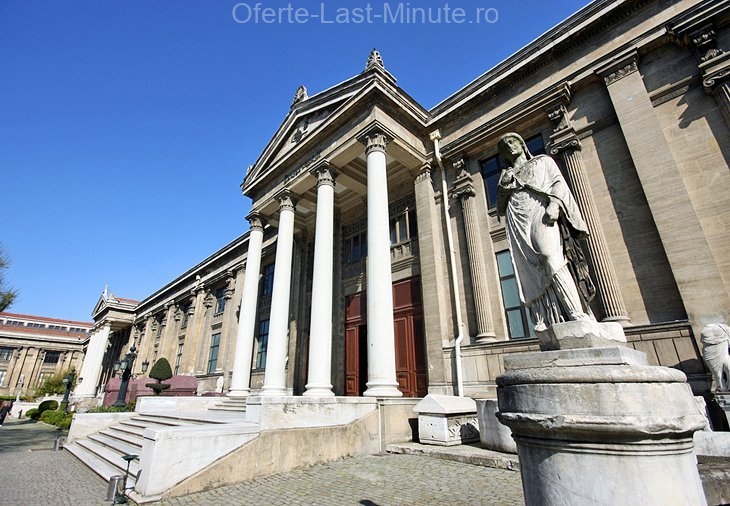 Only a hops, jump and jump the Topkapı Palace, this important museum complex brings together an amazing range of artifacts in Turkey and the Middle East, which crosses the vast history of this region.In the complex there are three separate sections, each one is worth visiting: the Museum of the Ancient East;The main archeology museum;And Mehmet's conqueror's pavilion, which has an amazing collection of ceramic art.In addition to all the wonderful artifacts displayed, you do not lose the interest of Istanbul over time exposes the room in the main archeology museum.
 The Dolmabahçe Palace, sumptuous and decorated, presents the clear influence of European decoration and architecture on the Ottoman Empire in the 19th century.Built by Sultan Abdulmecid I in 1854, the Topkapı Palace was replaced as the main residence of the Sultans.The formal gardens are punctuated with wells, ornamental basins and flowering beds, while the interior of the shine and pump of the Turkish Renaissance is dazzling. The interior combines elements of the Rococo type type, neoclassical and Ottoman, with mammoth crystal chandeliers, free use of gold and ornamental or ornamental.
 Originally built by Mehmet the conqueror in the fifteenth century, the sultans of the Ottoman Empire ruled over their masters of this glorious palace with Bosphorus until the 19th century.The vast complex is a dazzling exposure of Islamic art, with opulent courtyards lined with complicated works of manually painted tile, which link a lot of sumptuous decorated rooms, all delimited by allied walls and towers.Of the most important moments here, the most popular are harem (if many concubines and children of the Sultan will spend their days);The second courtyard, where you can pass through the vast palaces of the kitchen and stay in astonishment inside the orbit of the Imperial Chamber of the Council;and the third court, which contained the private rooms of the Sultan.Also, the third court presents an impressive collection of relics of the Prophet Muhammad in a safe security room and is at home at the Treasury Empire, where you are greeted with a cache of bright gold objects and precious stones that will make your eyes.To fully see the Topkapı Palace, you will need at least half a day.
 This Gentovese Tower was built in the fourteenth century and is one of the most recognized landmarks of Istanbul.There are beautiful panoramic views over the city of the upper balcony.
 The Asian shore of Istanbul is easily accessible with the eminonü dock ferry along the Bosphorus.On an island located right next to the Asian shore there is a height of 30 meters Kiz Kules, (Maiden Tower).Üsküdar was traditionally known as scraps and has a few beautiful old mosques, coils and brown wooden houses (especially between the ferry and the Great Cemetery).It was more exposed to the attacks of foreign conquerors than Constantinople, with the defensive situation and with the strong walls, but managed to attract economic advantages from the exposed situation - until 1800 it was the end of the caravan routes that brought the treasures to Constantinople and further to Europe.Of special interest of tourist interest here is Mihrimah Sultan Mosque, built by Süleyman Magnificul in 1547 for his daughter Mihrimah and valid Yeni, built in the eighteenth century by Sultan Ahmet III.

