


Catacombs and via ancient Appia (Appian Calea)
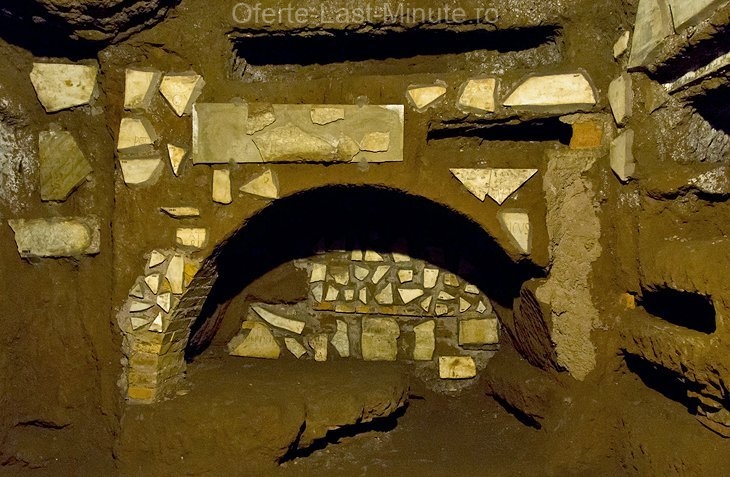
The Catacombes San Callisto (Sf. Calixt) and San Sebastiano, both places of underground funerals in ancient Appia, are extended - San Callist fills an area of 300 with 400 meters - with multistratified networks complicated by passages and rooms carved in the soft bush.In addition to the tombs, St. Calixt has six sacramental chapels, built between 290 and 310, with both pagan and Christian early paintings.San Sebastiano, one of the seven pilgrimage churches in Rome, was built in the fourth century on the place of the old cemeteries and catacombs that, together with the foundations of a Constantinian basilica, can be explored.Although it is believed that the venerated remains were brought here for storage during persecution, they were cemetery, not hidden for Christians.complete underground.Over 80 painted tombs and a fresco of the second century of the last one who survives in his galleries. Outside Porta San Sebastiano, Drusus's arch is close to the beginning of Via Acient Appia, one of the oldest and most important of the Roman highways, built around 300 BC.and extended to the port of Brindisi around 190 BC in parallel with the road are the ruins of some of the aqueducts that feed the city with water, and among the cypires along its sides there are remains of graves belonging to the Roman aristocratic families.The most prominent of these is the grave of the first century of Caecilia Metella and her husband.