

Rome is the capital of Italy.Located on the banks of the Tiber river, the city has a long history being throughout the centuries the capital of the Roman Republic, of the Roman Empire, of the Roman Catholic Church and of modern Italy.Rome has a population of 2,000,000 people
About
Best period
The best months for good weather in Rome are March, April, May, June, July, August, September and November, and the coldest months are January and February.
November is the rainy month
The best months for swimming are June, July, August, September and October.
Tourist Attractions
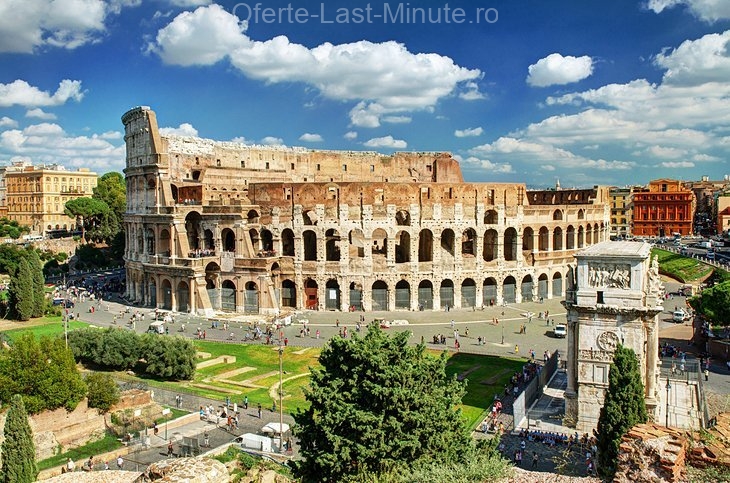 Because the Eiffel tower is to Paris, the silhouette of the Flavian amphitheater is to Rome.The largest structure left new by the Roman antiquity, the Colosseum still offers the model of the sports arenas-the current design of the football stadium is clearly based on this oval novel.with a series of splendid games.The colosseum was large enough for theater shows, festivals, circles or games, which the imperial court and the high officials were following from the lowest level, the second aristocratic families, the population on the third and fourth.Emperor as a "liberator of the city and bringing the peace" after his victory in the battle of the Milvian Bridge of 312. The lines are long and move slowly, so you can save time by joining the queue: the half-day round of ancient Rome and the Colosseum and you have a well-informed guide.
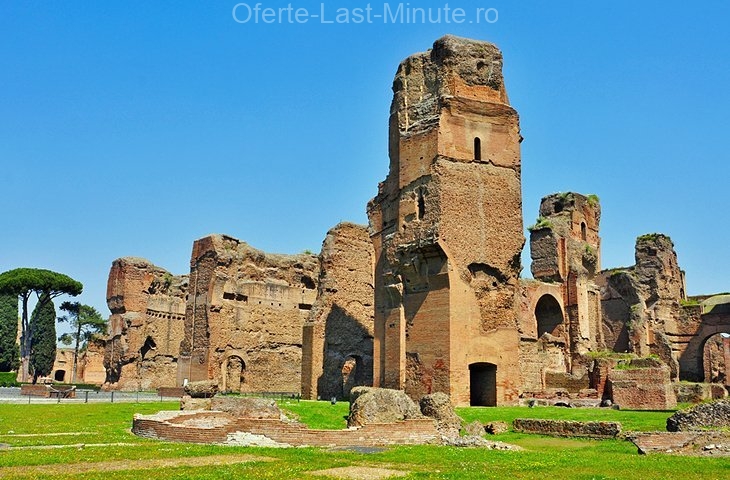 Completed by Caracalla in 216, they were much more than public baths.They were a complete sports center, with hot and cold baths, a swimming pool, dried and steaming saunas, gymnastics and sports facilities, social rooms, gardens, libraries, hairdressers and shops.Can host 1,500 people at a time.The floors and walls were covered with marble, mosaics and frescoes;Even in the ruin their splendor is still obvious.
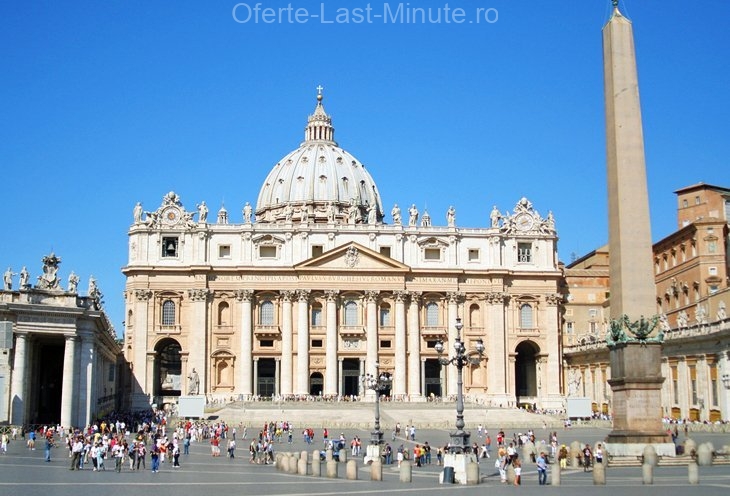 The Vatican is the smallest independent state in the world, with an area of less than half a square kilometer, most of which are closed by the Vatican walls.Inside are the Vatican Palace and Gardens, Sf Basilica.Peter, and Sf Square.Peter, an area led by Pope, the supreme chief of the Roman -Catholic Church.This compact space offers a lot of things to see, between its museums and the great basilic itself. Inside St. Peter's basil is Michelangelo's masterpiece, the Pie, together with the statues and altars of Bernini and others.The culminating point of the Vatican museums is the Sistine Chapel, whose magnificent ceiling is Michelangelo's most famous work. In the Vatican Palace are the Raphael rooms;at Apartments Borgia;The Vatican Library, as well as a series of museums that include Pinacoteca, the Secular Art Museum, the Etruscan Museum, and others.The collections you can see in them cover from papal coaches to the art of the twentieth century that reflect religious themes.To save time, buy a tour of a row in advance: the Vatican museums with St. Peter, the Sistine Chapel and the Upgrade Tour for Small Groups.This three -hour tour allows you to bypass the long lines and go straight to museums with an expert guide.The headphones are supplied and you can choose from several different hours of departure or you can switch to an evening or in small group
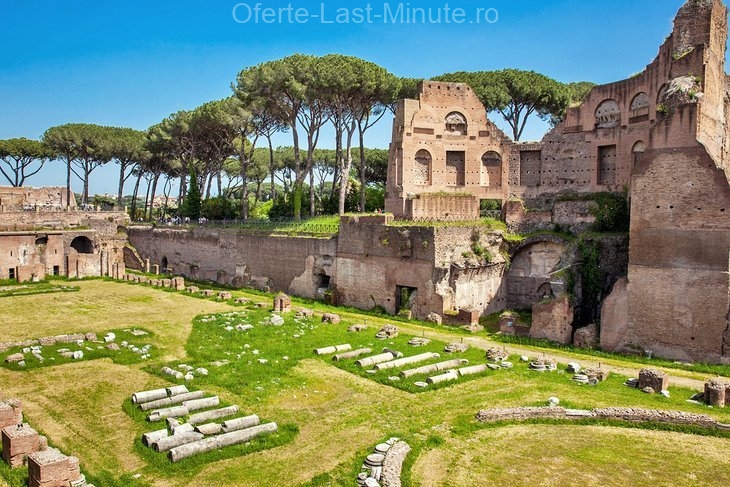 Strategically located 50 meters above the Tiber, Palatin Hill shows the evidence of the oldest settlement of Rome: stone cuttings found in front of the Temple of Ciulei shows human activity since the 9th century BC.Later, this was the place chosen by the emperors and the great aristocratic families for their palaces. In the beards the gardens were set on the hill in the 16th century Alessandro Farnese, a leisure park, pavilions, flowers, trees, and wells conceived as a kind of social.Attraction of the Palatine hill are the house of Liviei (Augustus's wife), Cryptoporticus Semi-Subteran, Domus Flavia, Domus Augustana and the most imposing of all, the baths of Septimius Severus.Palatine hill is a wonderful place to explore, combining a park with magnificent and impressive ruins of ancient Rome
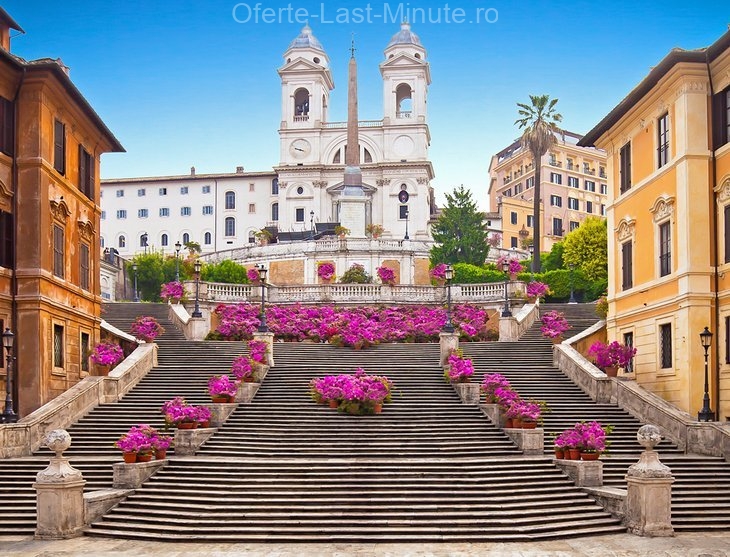 Take a look at a tourist map in Rome and you will see an area so full of things to do that it is difficult to read the names of the streets.This is Centro Storico, the historical center of Rome, with so many churches full of art, bright palaces and lifelong markets, that you could spend your entire vacation walking on its ancient streets and strips.Together with Piazza Navona, Fântâna Trevi and the basilica of Santa Maria Maggiore, stopped in less well -known churches, such as Santa Maria del Popolo, where you will find works by Bernini and Caravaggio.The stairs take their name from Piazza Di Spagna, the market at their base and one of the most typical markets in Rome.The stairs were a favorite haunting of tourists, where they can stay and enjoy a summer gelato or they can heat their hands around the cones of roasted chestnuts in winter.Via Condotti, which leads southwest of Piazza di Spagna, is the most fashionable commercial street in Rome, where Caffè Greco is famous for artists, writers and musicians who attended it.
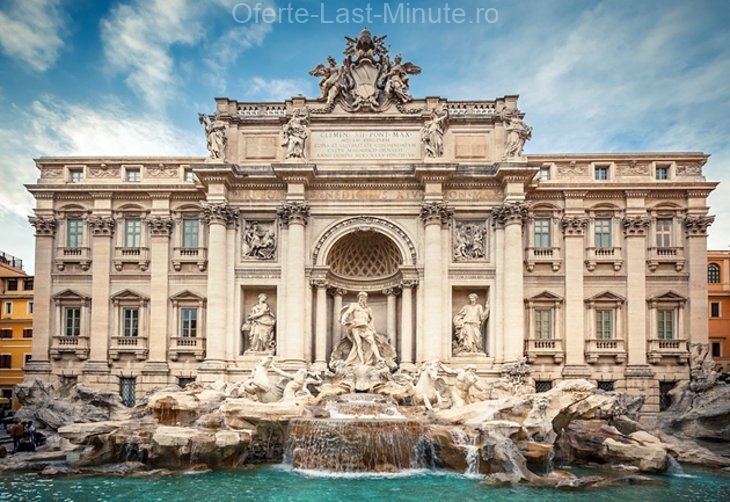 One of the most popular tourist attractions of the city, this seventeenth-century masterpiece was immortalized in films until it is almost a mandatory visit.Throwing a coin (not three) in the Trevi fountain (Fontana di Trevi) is a tradition that should ensure your return to Rome. In the biggest fountain in Rome, Fontana di Trevi is provided by a aqueduct initially built by Agrippa, the great patron of the first century AD to bring water.The fountain was created for Pope Clement XII between 1732 and 1751 by Nicolò Salvi and built on the back wall of the Palace Palace.The water revolves around the artificial figures and rocks and gathers in a large basin, always filled with coins
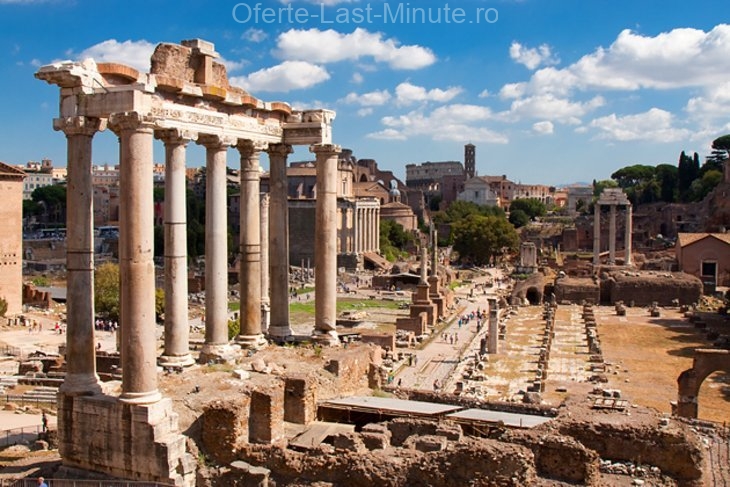 Walking through the forum, now in the middle of a modern thrilling city, is like a step back with two millennia in the heart of ancient Rome.Although what survives from this center of Roman life and governance shows only a small part of its original splendor, the columns standing and fallen, its triumph springs and the remains of its walls still impress, especially when we believe that, for centuries, the history of the forum was the history of the Roman Empire and the Western world, and the Roman world wasmeeting places.After the 7th century, the buildings fell into ruin, and churches and fortresses were built in the middle of ancient remains.Its stones were extracted for other buildings and only in the eighteenth and nineteenth centuries, the systematic excavations brought to light the ancient buildings under a layer of land and 10-meter rubble.The temple of the vest, and Titus's bow.
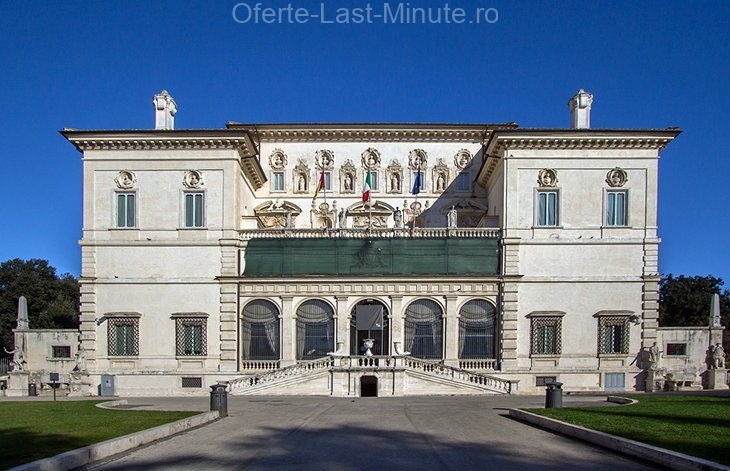 One of the largest parks in Rome, Borghese gardens contain a series of attractions that include two museums, the most prominent is Vila Borghese.Built as a party villa and to host the Borghese art collection, the gallery contains paintings, sculptures, mosaics and reliefs, most of the fifteenth century, and include works by Rafael, Titian, Caravaggio and Rubens.III of the sixteenth century and houses the Etruscal Museum.Several villas are from the World Exhibition that took place in Rome in 1911. In the parcel is an English -style landscape garden, with walking trails and ponds where you can rent boats with strings.You can also rent bicycles or a surrey to explore the park.There is a good zoo, Bioparco di Roma, with naturalized enclosures and a miniature track that connects its different sections.A number of attractions will attract children, including playgrounds, pony walks on the weekend and occasional doll shows.
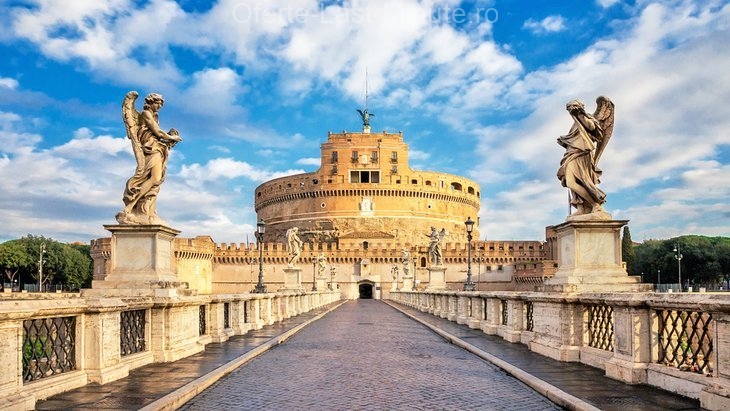 Started in 135 AD.As a mausoleum for Emperor Hadrian and his family, Sant 'Angelo Castle is a massive drum -shaped structure, with a tiber, near the Vatican.Throughout the millennia of existence, Sant 'Angelo Castle has been used as a papal and fortress residence and, more recently, as a national museum.As Bastion, he protected the city from barbarians and, until the Middle Ages, had become a substantial fortress.In times of danger, the popes fled here on a secret hidden corridor, Passetto di Borgo and kept the most precious riches in the treasure of the castle.At its different levels are prison cells, a large collection of splendidly decorated, covered papal weapons and papal apartments.At the top is a terrace with amazing views in the city.
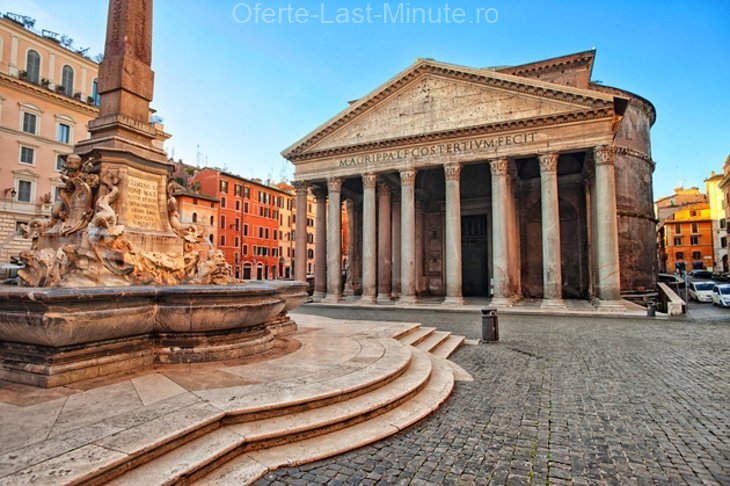 Pantheon - the best preserved monument of Roman antiquity - is remarkable for its 2000 years.This happens despite the fact that Pope Gregory III removed the golden bronze tiles, and the urban pope ordered the undressing and melting of his bronze roof to throw the canopy over the altar from Saint Peter and the cannons for the Castle Sant Angelo.D.Hr., and the resulting masonry shows the extraordinarily high technical mastery of the Romanian builders.Its 43 -meter dome, the supreme achievement of the Roman interior architecture, hangs suspended without visible supports - they are well hidden inside the walls - and the central opening of nine meters is the only light source of the building.Although the first Christian emperors forbade the use of this pagan temple for worship, in 609 Pope Bonifaciu IV dedicated it to the Virgin and all the Christian martyrs and, since then, it has become the burial place of the Italian kings (Victor Emmanuel II is in the second niche) and other Italians,
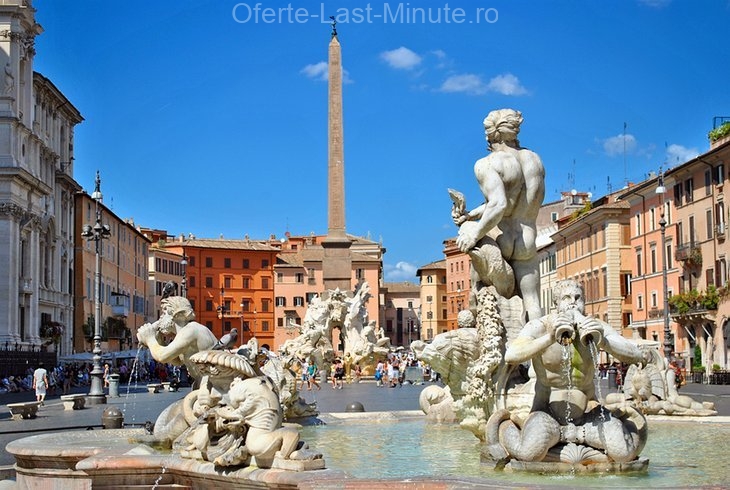 One of the most characteristic baroque markets in Rome, Piazza Navona still has the outline of the Roman stadium built here by Emperor Domitian.It was still used for festivals and horse races in the Middle Ages and was rebuilt in Baroque style by Borromini, which also designed the magnificent palaces series and the church Sant 'Agnese, on its west side.concave in a unified design.In the crypt of the miracle of St. Agnes of 1653 by Alessandro Algardi and the remains of a Roman mosaic floor.Sant 'Agnese offered a model for Baroque and Rococo churches in Italy and other parts.The spirited fountain represents the four rivers considered then the largest on each of the known continents, with figures that personify the Nile, Ganga, Danube and Rio from payment around the large basin, each accompanied by plants and animals in their respective regions.Della Porta and Fontana del Nettuno from the 19th century, with its figure of Neptune.Today, the market is full of Romanians, tourists, street artists, souvenirs, cafes and, in December, one of the best Christmas markets in Rome.
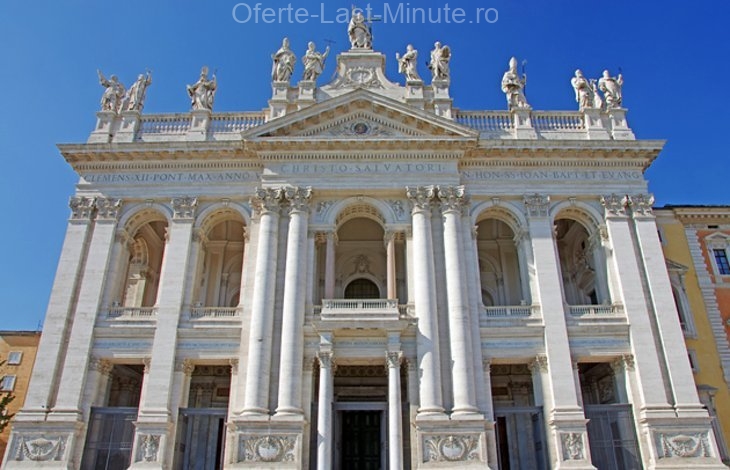 As you could expect for the Pope's episcopal church, Saint John Lartran is one of the most impressive churches in Rome.After centuries of changes, they still retain its original form from the era of Constantine, when it was built.Together with the apse mosaics, make sure you notice the beautiful wooden ceiling from the sixteenth century.If the octagonal baptism, San Giovanni in castings, seems a little familiar, is because it has offered the model for subsequent ones from all over Europe.Over the market, in the Church of Santa Santa, there is the Holy Scale, 28 steps that are believed to have been brought to Rome in the fourth century by Saint Elena, from the Pilate Palace of Jerusalem
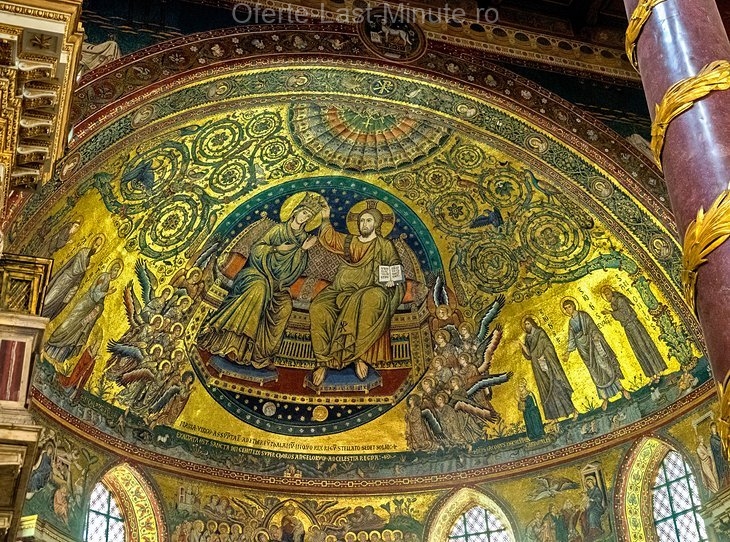 One of the most majestic churches in Rome, Santa Maria Maggiore has been here since Pope Liberius in the fourth century has had a vision of the Virgin, guiding him to build a church in which snow fell the next day.Although it was August, the snow fell on the Esquiline hill the next morning, so here was built the Basilic.The three color of its 86-meter long interior are separated by 40 marble and four granite columns, and the apse added in the thirteenth century is lined with mosaics from the themes of the Old Testament, masterpieces of the famous Mosaic artists in Rome.The floor is inlaid with colored stone in the style of the 12th century expert craftsmen in the Lake Como region.The first gold to arrive in Italy in America shines on the cassette ceiling.Two popes are buried here;It is one of the four papal basilics in Rome, an important pilgrimage place.
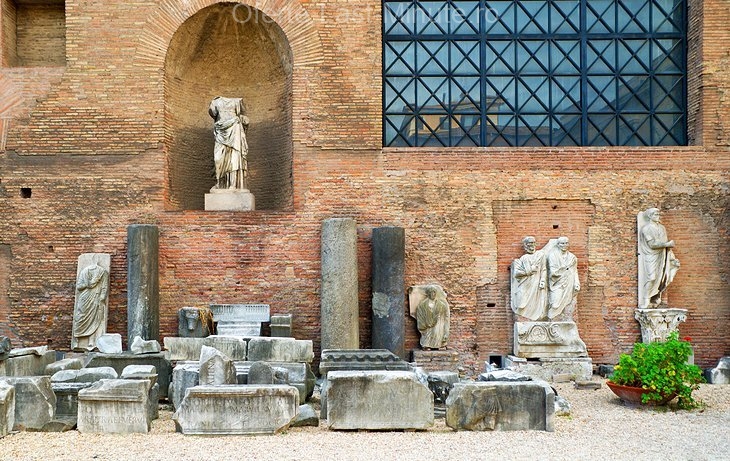 Diocletian's baths were so huge that today they contain two churches, large parts of a cartridian monastery and an important museum.Michelangelo used the vast Tepidarium (hot baths) as a shell for Santa Maria Degli Angeli, and Museo Nazionale Romano, the National Museum in Rome, fills another section with treasures of antiquity: Greek and Roman sculpture, pre -Christian sarcophagi and later MosaicuriFrom the sixteenth century it was built in a round at the corner of the baths;Its dome is like that of the pantheon, but only half its size.
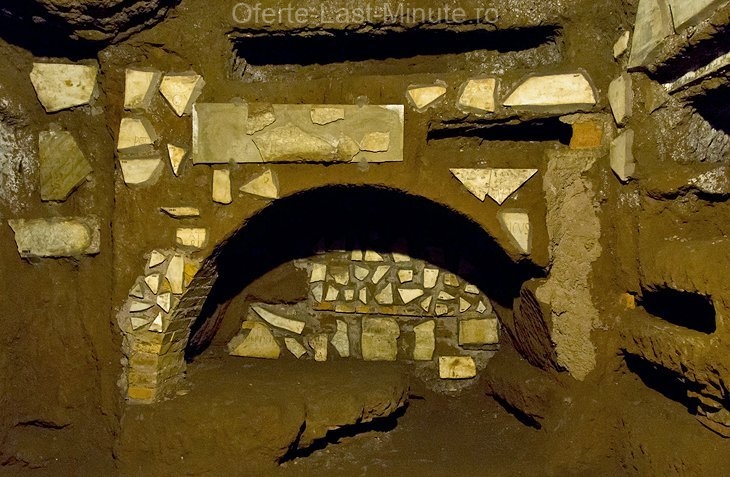 The Catacombes San Callisto (Sf. Calixt) and San Sebastiano, both places of underground funerals in ancient Appia, are extended - San Callist fills an area of 300 with 400 meters - with multistratified networks complicated by passages and rooms carved in the soft bush.In addition to the tombs, St. Calixt has six sacramental chapels, built between 290 and 310, with both pagan and Christian early paintings.San Sebastiano, one of the seven pilgrimage churches in Rome, was built in the fourth century on the place of the old cemeteries and catacombs that, together with the foundations of a Constantinian basilica, can be explored.Although it is believed that the venerated remains were brought here for storage during persecution, they were cemetery, not hidden for Christians.complete underground.Over 80 painted tombs and a fresco of the second century of the last one who survives in his galleries. Outside Porta San Sebastiano, Drusus's arch is close to the beginning of Via Acient Appia, one of the oldest and most important of the Roman highways, built around 300 BC.and extended to the port of Brindisi around 190 BC in parallel with the road are the ruins of some of the aqueducts that feed the city with water, and among the cypires along its sides there are remains of graves belonging to the Roman aristocratic families.The most prominent of these is the grave of the first century of Caecilia Metella and her husband.

