
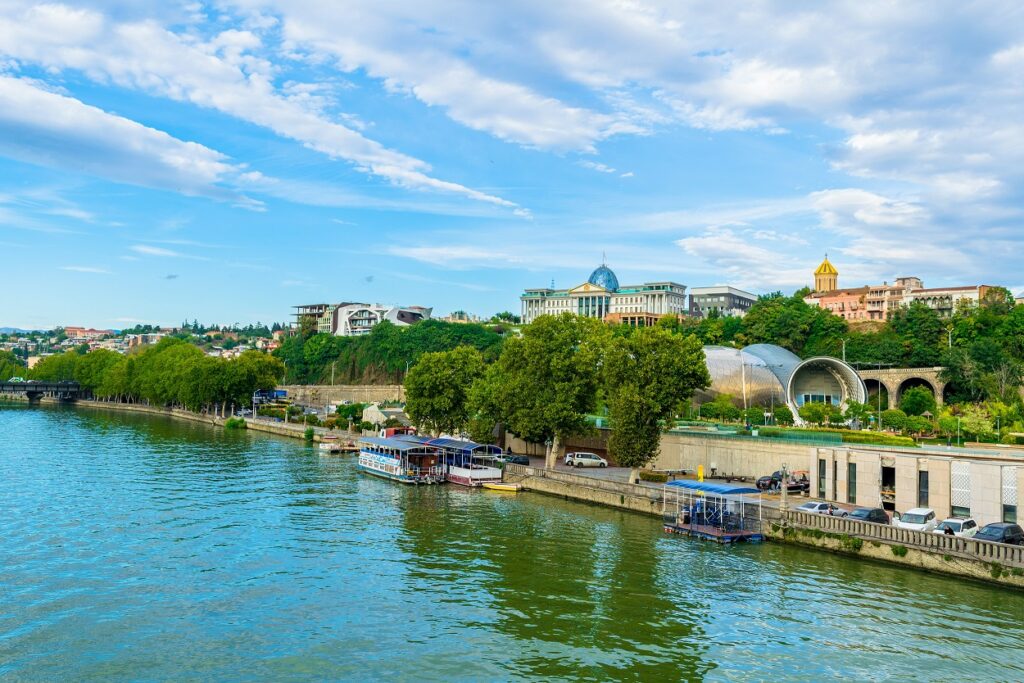
tbilisi , the capital of Georgia, the city of contrasts, as it is called by many tourists who come to visit it, a city where the cities of the Meidu age coexist alongside the imposing and modern structures of office or residential buildings.
About
Best period
The best months for good weather in Tbilisi are April, May, June, July, August, September and October
On average the hottest months are June, July and August
January is the coldest month of the year
Tourist Attractions
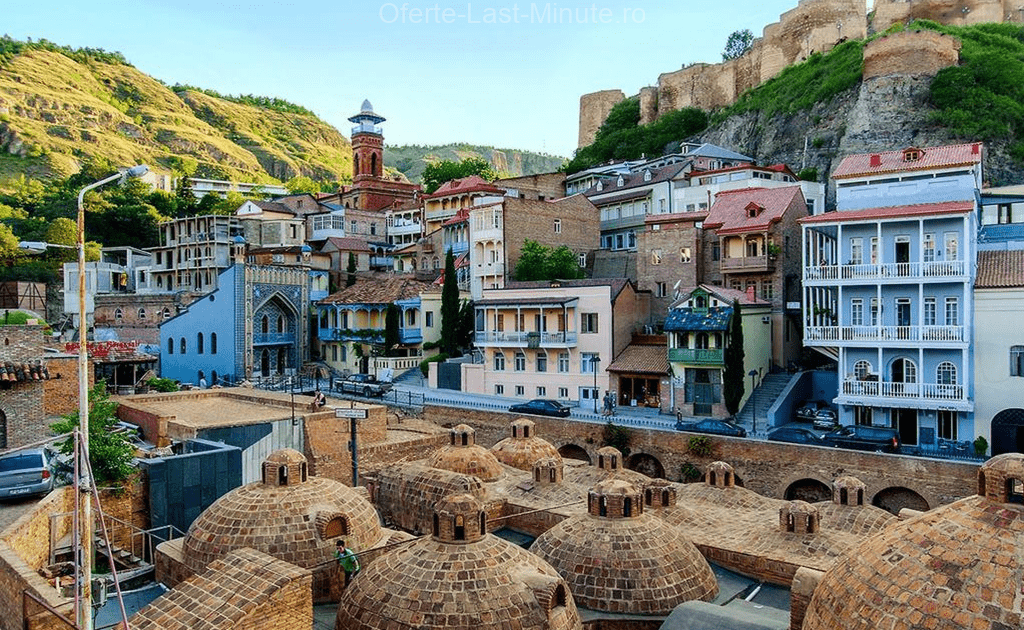 Do not leave Tbilisi without taking a walk in the old center to admire the architecture of his old houses, with colored wooden balconies, located with view at the Maidan Square and the Temple Metekhi.The gates of the houses lead to the interior courts, which the locals call "Italian courts", where the Georgians are used to gathering to stories, a tasty dinner and a glass of good wine.
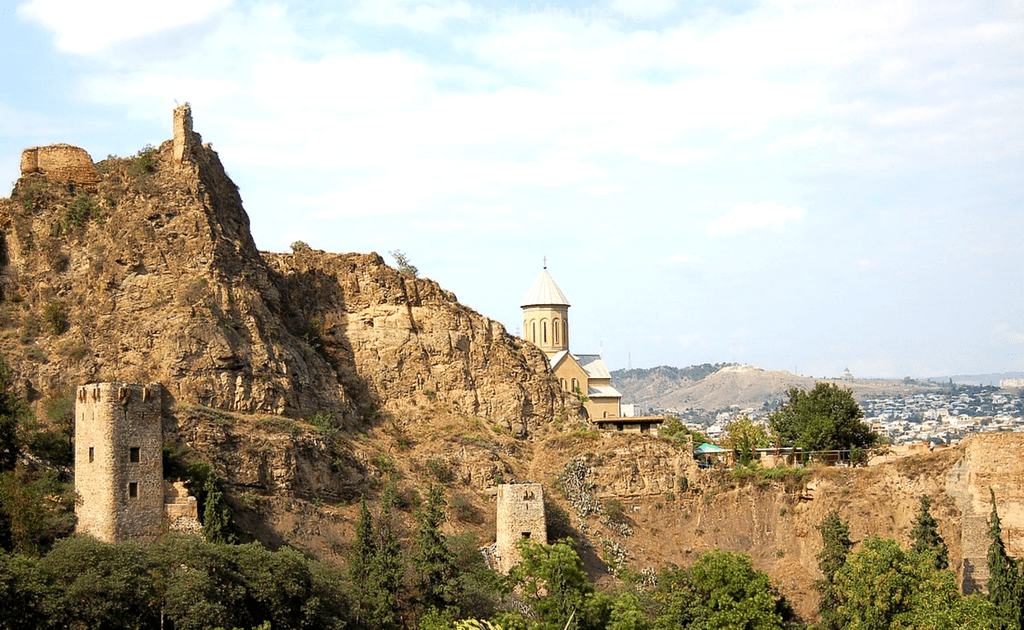 The Narikala Fortress is today one of the most visited places in Tbilisi and no one leaves the city without visiting it and making a foray into the history of this wonderful place.The fortress attracts the attention of those in any of the parts of the city of Tbilisi due to its imposing settlement.Being a defense fortress, it was raised at the highest point of the settlement, while offering impressive views on the Mtkvari river and the entire city, and after leaving the darkness, the view gets a special charm.In the cemetery is called even Shuris-Tsikhe-a rival fortress, this fact due to the different periods in which it was built.It was initially elevated since the fourth century, during the Persian occupation and was continued by the Arab emir, in the 7th century;Moreover, the latter had set up their residence right inside the fortress.The Narikala Fortress represents today a symbol of the defensive architecture of the city of Tbilisi in antiquity.
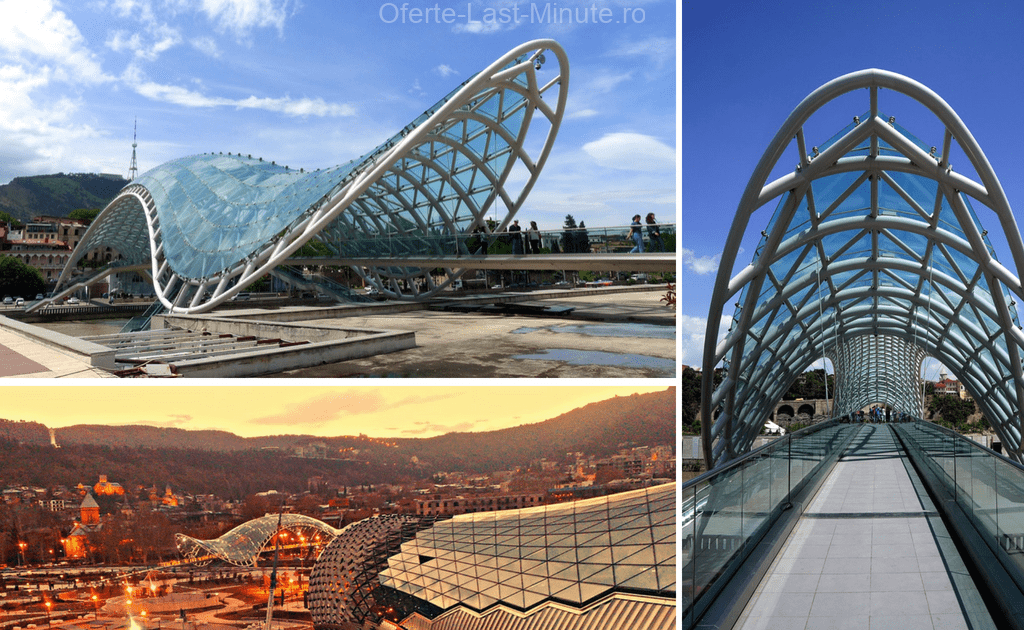 One of the first modern constructions of the city of Tbilisi was the Peace Bridge - an avant -garde construction of steel and glass, erected over the Mtkvari river.The Peace Bridge was designed by the Italian architect Michele de Lucchi and was opened to the general public in 2010. In the Pay Pod was brought from Italy, no less than 200 pieces, and assembled on the spot.The bridge has a length of 156 meters and more than 10,000 LED bulbs incorporated, which are put into operation every day 90 minutes before sunset.The idea of the Italian architect Michele de Lucchi was to convey a message, that of communication as "anthem of life and play between people and nations"
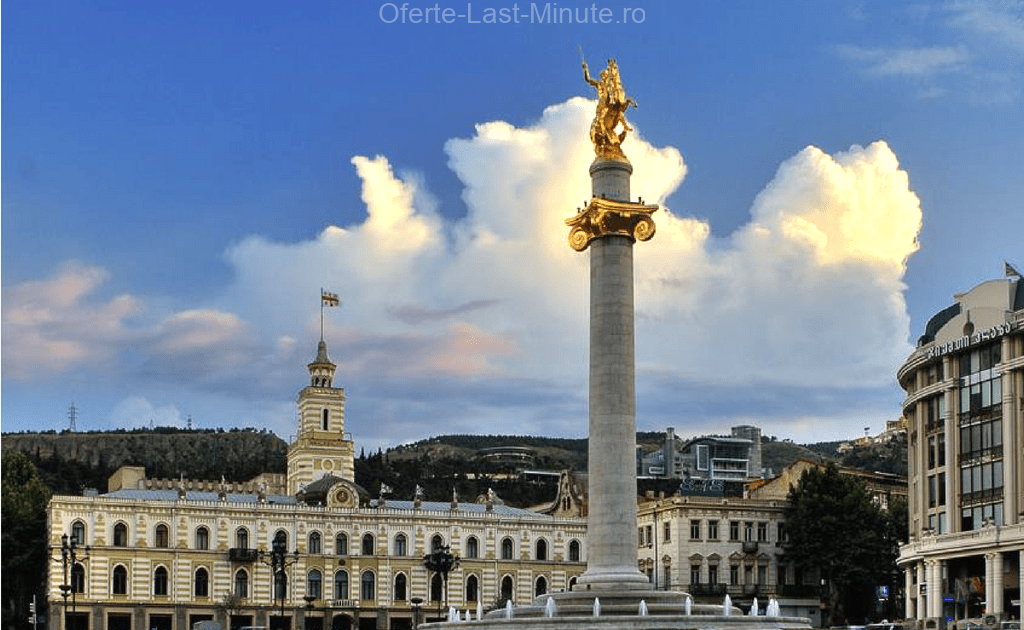 The Libertatii Square is located right in the center of Tbilisi and has undergone many changes in the name in its 200 -year history.Built at the beginning of the 19th century in neo-classical style with Moorish architectural elements, the Freedom Square was initially called Pashkevich-erivanskaya in honor of Ivan Paskevich-a Ukrainian general of the Russian imperial army that conquered Erivan-the current Yerevan in Armenia.After the restoration of Georgia's independence, from 1918, he returned to the initial name, during the establishment of the first Georgian Republic.The monument was made by the Georgian sculptor Zurab Tsereteli and is a symbol of the freedom of the Georgian people.
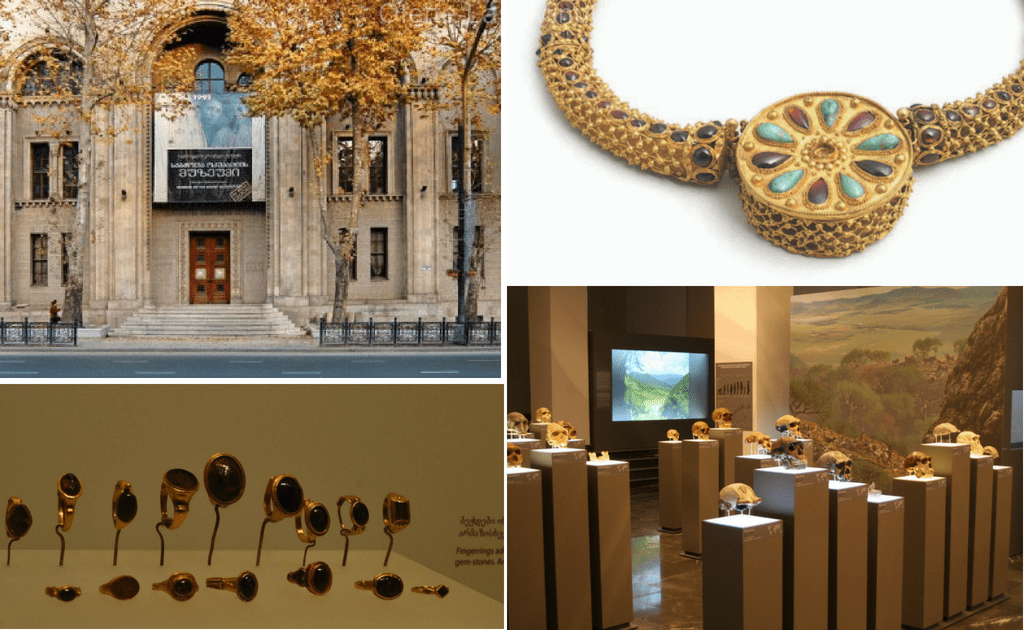 The National History Museum is the alternative name for the Simon Janashyya Museum in Georgia.The museum takes place in a series of buildings in Tbilisi, but the largest collection of exhibits will be found on Rustavelli Street, in the three-storey building, with a special architecture, belonging to the old Georgian style.2005, 13 museums were united in a whole: the Soviet occupation Museum, the Samtskhe-Javakheti History Museum, the Tbilisi History Museum, the Georgia Museum of Art, the DmanisInstitute of Archeology, Sighnaghi Museum and Vani Museum.
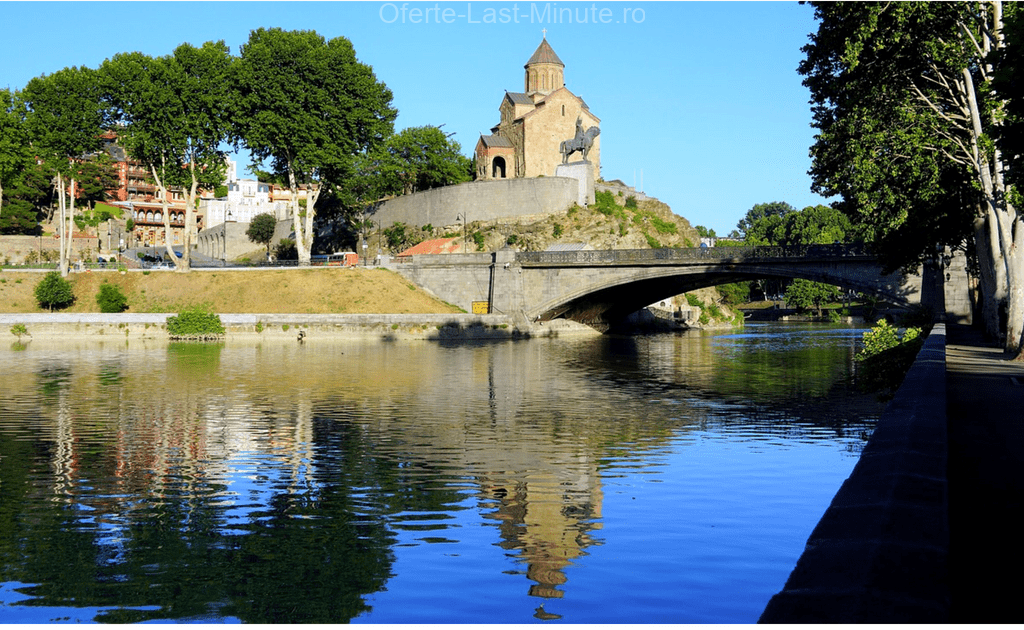 An important ancient edifice of Tbilisi is the Temple of Metekhi dating from the 12th century;It is located on the opposite side of the Narikala fort with the bronze equestrian statue depicting King Vaghang Gorgasali, the founder of Tbilisi.All these aspects make this tourist objective an important landmark for those who want to understand more from Georgia's history. In the Temple Metekhi was mentioned for the first time in the chronicles of the 13th century;He has suffered a series of repeated destruction and reconstructions over time.
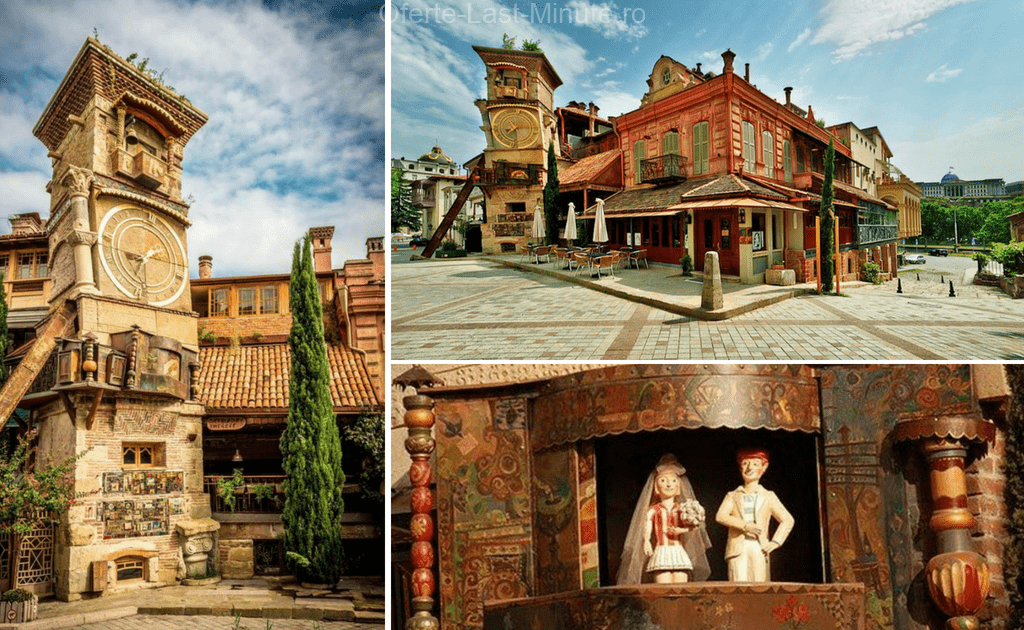 The clock urle or the tubed tower in Tbilisi is one of the most unusual buildings of the city.This building, with a unique structure, can be found in the old center;Although its architecture can lead you to a high construction in antiquity, this inclined tower is a modern one, attached to the doll theater of the renowned reso gabriadze.The doll theater was founded in 1981, becoming the first Georgian doll theater.The one who would have built them is Reso Gabriadze himself, the one who has dared to raise these two structures by reusing the usable parts found in the abandoned buildings of the old city or of the buildings destroyed after the earthquake.No less than 30 years he dedicated Gabriadze to the construction of the theater.

