

incredible sunsets, pearl white buildings adorned with bougainvillea, churches with blue dome and picturesque windmills make Santorini a sought -after destination.
About
Best period
In Santorini, the weather is good everywhere in February, March, April, May, June, July, August, September, October, November and December
Tourist Attractions
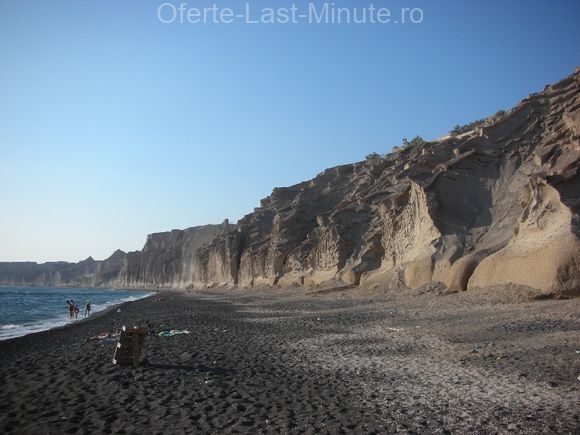 Cape Columbo is one of the most quiet and isolated beaches of Santorini island.It is surrounded by a wild landscape and the wind is very strong.We recommend that you do not sit directly under the rocks, there is a risk of falling stones.
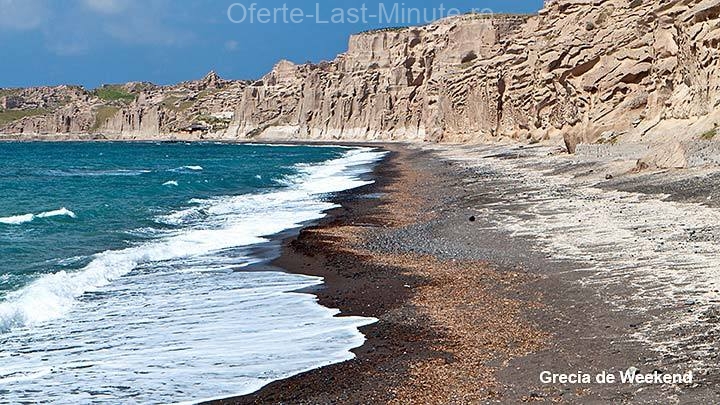 Vlychada beach is in a fishing village where tourists can relax at various taverns and cafes.Due to the imposing rocks, you can imagine that you are on the moon when you relax on the sand.
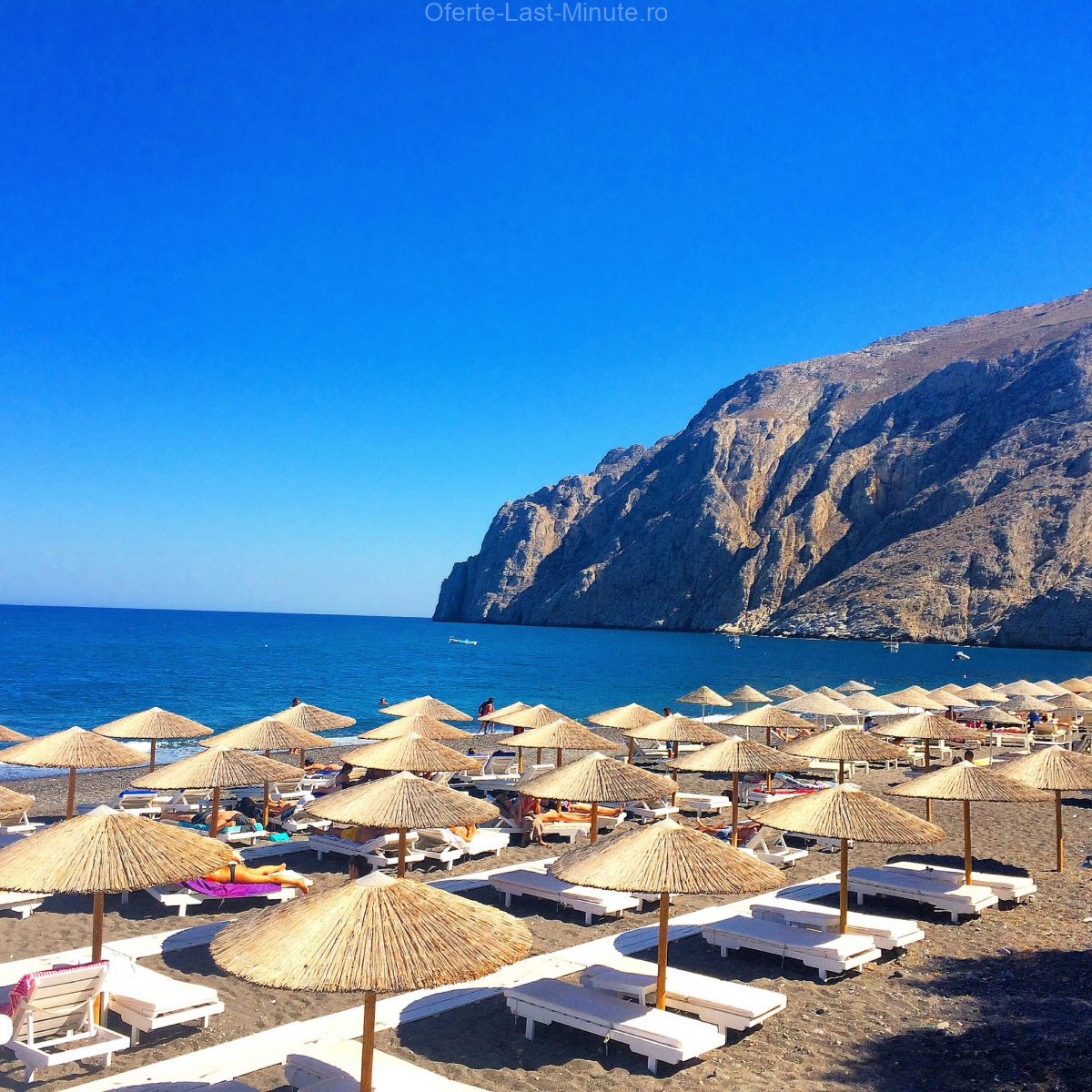 Kamari beach is near a massive rock, called Mesa Vouno and is the perfect place to look at the sunrise and sunset.The black sand has many stones, so we recommend that you do not go discharged.
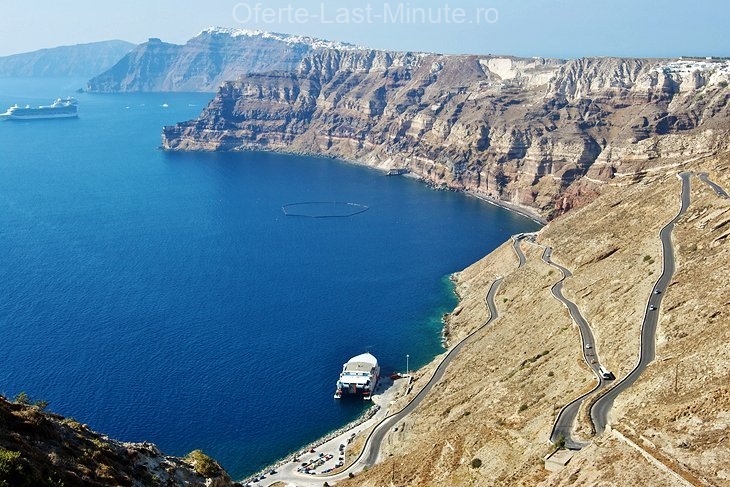 Formed by the massive volcanic explosion that blew the center of the island about 3,600 years ago, the calder is the full volcanic crater that remained.Measuring 12 kilometers on seven kilometers, it still hosts the volcanic activity - in its center the two Kaiméni islands with gas springs and gas emissions.Calderei, giving amazing views back to Santorini over the water
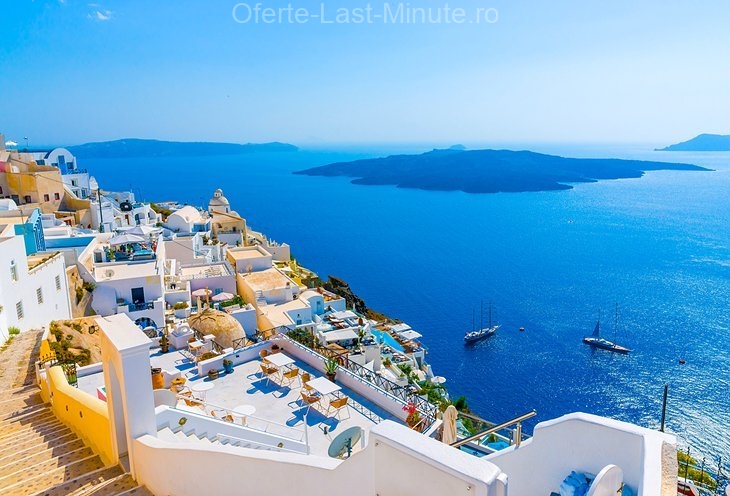 The capital of Santorini, Firá (Thíra) is made up of houses and cubic terraces, wrapped strips, small squares and churches with blue domes on the rocks, 300 meters above the warm.From the small port of Skala, Firá can be accessed either on the floor or horse (many are rented) on the steep and sinuous path (587 steps) or taking the cable car.Also, it can be reached from the neighboring cities through the picturesque Fira route to Oia, which takes you along the Rock of the Caldera.Firá lives mainly from tourism, and many of his buildings now serve as small hotels, apartments, restaurants, cafes, souvenir shops and jewelry.
 At the base of the rocks rising to the city of Oia, the port of the Bay of Ammoudi shines over the bright turquoise waters.Get down the approximately 200 steps down from Oia and you are in a perfect picture for the image, which is Ammoudi, known for the strange Greek taverns that serve the day capture at just a few centimeters of waves and ideal bays for swimming.Another popular activity is the sinking on the rocks, if that makes you adrenaline.
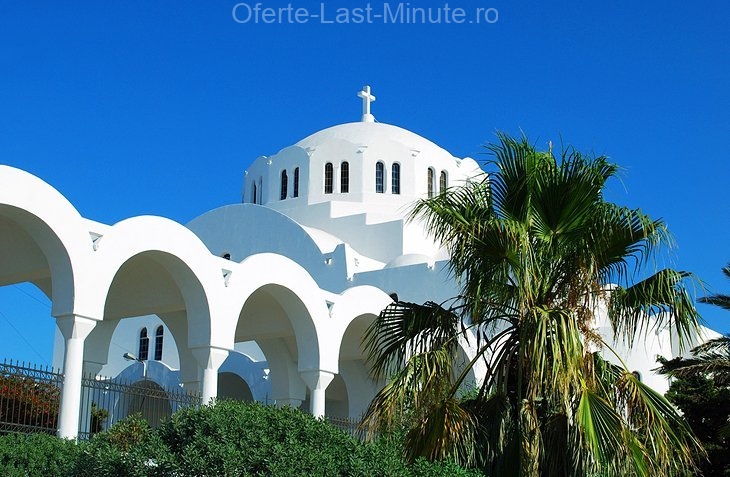 The Thira prehistoric museum displays discoveries from the Akrotiri archaeological site in a modern white building near the Mitrópolis Church in Firá in the 1950s. One of the top tourist attractions is the Blue Monkeys wall.Other exhibited ancient art works include marble figurines, painted ceramics, tools and weapons.
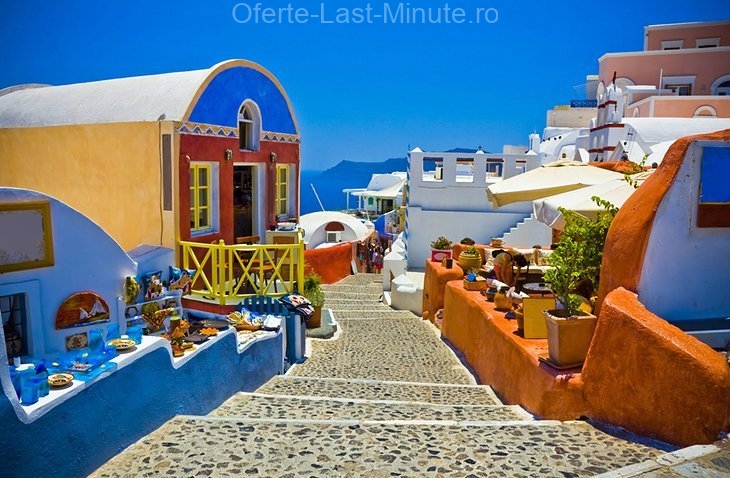 Oia is known for its famous sunsets that attract tourists from all over the world.Located at the northern peak of Santorini island, 12 kilometers from the Coast of Firá, ía (OIA) is a perfect village of images with houses, of which several have been transformed into small boutique hotels, with infinite swimming pools.Like Fiá, he lives from tourism, but he addresses a luxurious client. In the Bay of Ammoúdi, steep paths zigzage to the city, where you will find a series of seafood restaurants on the water's edge, many with outdoor meals.OIA can be accessed by local Ktel bus or walking on the path along the rocks above the caldera (allow three hours from Fira)
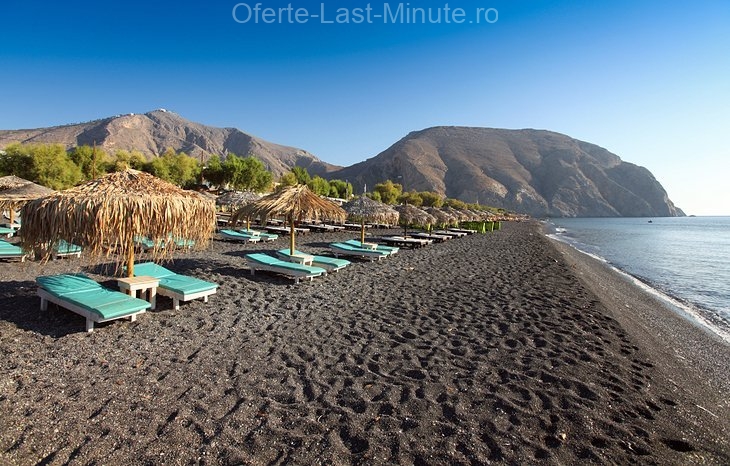 The most popular and popular beach in Santorini is on the southeast coast, between the villages Perissa and Perivolos.A long stretch of six kilometers of fine and black volcanic sand, is supported by Tamaris trees and overlooked by a series of taverns and cafes with seafood.There are loungers and shadows for rent, plus facilities for water sports.It is about 12 kilometers of threads.
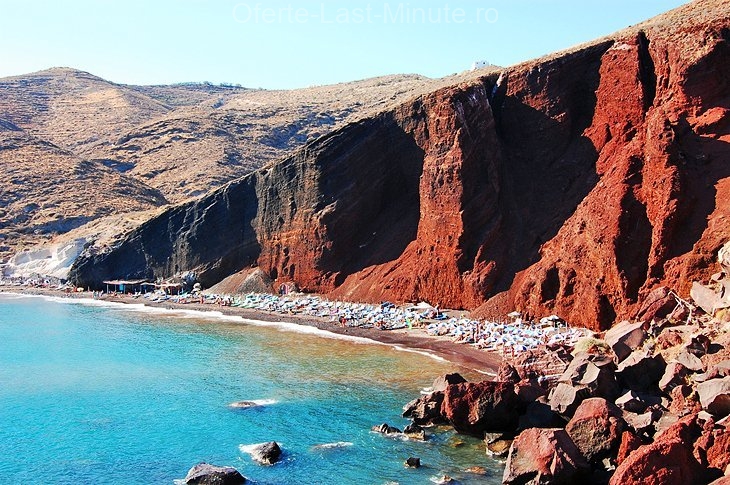 Near the Akrotiri site, you will find the famous red beach under a spectacular red rock wall.The beach is accessible along a path in the city of Akrotiri.You can also take a bus from Fira or drive and seem to be near you to venture on a rocky path to get to the beach.The beach is also accessible by boat from the ports of Akrotiri, Kamari and Perissa.Also note that the beach is prone to landslides, and the sections have been closed from visitors
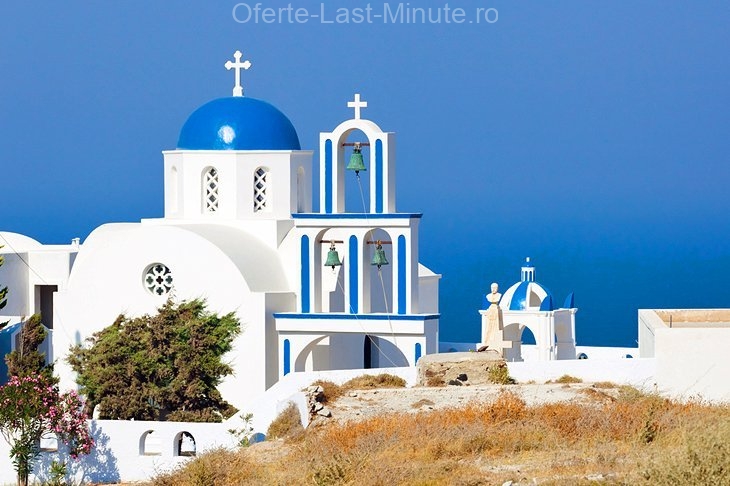 Pyrgos was the capital of Santorini island before taking over in 1800. The small village Pyrgos, located in the middle of Santorini island, is made up of cycladic boxes in white built around the ruins of a medi castle on the top of a hill.Previously, a sleepy, but forgotten city, Pyrgos has begun, in 2004, to deal with luxury tourism with the opening of several small, chic restaurants and boutique hotels.
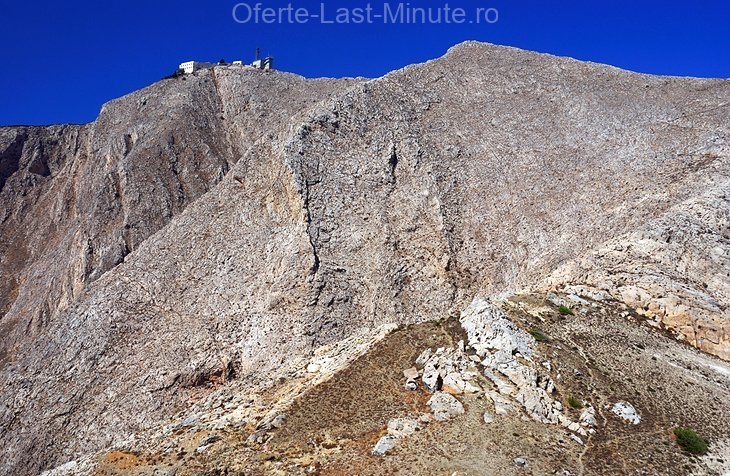 From Pyrgos, a road goes to the peak of Mt.Profítis Ilías (584 meters), the highest point in Santorini, offering panoramic views of the island and beyond the sea.Here is the powerful Profitis Ilias monastery, a eighteenth-century sanctuary, which is open to the public.Visit the museum presenting the mitra and the crochet of Patriarch Grigorie V, who was hanged in Constantinople by Turks in 1821. Also, the library, the monastic archives and the kitchen are of interest.The monastery was leading one of the many "secret schools", operated in the Turkish period
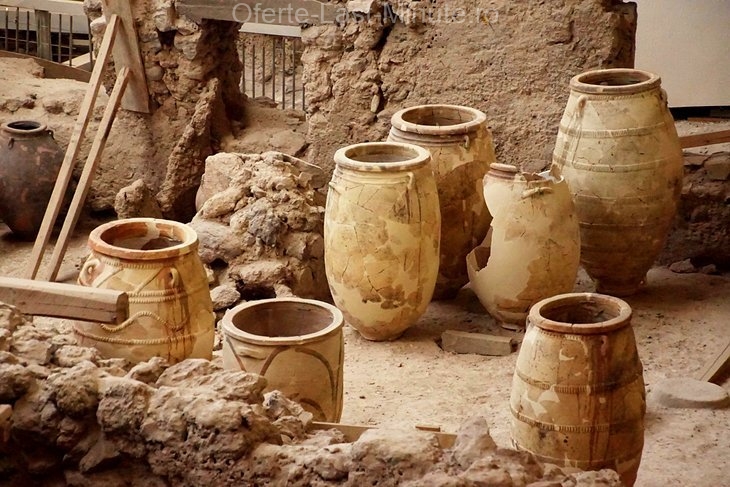 Near the village of Akrotíri Modern, 12 kilometers southwest of Firá, the old minoic settlement in Akrotíri was buried under the lava following the 7th century volcanic explosion BC.At the Akrotiri archaeological site, visitors can go through the residues of the city to see the remains of clay buildings in this city.It is so well preserved that it is often compared to pumps.The site has remnants of buildings on several levels, ceramics and drainage systems, which shows that Santorini was a flourishing and prosperous island before eruption and probably lived from maritime and commercial transport.who decorated his houses.The site of the ruins Akrotiri reopened to the public in 2012, after a few years of closing

