
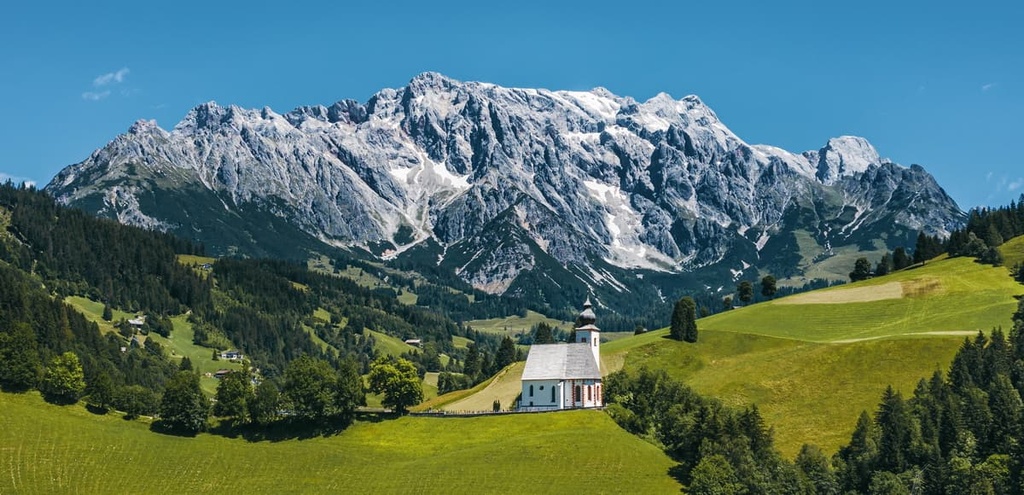
Salzburg is one of the most beautiful cities in Europe.Located in the northwest of Austria, it is equally popular among tourists for its well-preserved historical architecture, as well as for the Magnificent Alpine Decor.
About
Best period
The best months for good weather in Salzburg are August and September
On average the hottest months are June, July and August
The coldest months are January and February
The rainy months are January, May, June, July and August
Tourist Attractions
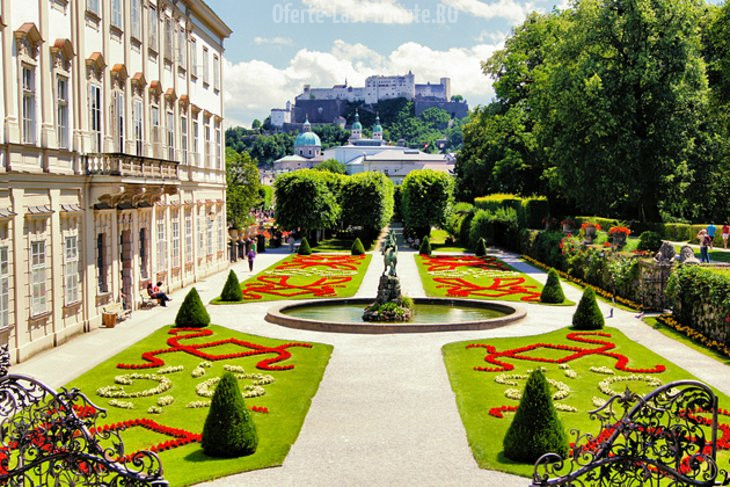 Another garden used in The Sound of Music is at the wonderful Mirabell Palace in Salzburg (Schloss Mirabell).This excellent example of baroque landscape design was arranged in 1690 with numerous terraces, marble statues and wells.XVIII, with a series of statues by Georg.Raphael Donner and his students. High interesting features are the marble room, which is still used for concerts and events, and the Baross Mirabell Museum.Hosted in the gardener building (GärtnerGeude), the museum is part of the ownership of the property from the seventeenth and eighteenth centuries.Of interest is the small outdoor theater located in the southwest corner of the gardens.
 One of the oldest and most attractive churches in Salzburg, St. Peter's Church (Stiftskirche St. Peter) has undergone many transformations over the years.Finished in 1143, it was added and modified in 1625 and decorated in Rococo style between 1757 and 1783, when its distinctive tower was added.The church is also known as the "Church of the Abbey" for its location in the complex of St. Peter's Abbey. Inside the porch below the tower is the Western door in Romanesque style dating from 1240. Inside, the Plan of the Romanesque basilica can still be detected, along with monuments including the grave of St. Rupert.Those dedicated to Mozart's sister, Marianne (Nannerrl), who died in 1829, and Jm Haydn, Joseph's brother.Other attractions are the painted rollers from the 16 marble altars and the lady's chapel (Mariekapelle) of 1319, which contains a stone figure of the Virgin, together with early and frescoes of 1755. n Nadress: St. Peter-Bezirk 1, 5020 Salzburg, Austria
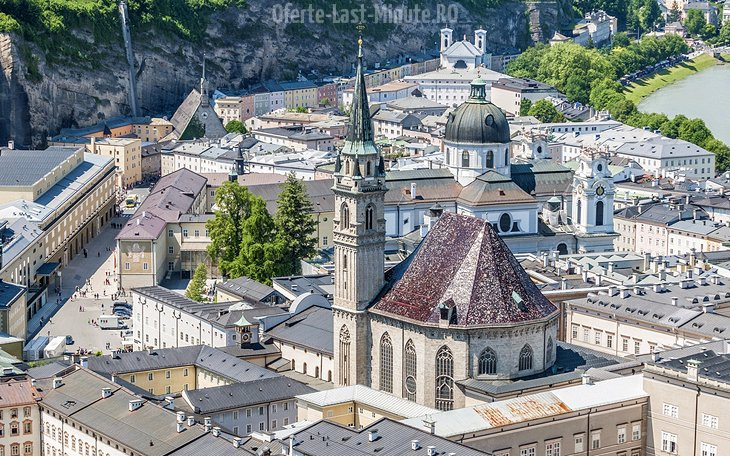 To the north of St. Peter's Church is the Franciscan Church (Franziskanerkirche), the parish church of the city until 1635. Remarkable features of the outside are the high roof of the choir and the southern tower of 1498.XV.In front of a Baroque chapel ring dating from 1606 is the large altar, added in 1709 and remarkable for Madona carved at the end of the fifteenth century.On the church is the Franciscan Monastery that still works.Visitors are welcome to participate in the Liturgy here. N Nadresa: Franziskanergasse 5, 5020 Salzburg, Austria
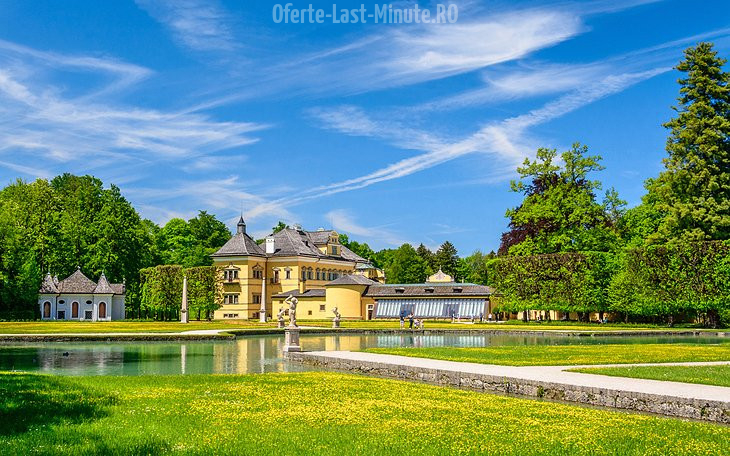 Markus Sittikus, Prince-Arhiepiscop of Salzburg, commanded this palace of pleasure in 1613 as a place of relaxation and fun.Never intended for a residence, the Hellbrunn Palace (Schloss Hellbrunn) is still quite great, and a tour gives you a look inside these huge and powerful leaders, both of the church and the state.These include a garden with water and tricky fountains, where an innocent-looking paving statue can suddenly turn into a shower, or what seems to be banks around a meal begin to pour water over all guests.The tour is cheerful and fun, especially for children and those who do not bother to wet a little (it is a good idea to keep the room and phone covered).In December, the gardens host a wonderful Christmas market;The entrance to a nearby folk museum is included in the entrance ticket.
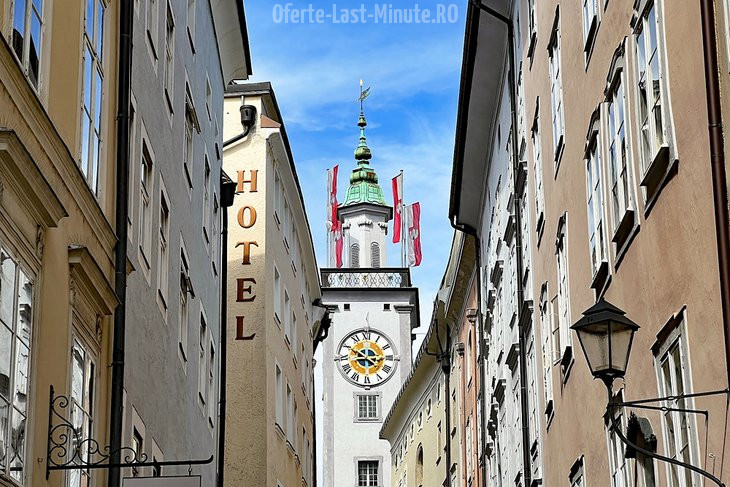 With the Rococo facade and the emblematic tower, the Old City Hall is one of the most attractive places in Salzburg.He has fulfilled important roles throughout history: to sound the bell when he was close to the entrance station, to keep the time for the public and as a waking tower.Follow the rotary exhibitions of the artists in Salzburg in the city gallery, located on the first floor.While the second floor is mainly used for the meetings of the City Council, it also displays the famous painting of Franz Kulstruck the city of Salzburg from 1916, in sight for the public.
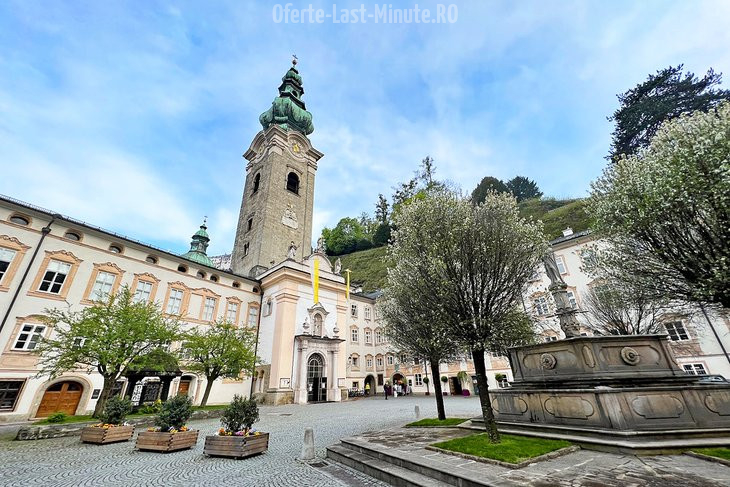 On the western side of Kapitelplatz in Salzburg is the Benedictine Abbey Sf. Peter (Erzabtei St. Peter).Fondat de Sf. Rupert în anul 690 d.Hr., acest impresionant complex de clădiri a servit drept reședință arhiepiscopilor până în 1110.nnÎn timp ce clădirile actuale datează în principal din secolele al XVII-lea și al XVIII-lea, ele rămân o mărturie impresionantă a aptitudinilor arhitecturale ale ordinului.The best example in this regard can be seen in the high-shaped tower of the building, one of the first of its kind in Europe. In front of the points of attraction are St. Peter's Court (Friedhof St. Peter), an impressive funeral place, surrounded on three sides of arches and family tombs.To the south, they go to the steep rock of Mönchsberg, where you will find the early Christian catacombs and the chapel of St. Maxim, cut from the solid rock.Johann Michael Haydn, the brother of the famous composer Joseph Haydn.The abbey is also the place of what is the oldest restaurant in Europe, St.Peter Stiftskulinarium, which was founded before 803 AD. N Nadress: St. Peter-Bezirk 1, 5020 Salzburg, Austria
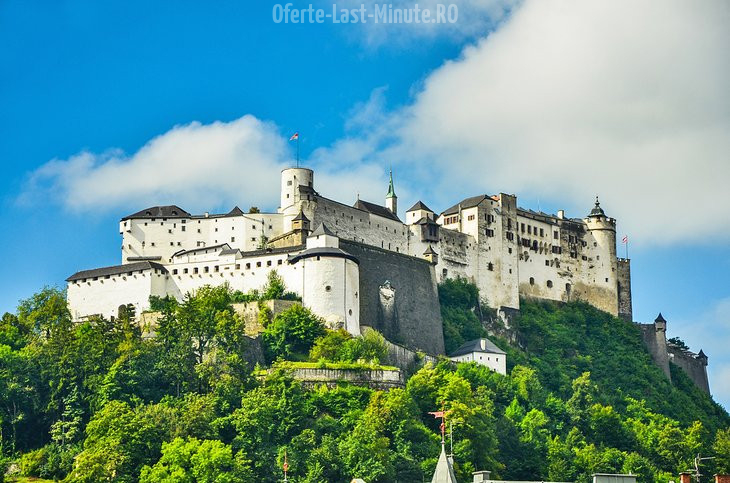 Salzburg is dominated by the picturesque fortress Hohensalzburg (Festung Hohensalzburg), an amazing historical fortress that dominates the city's horizon.Located on the southeast peak of Mönchsberg Mount, the original castle was built in 1077, and most of what can be seen dating from the early 1500s.The approach to the fortress goes through a series of impressive arched gates, under the seventeenth-century fire bastion to Reisszug, a unique palan dating from 1504, once used to transport supplies.Then he continues through the horses gate in Hauphofof, or the outer section, with his ancient tea and a tank of 1539.
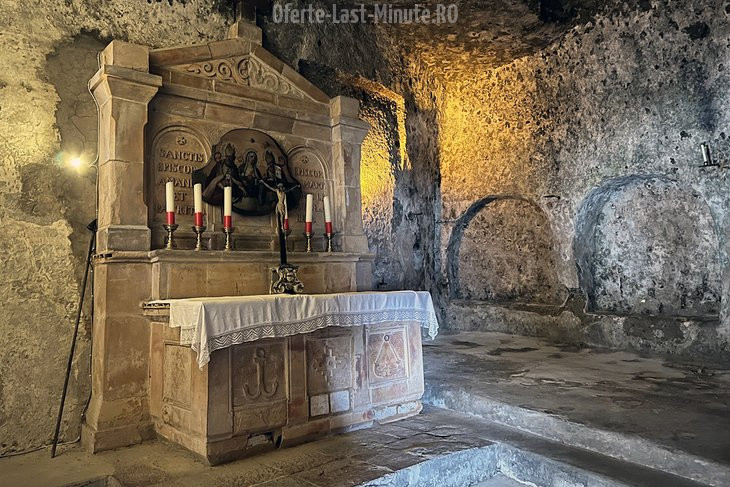 Even after the Church and the St. Sebastian Cemetery, they are carved catacombs in front of the Mönchsberg rock.The attraction, estimated to have about 1,000 years old, served a double purpose both as a schit and as a burial.You might recognize him from The Sound of Music as the place where the Trapp family has been seeking refuge before running to Switzerland.The first level contains the "Gertrauden Chapel", while the upper part houses the "Maximus chapel", which is believed to be even older.You can also see an incredible view over Salzburg from windows and balcony.
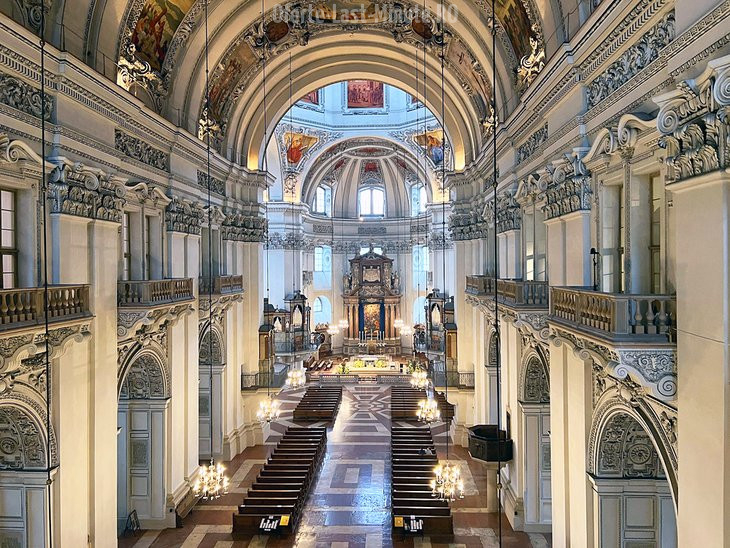 A prominent building due to its 79 -meter twin towers, Salzburg Cathedral (Salzburger Dom) was completed in 1657 and is famous for its Italian style and its role of location of Mozart's baptism.The western face of the building, oriented towards Domplatz, has four colossal marble statues, the outer ones representing St. Rupert and Vergiliu, the holy patrons of the province.The interior depicts Peter and Paul.The great altar with his resurrection painted in 1628;and the gorgeous frescoes in the vault.It is also worth seeing the bolts and artifacts in the crypt.
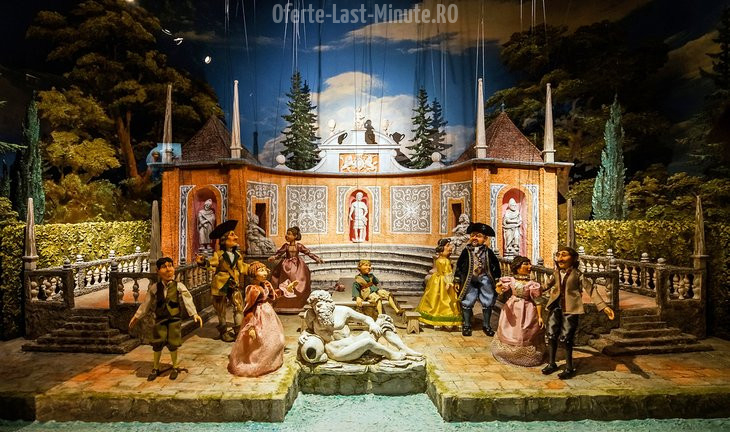 Salzburg has been famous for his music festivals, as the numerous theaters and historical concert halls of the city shows.Collective known as the Festspielhäuser Festival), these buildings consist of the Great Festspielhau;Haus Für Mozart, smaller, among which is a fine frescoer;and the Karl-Böhm Hall, used for exhibitions and receptions. In this building, decorated with beautiful frescoes from the seventeenth century, the famous Salzburg festival has been held. This popular summer event for several weeks presents the best of the European music and drama.of winter that focuses on the works of the great Austrian composer;And Salzburg Cultural Days, an annual two -week festival in October, which includes symphonic and room concerts and opera shows.Established in 1913, it is one of the oldest puppet theaters in the world. N Nadress: Hofstallgasse 1, A-5010 Salzburg, Austria
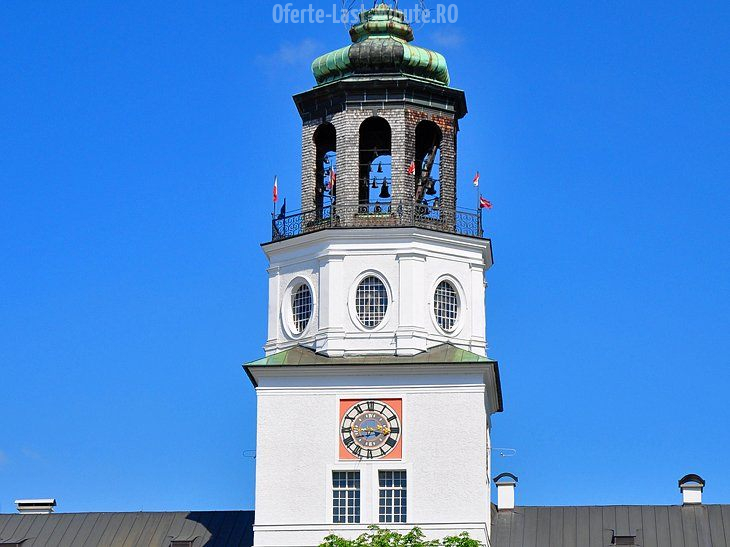 On Salzburg Residenz is the new (neugubäude) building, erected in 1602 as the Archbishop's Guest House and enlarged in 1670. It now houses the provincial government offices and the Salzburg Museum, the building is renowned for its carillon, the famous Glockenspiel.Bells that sing songs from Mozart's vast repertoire three times a day (7:00, 11:00 and 18:00).Guided tours of the tower are available, providing a unique view of the functioning of this impressive mechanism.Also, make sure you visit the wonderful church of St. Michael (Michaelskirche) in the eighteenth century, from the northern part of Residenzplatz, at the corner between Mozartplatz and his monument Mozart from 1842. n Nadresa: Mozartpl.1, 5020 Salzburg, Austria
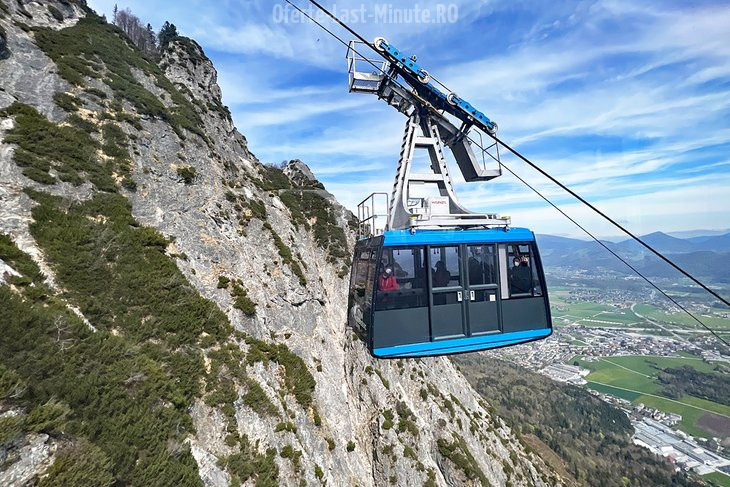 UNTERSBERG, a popular area of recreation with an injured peak, attracts free air lovers from all over the world.You can get at the top by taking a walk with UNTERSBERGBAHN (cable car), located about 10 kilometers south of the city and easily accessible by bus.The 8.5 -minute trip with one of the two cars similar to a gondola is a delight, offering amazing views of Salzburg, Rositten Valley and the entire Berchtesgaden region.snow.It is not surprising that many couples engage in this beautiful place. You are on an hour or two by exploring the amazing mountaineer and when you are ready to do the full, simply draw a place at the coffee shop for coffee and Ştrudel.
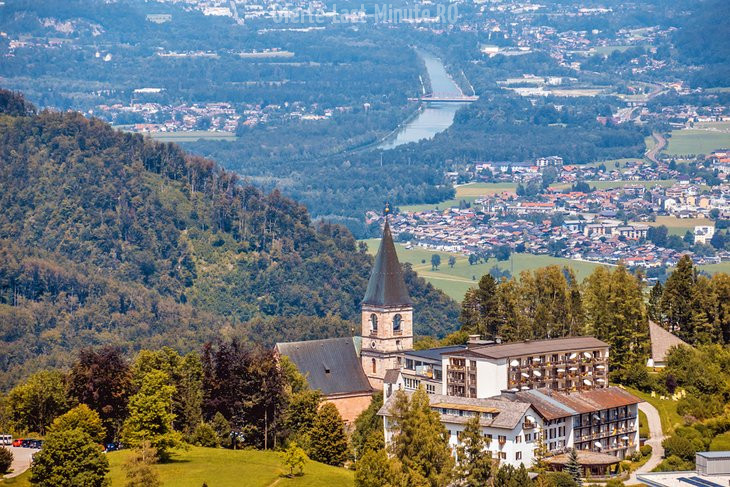 The old Hallein Celtic city on the Salzach river, a 10 -minute drive from the center of Salzburg, is one of the many interesting places to visit near Salzburg.The city is particularly popular for its narrow streets, gates and statues, as well as for historical houses built in the typical Salzach style.Also, here you will find the Celtic Museum (Keltenmuseum Hallein), one of the largest and most complete museums of Celtic art and history in Europe.Located in a former seventeenth-century orphanage, this rebuilt Celtic farm includes buildings and tools used by Celtic colonists, as well as an old funeral camera.There are also exhibits that present local habits and the history of the city's guilds. N Nadresa: Pflegerplatz 5, Hallein, Austria
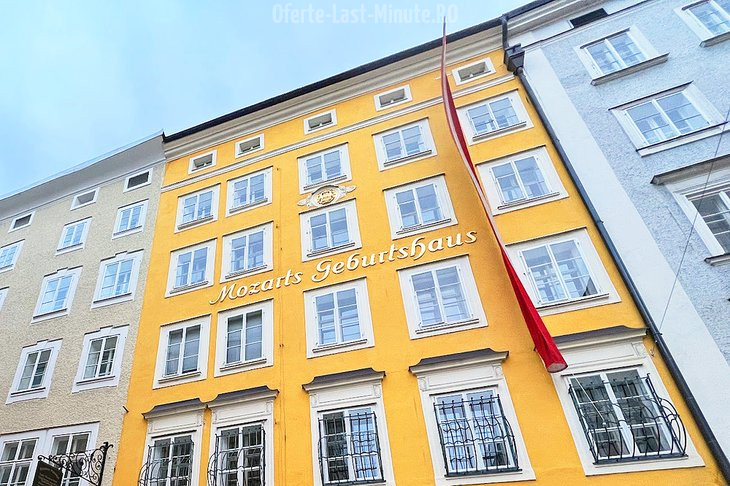 The house in which Wolfgang Amadeus Mozart was born on January 27, 1756, is one of the best places to visit in Salzburg if you are a fan of classical music.Among the points of attraction are the rooms occupied by the Mozart family and a museum that presents numerous interesting memories, including the violin of the young Mozart, portraits and original scores of his compositions.A room is furnished as it was in his time.Guided tours can be organized in English.9, Salzburg, Austria
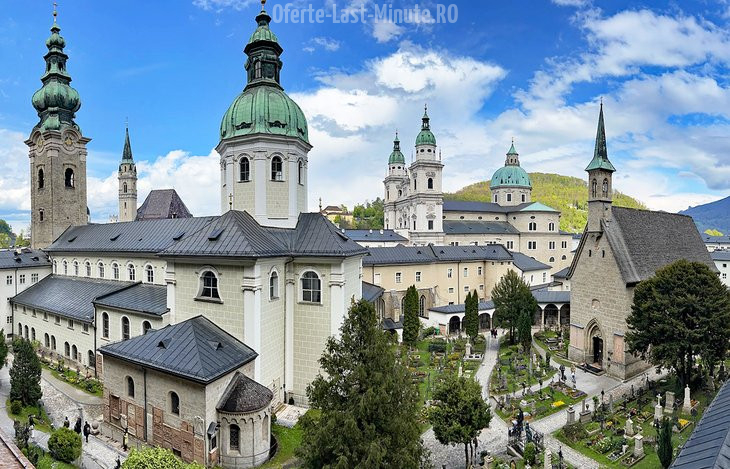 A culminating point in the more modern neighborhood in Salzburg on the right bank of Salzach is St. Sebastian Church (Sebastianskirche).Built in 1512 and completely remodeled in Rococo style in 1753, the church has a step that leads to St. Sebastian Cemetery (Friedhof).Archbishop Wolf Dietrich. In the way to the chapel are the graves of Mozart's father, Leopold, and his widow, Konstanze.To the west of the church there is a passage that leads to the Loreto Monastery (Loretokloster) and Paris-Lodron-Strasse. N Nadresa: Linzer Gasse 41, 5020 Salzburg, Austria
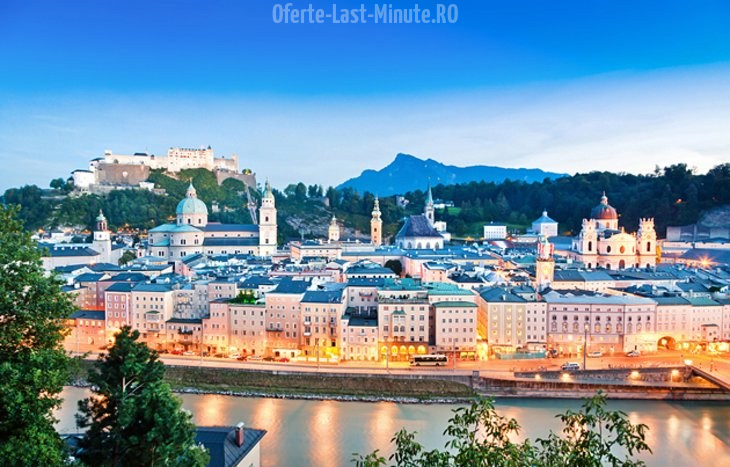 From the University Square (Universitätsplatz), a series of wonderful passages known as "Durchahäuser" are heading north to Getreidegasse.This crowded pedestrian area has been recognized as a UNESCO World Heritage site and is bordered by old houses of strange merchants, dating from the fifteenth centuries to the eighteenth century.And it is a large area to cover, comprising about 580 acres in the heart of Salzburg, all begging only to be explored.
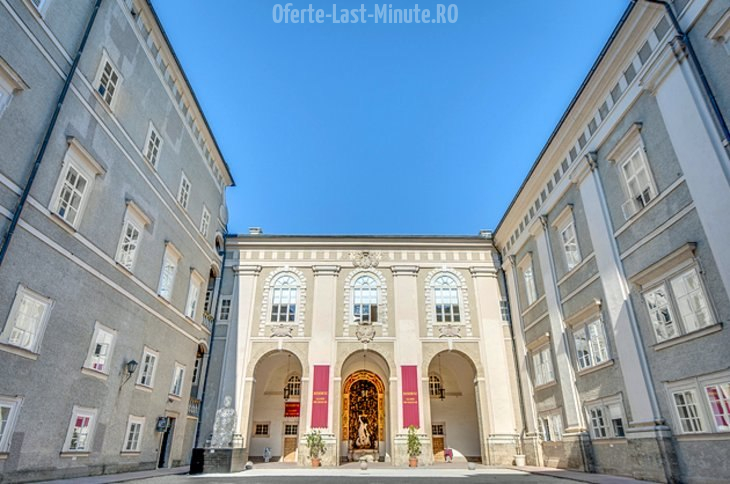 Dominating the western part of Residenzplatz in Salzburg is Residenz, the former palace of once powerful princes bishops of the city.Built between 1596 and 1619, this huge palace is placed around three courtyards, with a large marble gate added in 1710.Remarkable are the Knights' Hall (Rittersaal), the conference room (Konferrenzsaal) and the splendid audience room (audience), which contains the Flemish tapestries from the 1600s and refined Parisian furniture.
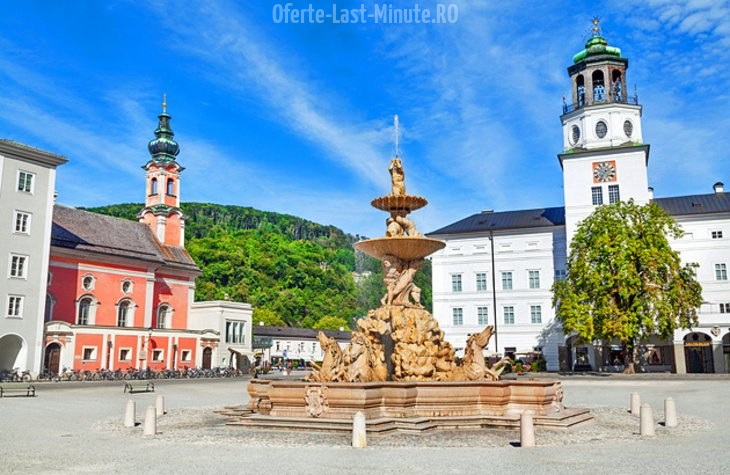 In the heart of the old city of Salzburg (Altstadt), on the left bank of Salzach, is Residenzplatz.One of the largest markets in the city, is the best place to start exploring the many tourist attractions and things to do that this beautiful city has to offer.This marble masterpiece was made by an Italian sculptor in 1661 and is the largest and most beautiful baroque fountain in this part of the Alps.Standing 15 meters high, with splendid figures of bold horses, together with the god Atlas wearing dishes, it also impresses with its dolphins.Coronating the whole display is a triton with a carapace. It is easy here, it is easy to spend time relaxing in the cafes with the terrace and the boutique stores on the adjacent streets.You can also jump and visit key attractions, such as the Cathedral in Salzburg and Residenz, the former Palace of the City Bishop Princes. In the area is also commonly used for concerts and holidays, such as New Year's Eve parties and the excellent Christmas market in Salzburg.

