

Prague is the capital of the Czech Republic.The city is located on the Vltava river, in the central Bohemia, and has almost 1.67 million inhabitants, without taking into account the approximately 300,000 commuters, who work in the city, but do not live here
About
Best period
The best months for good weather in Prague are July, August and September
On average the hottest months are July and August
January is the coldest month of the year
Tourist Attractions
 The Municipal House of Prague (Obecní Dum) is widely considered one of the best examples of art Nouveau in the city.Built in 1912, this splendid civic building also hosts one of the most important (and largest) concert halls in Prague, Smetana Hall and prides itself on numerous striking features, from its sumptuous facade, with a large mural on the arch above the balcony from the second floor to the second floor and above the large floor.the arch.While tours guided in English (including the chance to see otherwise closed ceremony rooms), one of the best ways to enjoy this landmark is to take a concert or taste the coffee shop, restaurants and luxury boutique stores.
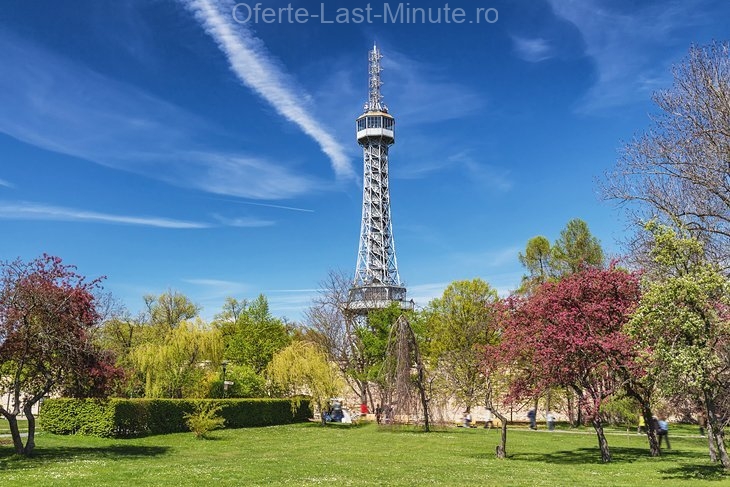 Named after the hill on which it is located, the Petrín (Petrínská Rozhledna) observation tower, 63.5 meters high, resembles a smaller version of the Eiffel Tower in Paris, which offers panoramic views on Prague.Although only one fifth of the size of his French counterpart, the height of the tower creates the illusion that it is greater than it is.Today, visitors can climb 30 minutes on the Petrín hill to the base of the tower or they can make a quiet journey on board the funicular before approaching the 299 steps of the structure to the top (there is also a lift, as well as a cafe).Make sure you visit the Mirror Labyrinth, a fun diversion built and in 1891
 Perhaps one of the most unlikely attractions of the city, the Lennon Wall in Prague has been in the 1980s as a tribute to former Beatle and Peace Military John Lennon.Things started almost immediately after the singer's assassination in 1980, when this wall, otherwise modest, near the Carol Bridge, became a place where fans can demonstrate their pain, painting pictures, lyrics and slogans attributed to the star.symbol of hope and peace for the city's population.The tradition continues to date and, together with the assemblies of Lennon's death, tourists can be observed frequently by adding their feelings to the wall.
 A culminating point in the neighborhood of the New City in Prague (Nové Mesto) - an area that has grown out of the city's need to expand as it prospered - it is the wonderful Wenceslas market (Václavské Námestí), where the National Museum and numerous other architectural treasures are located.Named after the dedication of Bohemia, whose statue can be seen here, the Wenceslas Square was created in the fourteenth century during the reign of Carol IV as a horse market and since then has become one of the most important public spaces of the city, still used for demonstrations and holidays.Enter visitors in some of the best dining and restaurant experiences in the city, as well as excellent shopping.If you visit Prague in December, is the place of the largest Christmas market in the city
 Located idyllic on the banks of the Vltava river, the Prague National Theater is a mandatory visit for the show lovers.At home at the most important opera, ballet and drama shows in the country, the National Theater was opened in 1881 as a symbol of Czech national identity and to promote the Czech language and culture.Despite a somewhat carrier past, who saw the building destroyed by fire and even closed by the Communists, this amazing theater suffered extensive renovations and rises as a monument of the rich talent and cultural significance of the city.(English guided tours are available).
 One of the most recognized old bridges in Europe, the magnificent Pod Charles (Karluv Most) is proud of 32 points of unique interest along his 621 meters area.Built in 1357, the bridge has long made the object of a great superstition, including the builders who placed the initial stone of the bridge on July 9 exactly at 5:31 in the morning, a precise set of numbers (135797531) which is believed to offer additional resistance structure.For a better extent, it was built in perfect alignment with the tomb of Saint Vitus and the sunset on the equinox.Among the most important are those of the Emperor of Saint Carol IV and John of Nepomuk, the most venerated saint of the country, revealed in 1683 (a more recent superstition implies the rubbing of the plate at the base of the statue).Other attractions include spectacular views on the Vltava river and the gorgeous gothic gates of the structure.The visualization of the Carol Pod at night is also highly recommended (an additional benefit is the smaller crowds, especially after the spectacular sunset).
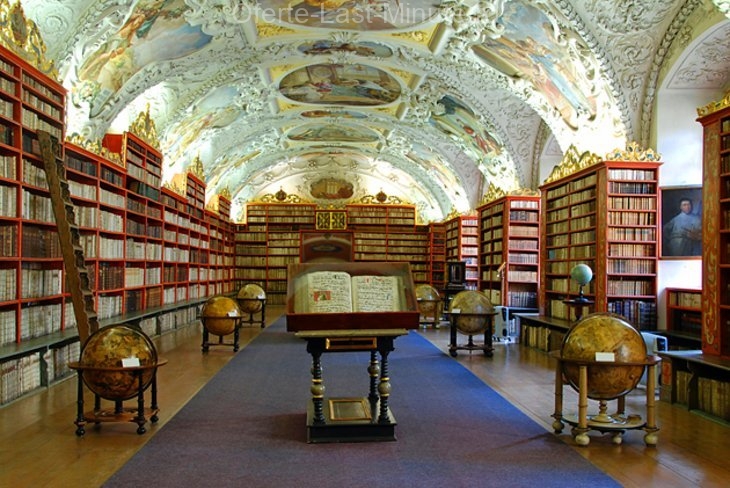 The Monastery and the Strahov Library (Strahovsky Kláster) date from the 12th century and is the second oldest monastery in Prague.While his imposing gate and churches are sufficiently impressive, his most important buildings are the two beautifully decorated baroque libraries.The philosophical library contains a variety of extraordinary furniture, along with a refined ceiling painted by Franz Anton Maulbertsch entitled Lighting.stucc.Libraries contain many rare old volumes and manus, including the famous Strahov Gospel of the 9th century, while in the cellars there are old typographers together with the remains of Saint Norbert, the founder of the premonestratensian order.Strahov curiosities office, remarkable for its historical artifacts in science.Tours are available in English.If you want to stay a little longer, consider the meal at the Great Monastery restaurant or participate in one of the daily masses.
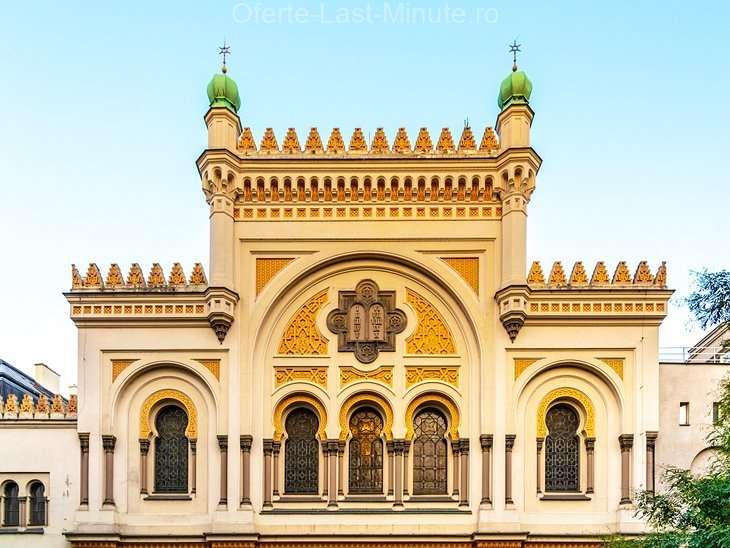 The Jewish district of Prague was initially located in the castle district, but until the 1200s it spread in the area of Josefov and was considered for centuries as a ghetto.Its transformation into one of the most important and interesting neighborhoods of the city took place in the late 1800s, when large sections were demolished to make the ART Nouveau apartment buildings.Spanish synagogue, Pinkas Synagogue, Ceremonial Hall and Klaus Synagogue.One of the best free things to do in Prague is the exploration of the old Jewish cemetery, remarkable for its degraded funeral stones, many inclined in a messy way because of their age.Josefov is also popular for his excellent Kosher restaurants.
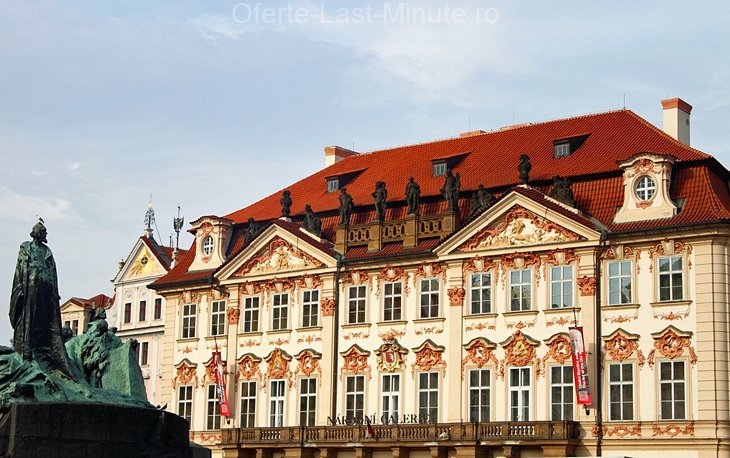 Spread on some of the most important architectural landmarks of the city, the National Gallery in Prague (Národní Gal Gallery) hosts some of the most important art collections in Europe.Most of the collection is hosted in the Veletrzní Palace (Veletrzní Palác), a relatively modern structure built in 1925 holding the works from the 19th-XXI centuries.Although a strong emphasis is placed on Czech artists, there are foreign artists such as Monet and Picasso, as well as other art forms, fashion, applied arts and sculpture.From Bohemia, where you will find the European art of the Middle Ages. In the end, the splendid Sternberg Palace from the seventeenth century (Sternbersky Palác) houses some of the most famous pieces of the gallery, focusing on the European art from the classical era to the end of the Baroque period and including important Romanian and Romanian periods;Italian masterpieces from the XIV-XVI centuries;And works from the 16th-16th centuries of artists such as El Greco, Goya, Rubens, Van Dyck, Rembrandt and Van Goyen.
 Created in 1680 to host the numerous victims of the plague in Prague, the Olšany cemetery (Olšanské Hrbitovy) served as the main cemetery of the city for centuries and is the last place of rest of the countless victims of disease and war.High enough to host about two million graves and divided into sections, the cemetery consists of the Jewish cemetery, which includes the tomb of the writer Franz Kafka and the Christian cemetery, where you will find the last Czech rest place, Jan Palach, who set on fire in 1968 as a protest against the Soviet invasion.Although his body was taken from the Olsany cemetery in 1973 to prevent his tomb from becoming the place of organized protests, his coffin was returned in 1990. In addition to his somewhat morbid history, he remains a wonderful place to explore due to his numerous old mysterious tombs and art monuments.
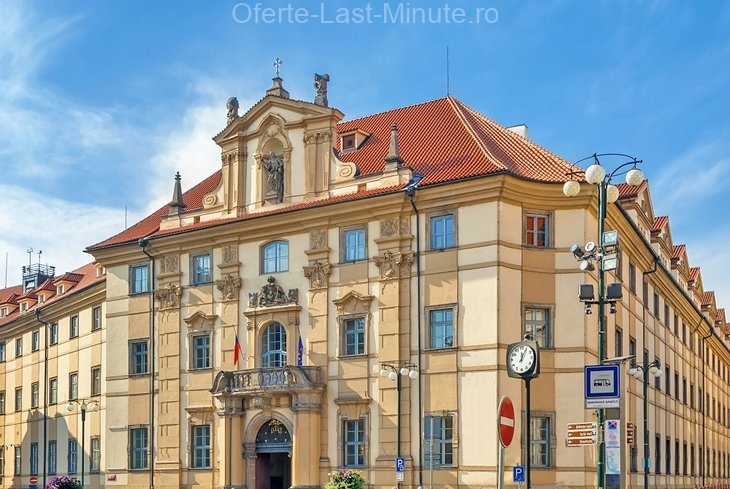 Clementinum (Klementinum), one of the largest collections of historical buildings in Europe, houses the National Library of the Czech Republic.These beautiful baroque buildings initially were part of an Jesuit college and later they came to host the collection of Jesuit books, as well as the Karolinum collection.The library eventually became the property of the state after the expulsion of the Jesuits, and Clementinum became a public library in 1782 shortly after the National Library was set up.A culminating point is the refined room of the Baroque library, with the beautiful works of art in the ceiling, the 68 -meter high astronomical tower, with its spectacular views on the Pragei and the splendid chapel of the mirror, with its refined decoration.Guided tours are available in English and it takes about 50 minutes.For a truly memorable experience, Clementinum is also used as a place for jazz events, classic concerts and festivals.
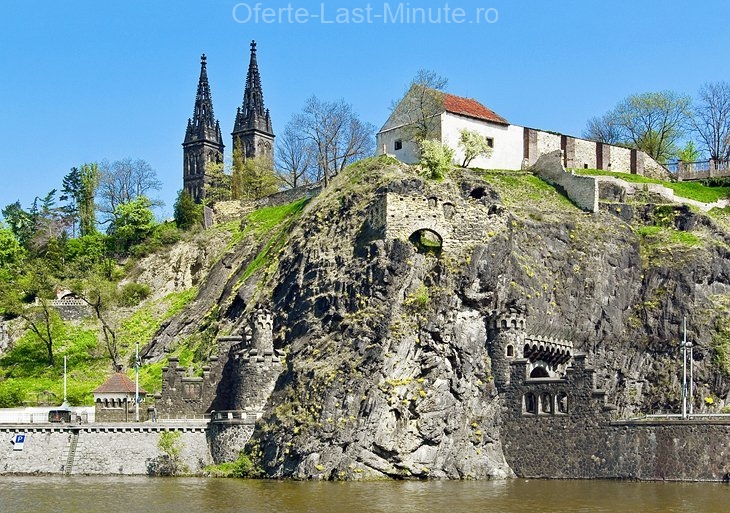 Looking like something from a fairy tale, the Vyšehrad fortress - literally translated as the "upper castle" or "the castle on the heights" - is above the Vltava river with sight in Prague.It is known that it has existed since the tenth century, the subject of myth and legend has long been, including the foreshadowing of an ancient princess of rising a large city around it.With the royal residence of Vratislav II, Vyšehrad also played a role as part of the initial royal route to be crowned, who should stop here to bring tribute to their predecessors (the route led from Vyšehrad to Hradcany).A walk or picnic and offer beautiful views of the surrounding city.In the summer months, the outdoor theater of attraction hosts musical and theatrical performances.Guided tours can be arranged in English.
 The astronomical clock in the tower of the old mayor dates from the fifteenth century.In order to appreciate this complicated mechanism you must witness the procession of the twelve apostles.From hour to hour, a small door opens and Jesus advances and the 12 disciples follow him, while the skeleton beats the bell.Under the astronomical clock there are 12 medallions with the signs of the zodiac, added by Josef Manes in 1865.
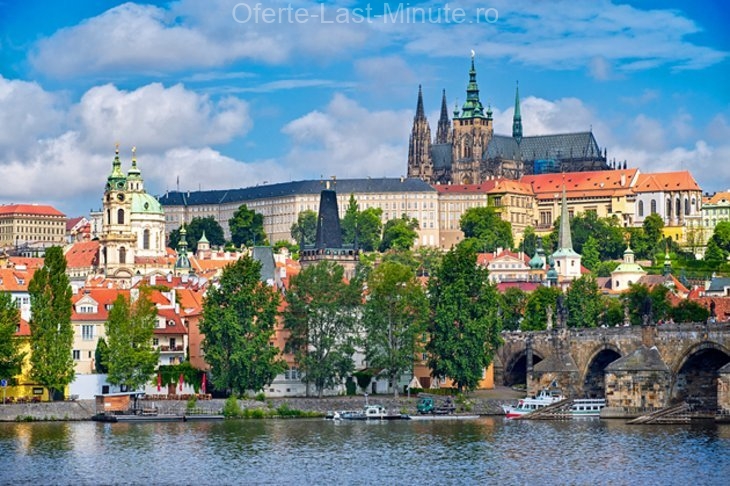 Located in the Hradcany district of Prague, the Prague Castle (Pra?Originally built as a fortress built around 870 AD, the castle has changed dramatically over the years and contains examples of most top millennium architectural styles.Inside the walls of the castle are several of the most popular tourist attractions in Prague, including St. Vitus Cathedral, St. George's Basilica, Powder Tower, Old Royal Palace and Golden Band.on the Vltava river with the old city and its numerous beautiful turrets in the background).The attraction points include the main room of the old royal palace, the Vladislav Hall, so large that it could be used for tournaments and stairs large enough to allow the knights mounted to use them.Make sure you spend time in the royal garden, dating from 1534 and hosting a series of beautiful old buildings, including the ball game, the summer royal house with the singing fountain and the yard of the lion.Also, check the official website of the castle for news and updates on cultural events, such as classical music concerts, lectures and workshops.In fact, relying on a hotel in the vicinity of Prague Castle is a good idea, so you can experience the attractions of the city day and night.
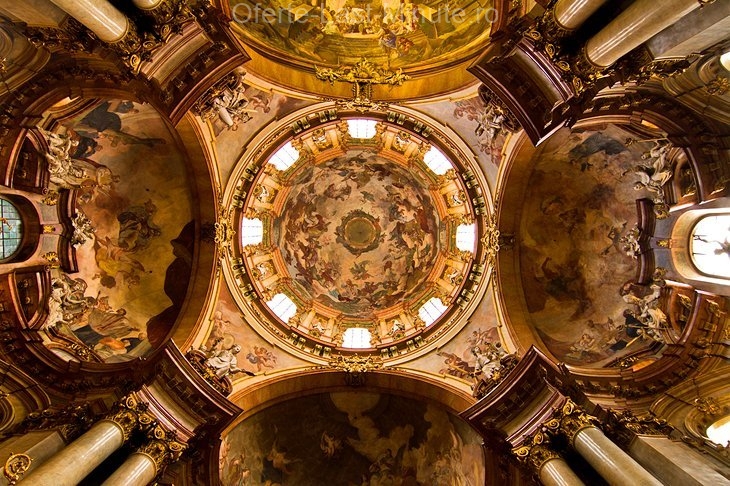 On the picturesque small neighborhood of the neighborhood of the Old City is the Church of St. Nicholas (Kostel Svatého Mikuláše), one of the newest churches in Prague.Constructed by Jesuits in the eighteenth century, it is an excellent example of a high baroque and is noted in its splendid interior, with its unique nineteenth-century chandelier, as well as the great baroque paintings of the Czech artist Karel Skreta, who adorn the huge dome.It is worth noting in particular the two historical organs of the Church, of which the oldest was built in 1745. The nbiserica also has a bell tower, which visitors are allowed to climb, from which there are wonderful views on the huge dome of the Church and the Old City.Try to time your visit to coincide with one of the regular organ concerts took place here, including Mozart Requiem and other notable classic pieces.Guided tours are available in English.
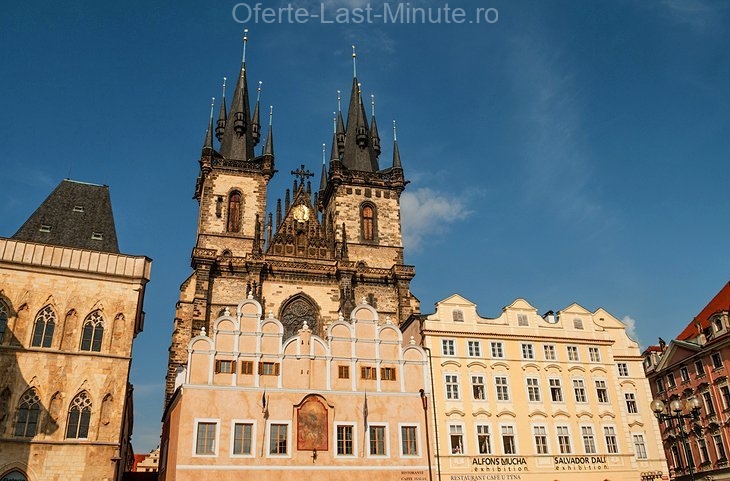 One of the most recognized buildings in Prague is the Church of the Virgin before Týn (Kostel Matky Bo?Unmistakable for its 80-meter-high double towers that flank each part of the building (each supporting four smaller towers), its main entrance is through a narrow passage that passes the facade.The interior is underway, there are still many things worth seeing, including numerous fine graves, the beautiful Nordic Gothic portal with the sculpture of its crucifix, paintings of the early Baroque altar dating from 1649 and one of the best organs in the seventeenth century in Europe.its many refined restaurants and cafes.Another old splendid church worth visiting is the Baroque Church of the Virgin Mary, with her famous statue of the Baby Jesus, which is said to have been responsible for miracles and another pilgrimage point.
 The Prague Zoo was based in 1931 and is one of the largest zoos in Europe.Some of the most appreciated pavilions are the Indonesian jungle and the planet of the monkeys, where you can see a flora and a jungle -specific fauna or you can even play with wood.The ticket costs 200 CZK (7.40 euros) for an adult.
 The National Museum (Narodní Museum) represents an association of various museums, with over 14 million exhibits from the sphere of natural history, history, art, music and literature, located in dozens of buildings.The main building of the National Museum is located in the Wenceslas Square and is dedicated to the Museum of Natural History.
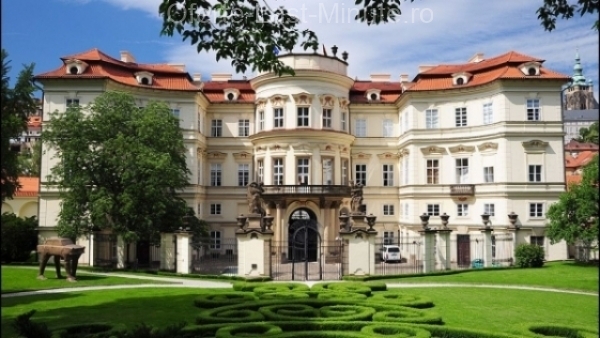 Lobkowicz Palace (Lobkovickky Palac) was built in the 16th century and belonged to the Lobkowicz family, being first confiscated by the Nazis, then by the communist regime.After more than 40 years of communism, the Lobkowicz family became the owner of the palace, and in 2007 he was opened to the public as a cultural center.The permanent exhibition includes the collections of the princes and the collections of the Lobkowicz family, of which paintings, decorative art, original scores and musical instruments, a huge bookstore of rare books, important weapons and weapons are part, being the most valuable being the musical manus of Mozart and Beethoven.Every day at 13:00, concerts take place at the palace.
 The Carol Bridge (Karluv Most) is one of the main attractions of Prague.The construction of the bridge began in 1357, at the orders of King Carol V and was completed in the fifteenth century.The impressive gothic structure has a length of 516 m, 10 m wide, 16 arches over Vltava, a device of three towers and decorated with 30 statues.Legend says that Saint Jan Nepomuk.He was thrown over the bridge because he had refused to reveal to King Vladislav IV the secrets confessed by Queen Sofia.Since then it is said that if you reach the cross that marks the place where it was thrown, your secret desire will be fulfilled.
 In the Historical Center of Prague (Město Status) you will be able to admire the astronomical clock, the Gothic church Tyn, the Starch building, one of the most beautiful in the city, the monument of Jan Hus, the State Theater, where the "Don Giovanni" operated by Mozart, the old City Hall and many historical churches were for the first time.
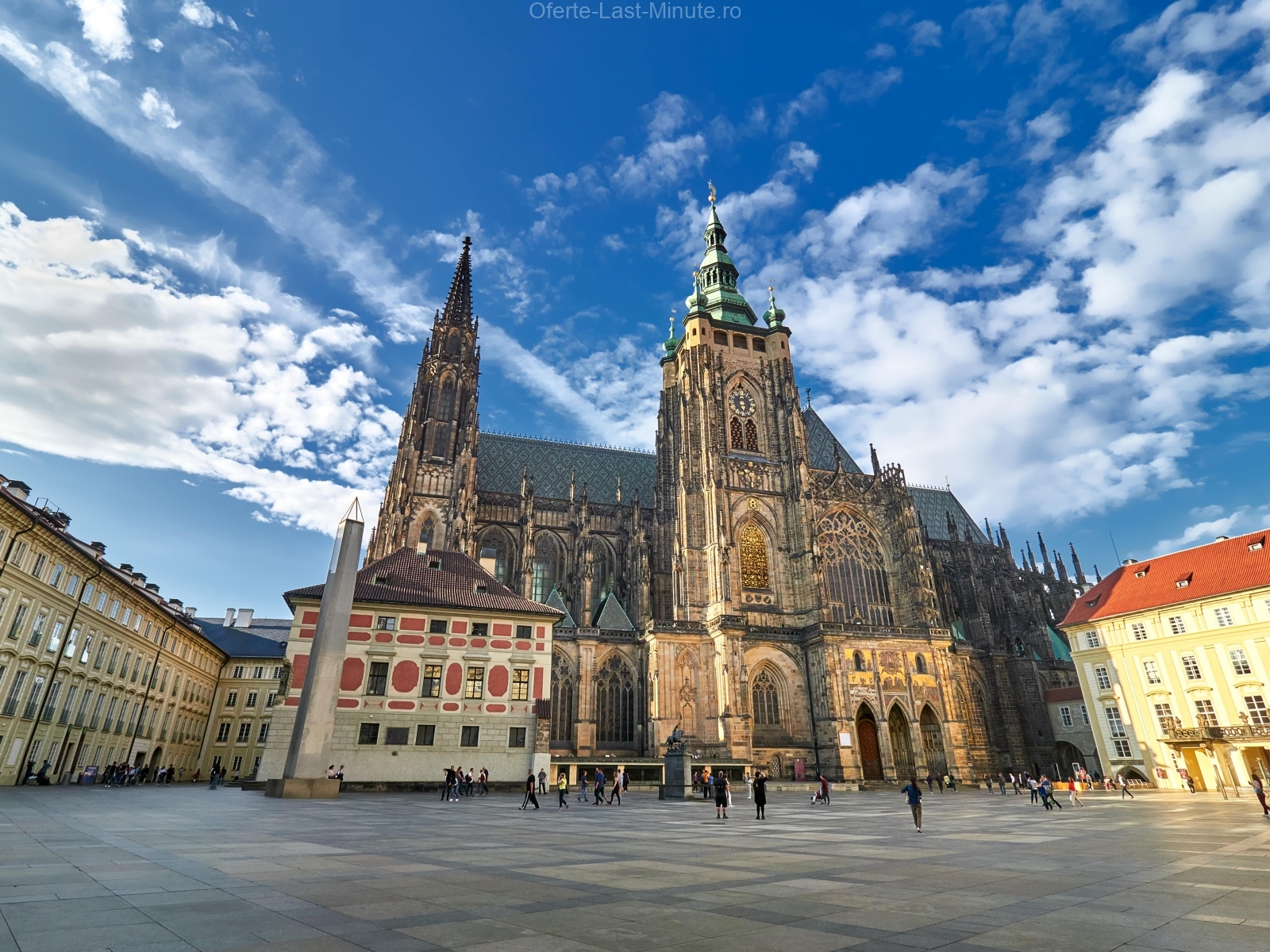 The Cathedral of St. Vitus (Katedrala Svatho Víta) is the largest and most important cathedral in the Czech Republic, as well as one of the best examples of Gothic architecture.It is the headquarters of the Archdiocese of Prague and the place where saints, kings, princes and emperors of Bohemia are buried.
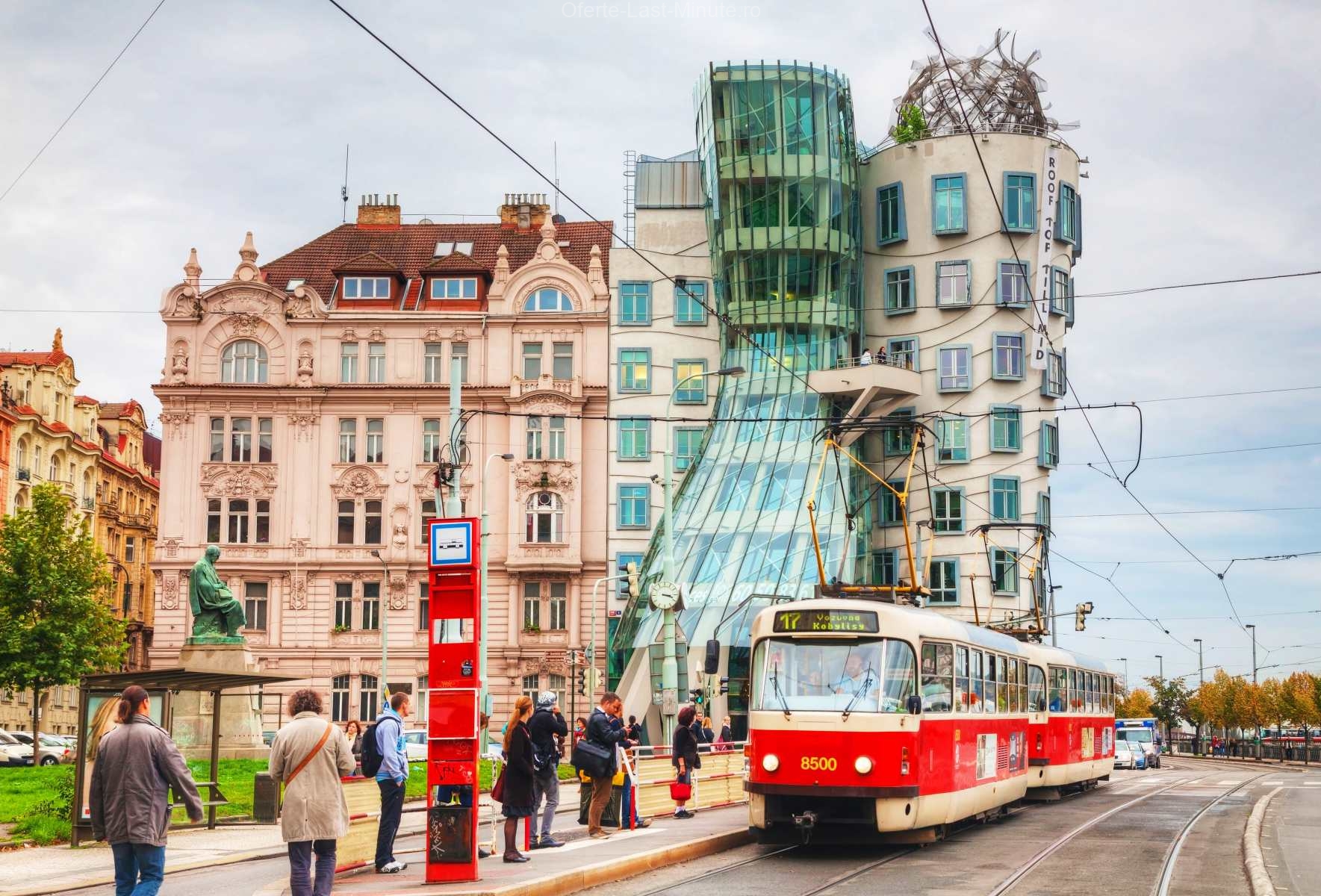 The dancing house (Tančící Dum) is the name given to the national-black building in the center of Prague, created by the Czech-Croat architect Vlado Milunić, in cooperation with the Canadian architect Frank Gehry.The creation consists of two towers that seem to be hugged or danced, from where the name of ginger Fred, referring to the famous couple of Ginger Rogers and Fred this dancers
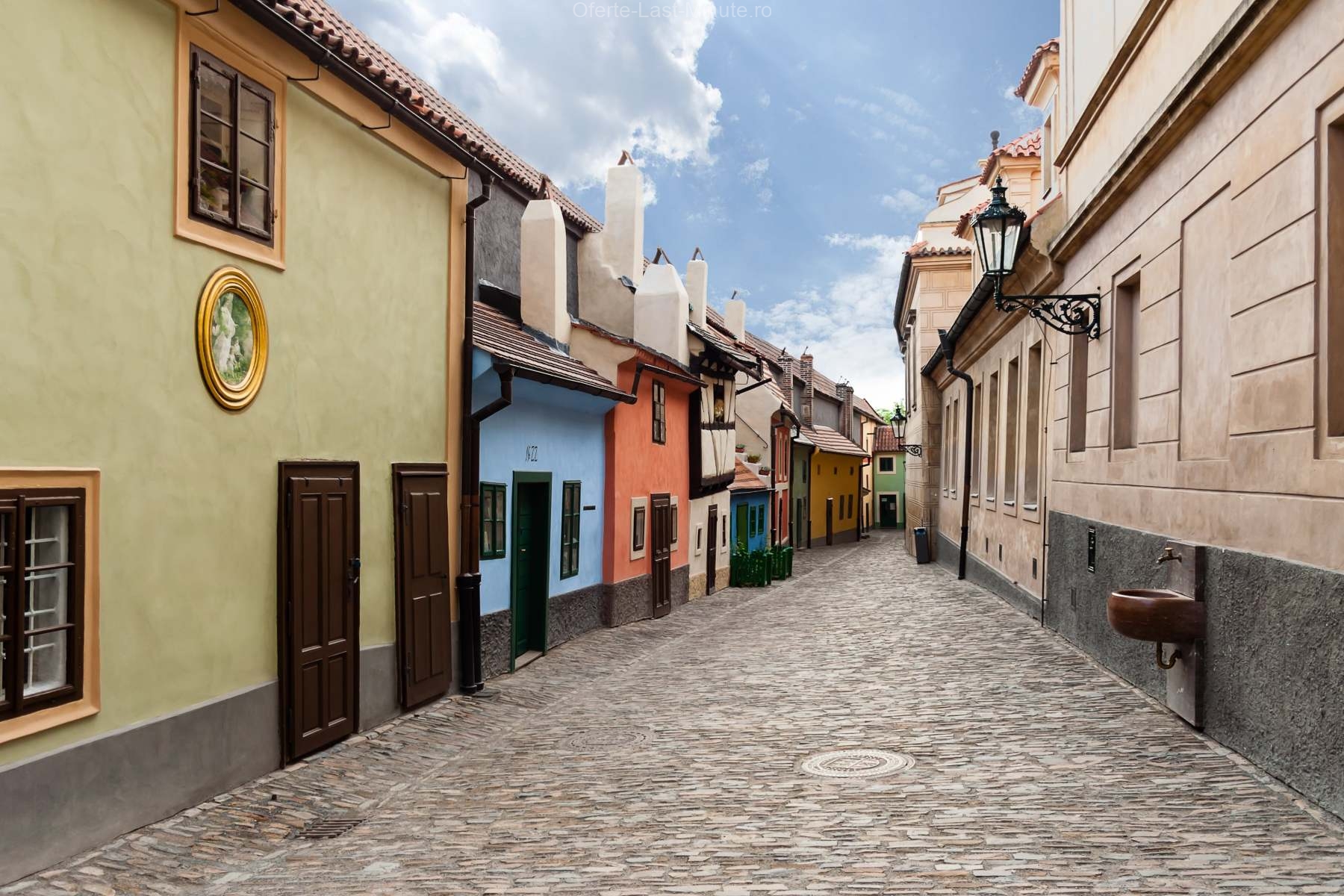 Prague Castle (Prazsky Hrad) represents the largest medi complex in Europe.Here are kept the jewels of the Bohemian crown and served as a office for the kings of Bohemia, the Holy Emperors, as well as the Presidents of Czechoslovakia and of the Czech Republic.The complex are part of the complex: Saint Vitus Cathedral, Golden Lane, Lobkowicz Palace and Saint George Church.On the Golden Lane or the Golden Street (Zlata Ulicka) there are eleven historical houses, built right inside the caste walls, where weapons, medi textiles and souvenirs are exposed.The writer Franz Kafka lived in these houses, as well as the Nobel laureate, the poet Jaroslaf Seifert.The price for an entrance ticket to the castle starts from 350 Czech crowns (CZK), the equivalent of 13 euros.

