
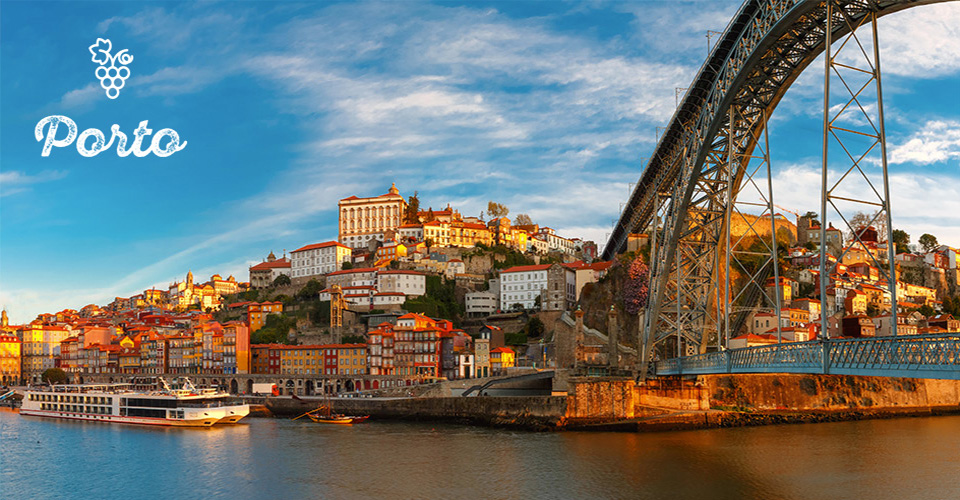
Porto, the second largest city in Portugal, is famous for the historical center inscribed in the UNESCO World Heritage, for the picturesque sunsets on the banks of the Douo River and, of course, for the wine bearing its name.
About
Best period
The best months for good weather in Porto are March, April, May, June, July, August, September, October and November
On average the hottest months are July, August and September
The coldest months are January, February and December
Tourist Attractions
 The Portuguese photo center will call on anyone who has an understanding of the photographic process.This active cultural unit is inside the walls of a former eighteenth-century prisons, Cadeia de Relação.The prison was closed in 1974, but the labyrinth of the cells, the various administrative offices and the inner courtyard have been carefully restored and now serve as unusual exposure spaces.The exhibitions tend to focus on contemporary and contemporary Portuguese photography, but a number of international photographers have seen their works on the cultural exchange initiatives.Interestingly, the photos created digitally and those taken by traditional analogical methods share a more or less equal platform, so that the purists and fans of new imaging technology will be just as excited.Most visitors, however, will be fixed on the collection of ancient cameras and photographic equipment hosted on the last floor.After thinking about countless ancient linchofs, classic Leicas and eternal Kodaks, taking a photo using the phone will look a little ridiculous.
 A vibrant and fun daily review can be obtained by walking the length of this wide double boulevard.Surrounded by shops, shops, boutiques, cafes and restaurants, both sides, "aliados" is the commercial hub of the city.At the foot of the artesians lies Praça da Libedade, but visitors can start to explore by throwing near Estação de São Bento, the central station in Porto, to look over 20,000 orbits by illustrating the early transport and the history of Portugal.A slow northern race will take you to the Municipal Camera, the City Hall of Porto, which incorporates the top of the boulevard.From here, do right along the Rua Formosa until you get to the covered Mercado do Bolhão.This market on two levels has been seen for better days, but it still emanates a living and funny character and is the best place in the city to buy fresh fruits and vegetables, meat, fish, household goods and handicrafts.If you are traveling with a budget, put on cheese and freshly baked bread and straighten on the opposite side of the boulevard to enjoy a picnic next to the river.
 Anyone who stays in Porto for a few days should check the cultural program offered in this fabulous international concert. The "Music House" is celebrated for both its radical design and the quality of fun it hosts.Dutch architect Rem Koolhaas gave birth to a convention when he was in charge of creating a building that would propel the city in the 21st century.He managed to enjoy a great recognition, and the best way to appreciate his triumph is to participate in one of the many concerts organized on the whitish and strange skin.All the musical tastes, from the classic and fado to the jazz and hip-hop are enjoyed.World class acts here include the delay of Lou Reed, which played the first evening in 2005. Another way to look at the interior is to climb to the last floor restaurant.In the Mediterranean menu, the influenced cuisine is a panorama inspired by the Boavista neighborhood occupied by Porto.But for an unclear, close and personal viewing, you take a guided tour.Otherwise, Amble here, in the dark, when the place is washed with Floodlight for a truly abstract perspective of this extraordinary structure.
 The Serralves Foundation, influenced, runs the Museum of Contemporary Art in Porto.Designed by the minimalist expert Álvaro Siza Vieira, the white-Christian building is itself a cultural draw, an example of subliminal ergonomic architecture, located in a green and meandering park, four kilometers west of the city center.The museum has avoided a permanent collection and, instead, aspires to provide different perspectives on contemporary art in various environments.All this contributes to an extraordinary and unpredictable experience of visitors, where, very often, you have your own mind for the meaning behind each piece and the intentions of the artist - in other words, this is modern art.Also established within the land is the art deco, the Casa de Serralves, where other exhibitions are held. The discounts, arguments and points of view can be changed in the cafe in the enclosure or in the more formal restaurant.The park is quite beautiful, an Eden arranged with an extraordinary biodiversity.A series of paths have a snake through the 18 hectares, wrapping spruce lawns, ornamented lakes and planted gardens before circulating through a shady and forested child.
 The Porto neighborhood, on the river bank, is an attractive maze of narrow and inclined streets;Zigzagging Alleyways;and arches with weak hunger.The Douro river faces, however, are terraces of urban houses painted in light mustard, tangerines and hard shades - Ribeira is an adventure in colors and aroma.A multitude of restaurants and cafes located under the arches along the key make this the most popular area in the city for relaxation and socialization.Praça da Ribeira, the square on the river bank, is a popular and lively meeting point and vibrates with a young and friendly atmosphere.This is also a busy commercial neighborhood, where the Bacanians eat their shoulders with butchers and caves.The studios of small shoes, peas, an equivalent with working clashes, and the rustic aroma of freshly ripe bread collides with Douro's salty salty smell.Above all, the locals share gossip from balconies or open windows, shouting inexorably over the washing lines that descend into the breeze.Ribeira is also about history, and the exploration of this fascinating neighborhood is to discover medi relics built on Roman foundations.UNESCO loves the place and has stated in the past that it is a world heritage site.
 Visitors are wrapped in gold when entering the beautiful church in St.Francis.The Baroque interior of the eighteenth century is hot with a golden veneer, so blind and exuberant, that I agree that this is one of the best examples of gold worked anywhere in the country.Indeed, this is an invaluable experience of the visit.The sculpture in the sculpture beautifies the high altar, the columns and pillars, with a single stone patch left visibly. Whispered smiling cherubis and monks with focused eyes as you head to the north wall and the Jesse tree from São Francisco, a family tree and a painted wood.An extraordinary and falsified artifact carved between 1718 and 1721, the tree prides itself on the tiny details seen in the expressions of Jesus, Maria and Joseph and other figures, including King David, Solomon and Jesse, who leave the viewers speechless.A tour of the ancient catacombs under the church helps visitors to return to Earth, but there are several treasures from the church monastery to see in the museum afterwards.
 The exterior placement of the 18th-century Carmo church in Porto is a blue and white burn (tiles), and the striking facade is one of the most instantly recognized in the city.The huge panel is a real founder, but the golden splendid sculptures that decorate the interior are just as attractive.In fact, the elegant golden work is one of the most beautiful examples of Rococo oranges.The neighboring Igreja Das Carmelitas is less an eye opening.Incredible, division is a house, built to comply with an ancient law that provided that no two churches would divide the same wall.Many believe that this is the narrowest private residence in the country, although it has been unoccupied for almost 30 years.A capricious anomaly, the abdomen with one meter wide makes an interesting snapshot squeezed, because it is between two granite monoliths.
 The remarkable period of conquest and exploration of Portugal, the age of discovery, is re-enacted with amazing effect at this interactive museum and theme park.The dangerous journeys of Portuguese navigators from the fifteenth century, sailing in fragile caravele fleets to show unknown waters and to mark new lands, are brought to amazing life through a series of detailed exhibitions and shielded animations.But the real adventure begins after climbing on a ship and traveled in countries discovered by Vasco da Gama, who in 1498 drew a maritime route from Portugal to India and Pedro Álvares Cabral, who arrived in Brazil in 1500.fascinating on the history and culture of various destinations colonized by Portuguese during this period.In fact, this is a wonderful experience of employee and educational and good fun for all ages.
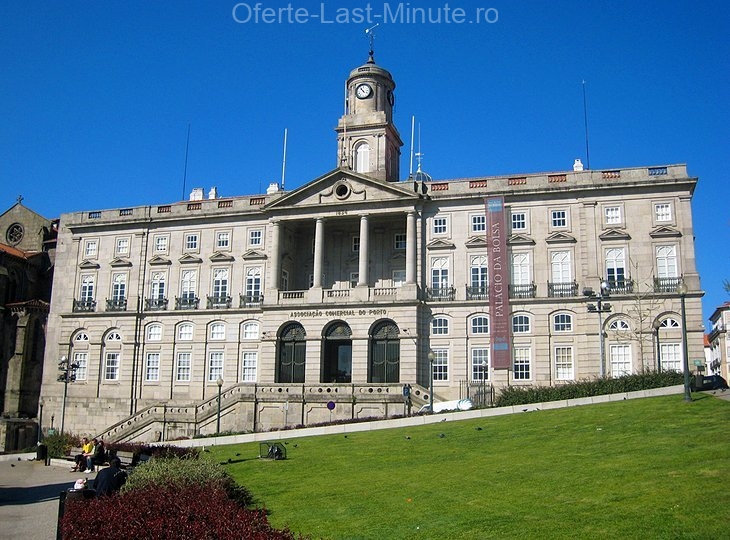 Dating from the middle of the nineteenth century, the former Porto stock exchange contains a richness of historical interest.Built on the site of a Franciscan monastery, its sumptuous interior is divided into several rooms and salons, each being unique in its appeal and worthy of careful examination.Pretend that you are a rich trader visiting the business as you walk through the portrait room with the gallery of uniform monarchs and then throw your eyes to the sky after entering the golden room to admire your golden ceiling.You will be ready to meet with the head in the president's room, generously furnished, before joining some traders in the hearing room of richly decorated judges, to witness the mercantile law, who have been implemented in a timely manner.You may want to show you in the awarded jury's awarded room before gathering in the magnificent hall of nations to mix with the big and good.But you will want to leave the best for the last, hiding in the amazing Arab Hall, inspired by Alhambra from Granada, and the only place that really sells a Bolsh tour.In fact, the building is the headquarters of the Chamber of Commerce in Porto, and its members still gather in the classical Chamber of the General Assembly.
 One of the more unusual things to do in Porto - and certainly a radical deviation from the traditional options for visiting the tourist attractions - is the chance to climb the Arrábida Bridge, downstream from the most familiar Ponte Dom Luis 1. Porto Climb leads guided trips of this iconic structure, with a safety, withcomfortable.Following a narrow and cable connected pedestrian staircase to a parallel parallel hand, visitors slowly bathe the deer arches to reach the upper part of the Span, 65 meters above the Douro river.The panoramic views of the city and the mouth of the river are truly memorable.Downing down the steps of 262, the size and elegance of this wonderful 19th century engineering, inaugurated in 1963 and is currently the only connection point in Europe that can be accessed in this way.
 The Grandios Dom Luis I is one of the most iconic structures in Portugal.Together with the Douro river, with which Porto Nova de Gaia can be connected on the southern shore, the majestic appearance of the bridge and the appearance on two levels represents a mandatory component in the proud social structure of the city.Gustave Eiffel wrote everywhere, and he was indeed an assistant to the great French engineer who built the bridge in 1886. The commanders use the daily Zalog-a road, Avenida da RepuBlica, runs along the lower bridge, while the upper part allows a subway railway.Pedestrians can walk on narrow sidewalks that are on one side of the road or can be really brave and can cross the structure with the 60 -meter -high crossing path.An extraordinary view of the bridge can be obtained from the Mosteiro Da Serra Do Pilar terrace, on the southern shore.From here, the whole city forms a fabulous background, and the panorama is particularly dramatic at dusk.Don't forget the tripod!
 The historical center of the city of Porto and the river can be admired from a vintage tram during trips that take a series of emblematic attractions and cultural landmarks.Three different lines serve the destination, all offering a different perspective on the second city of Portugal.Line 1 begins almost Ponte Dom Luis 1. Start from here on "Riverside Line " to cross the west to the coastal city of Foz Doo, located at the Gura Râul Douo and known for close beaches and bays.This trip in love is a favorite option during the summer when you want to get rid of the heat of the city.Line 18 is a restored track, a circular part in design and the shortest walk.The route passes Igreja Dermo and ends, properly, at Museu Do Carro Electrico, the tram museum.Obviously, the most satisfying circuit regarding the visit of the tourist attractions and the attractions is the Line 22. On this route, the tram trembles and the past Torre dos Clérigos, Igreja Dermo, and Café Majestic, among other showstoppers.
 Visiting the tourist objectives in Porto should always include the exploration of the city's cathedral.In fact, the bright panorama on the terrace on the streets of the old city and in the sleep of the Douro river is a large curtain wagon and receives the senses for what follows.An imposing landmark of the twelfth century, the cathedral has the appearance of a fortress, such as the forbidden appearance of its towers and the shadows of the facade.The renewal characteristics include a beautiful XIII rose window, located in the west, and the quiet baroque monasteries with light blue Dale.It follows a little to absorb the medi environment and the quiet location.From here, an eighteenth-century granite staircase connects with the capital, which is wrapped in a more pleasant work for faience.Another remarkable attraction is the magnificent silver revealing in the small chapel to the left of the cottage.Finish your tour by moving over the ornamental gold and silver treasure of the cathedral held in the treasury.
 The Clérigos Tower, which rises, marks the horizon of Porto as a monumental needle.This is the most visible landmark of the city, a 75-meter high rocket, from the eighteenth century and visiting this historical structure should be raised on the "things to do".You will need a pair of feet to climb the 240 steps to the top of the tower, but the effort will be rewarded with an amazing panorama on the river, the coastline and the Douo Valley far-a view of the birds from the second largest city in Portugal, and an inspiring way for the first age.Commanded by the clergy (Clérigos) Brotherhood and designed by Nicolau Nasoni, born in Italy, the Baroque tower completes the adjacent Igreja Dos Clérigos, which is also the work of Nasoni.Built between 1732 and 1750, the church itself is a wonderful example of the architect's affinity with the Baroque and presents an elliptical planet, one of the first churches in Portugal built in this way.But the tower remains the climax, and day or night, its conical profile is a visible historical sign from most parts of the city.
 With a long and wide promenade and appearance of the river, Vila Nova de Gaia is an irresistible deviation.Easily you reach the foot by passing the Ponte de Luis I train, the key to the arranged city is surrounded by a long line of restaurants and elegant cafes.It is also the starting point for numerous Dour River cruise boats.Adding a wonderful nostalgic perspective is the traditional rabish Barcos fleet with the esplanade.These graceful navigation ships were used once to cross the barrels down from the Douo ports, and the Ribeira district of Porto, offering an adequate romantic frame, were adjusted with an urban atmosphere, a sheet reminiscent of the eighteenth century.For a truly dramatic perspective, take a walk on Teleférico de Gaia, or with cable car.This new attraction of visiting the tourist objectives takes place along the Gaia river and connects the upper station, near Mosteiro da Serra Do Pilar, with the eastern end of the esplanade.

