
Pisa was an important Roman port, but the Arno river blackened, leaving it 10 kilometers inwards.In 1063, the Marina of Pisa played an essential role in defeating the Saracens in Messina and Palermo, starting the Pisa ascension to control the Mediterranean navigation
About
Best period
The best months for good weather in Pisa are April, May, June, July, August, September and October
On average the hottest months are July and August
January is the coldest month of the year
Tourist Attractions
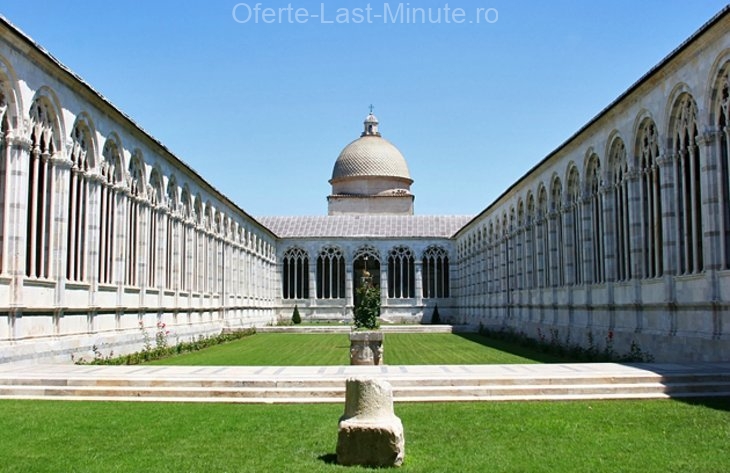 According to the local legend, Archbishop Ubaldo Dei Lanfranchi returned from the fourth crusade with several ships on Golgotha, so that the citizens of Pisa can be buried in the sacred soil.Camposanto's construction (sacred field) to keep it started in 1278, a large rectangular monastery, whose arches gallery, decorated with the Gothic Gothic, opens in the yard.On the floor of the monastery are the tombs of the Patricians Pisan, and around the sarcophages.The walls were covered with frescoes from the 14th and 15th centuries, but a fire caused by the 1944 artillery bombings melted the lead roof, destroying or destroying the frescoes.The advance of this tragic loss was the discovery of the original sketches of artists in red pigment on the walls below.These synhesia were the most important contribution of the artist to a fresco, specifying every detail of a composition;The current fresco painting has often been left to students and assistants.These synhesia are now presented, with reproductions of the appropriate frescoes, in Museo delle Sinópie.These frescoes that were saved were restored long ago and returned to the monastery.
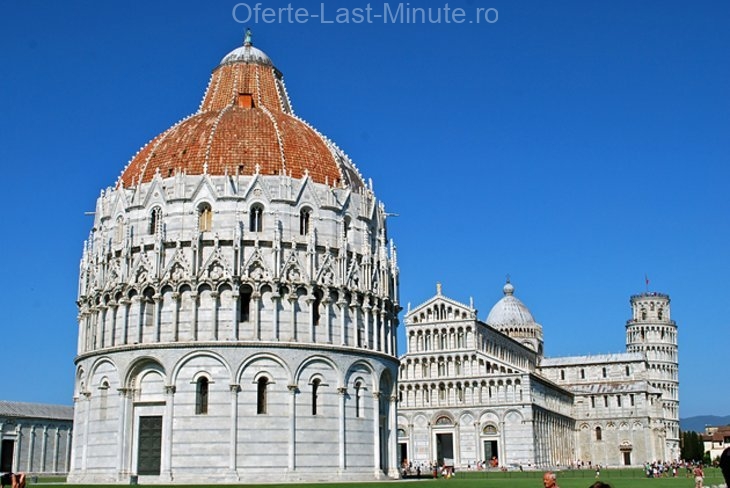 To the west of the cathedral, the free Baptiser was started in 1153, almost a hundred years after the cathedral, but still in the big days of the city of Pisa.It realizes the design of the cathedral using the same building material, modeled with different stone colors, and blind galleries and dwarves.But, as the works continued over two centuries, it began to show the transition from Romance to Gothic between the lower and upper levels.In 1260, Nicola Pisano took responsibility for the project, followed (1285-93) by his son Giovanni.The conical dome is on four pillars and eight columns, creating a light and solemn effect.It is decorated with relief panels that illustrate scenes from the New Testament with high artistic intensity.Also make sure that Guido Da Como (1246) and the figures of the saints by Nicola and Giovanni Pisano.The baptism is also remarkable for its gorgeous acoustics, which the guides usually make a demonstration point.
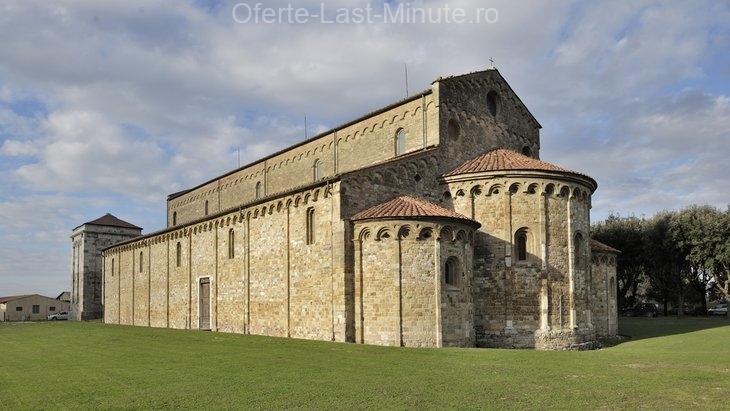 Far from the center of Pisa, on the way to its port of Marin, is the 10th century basilica, built in the old port of Pisa, in the place where it is believed that St. Peter landed in Italy in 44 AD.The site is good in today's waters, but 2000 years ago, the Mediterranean has expanded so far.The church has been built and modified over two centuries, and its interior is lined with frescoes, the colors are still vibrant.Behind the church, the excavations reveal the foundations of an anterior Paleo-Christian Church and even earlier Roman buildings.
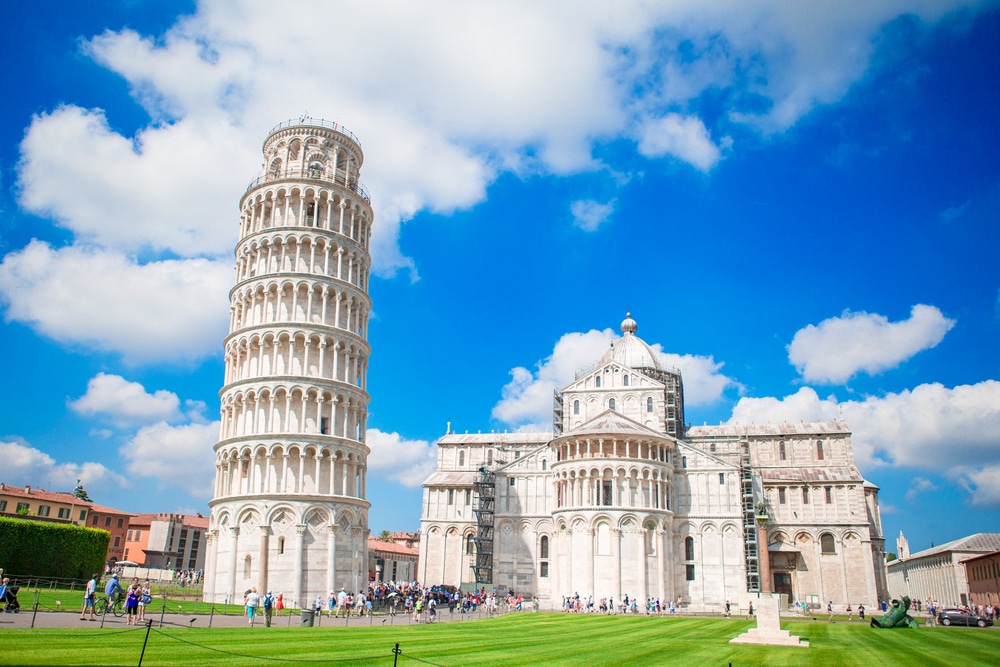
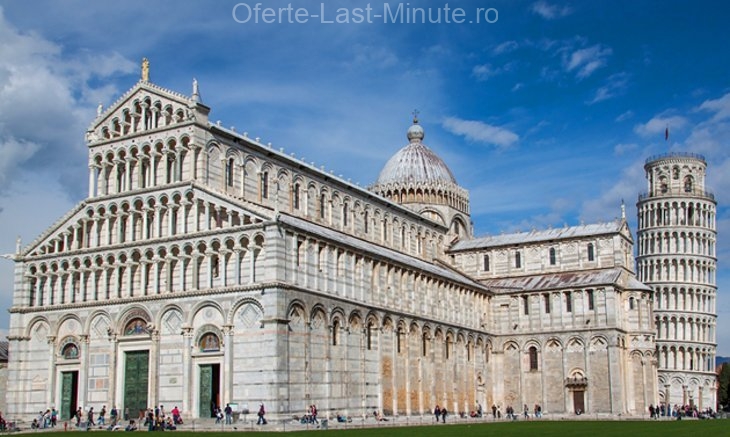 The definitive example of the Pisan architectural style, Santa Maria Assunta Cathedral is a Roman white marble basil, built by five burns, designed by the architect Pisan Buscheto.Started in 1063, after Pisa's naval victory over the Saracens, it was devoted (still unfinished) in 1118, and towards the end of this century a new western front was added, and the main apse was completed.The arcadia decorated on the splendid facade is continued around the side walls, and its tranches end in small apses, which exceed the aisle.Dominating the whole interior is a well -proportioned oval cup.In the apse is a mosaic of Christ between the 13th and 14th century, crowned between the Virgin and John the Evangelist, by Cimabue.Do not miss the bronze gates in Porta di San Ranieri, with scenes from the life of the Virgin and Christ.It was created between 1302 and 1311, and Giovanni Pisano's vigorous style and rounded shapes mark a deviation from the severe style of his father Nicola, whose more angular magnitude can be seen in Baptisteriu.The pulpit is supported on columns (the shortest on the lions) and the figures of the Archangel Michael, Hercules and Christ, with the four evangelists around the base.The relief panels around the pulpit show scenes from the New Testament.
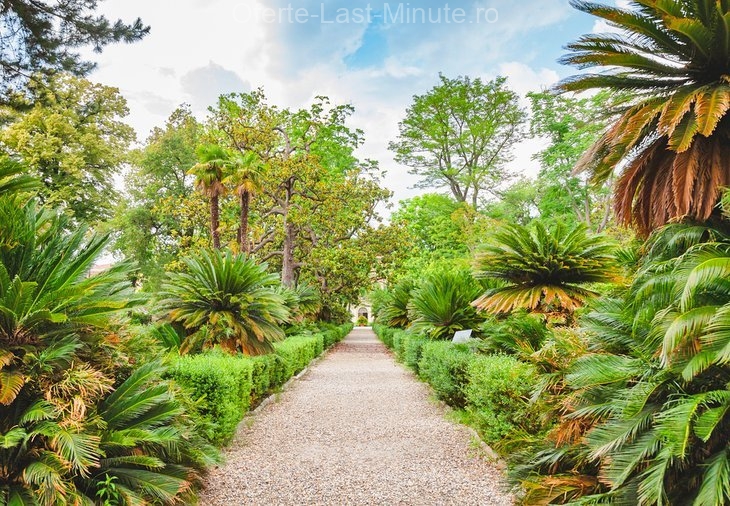 Also known as Orthotico dell 'Università di Pisa, the Botanical Garden in Pisa was the first university botanical garden in Europe, founded by Cosimo I by' doctors in the mid -1500s. You can explore various environments and collections, both outdoors and in several buildings, to find gardens, a gardens,One of these is the first greenhouse with iron frame in Europe.After the almost overwhelming abundance of Renaissance art works in Pisa, this is a pleasant and restful place to visit in the middle of the city.
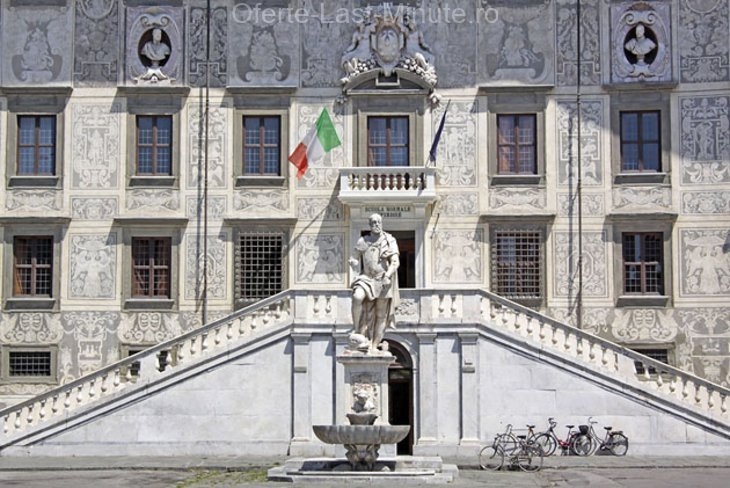 This palace in Piazza dei Cavalieri was initially Palazzo Degli Anziani (the Elder Palace).In 1562, the architect Giorgio Vasari began to rebuild and extend, creating the magnificent Palazzo dei Cavalieri, named after the training courses for knights (cavaliers) in the order of St. Stephen, who were held here.The most imposing and most adorned building outside the Piazza Dei Miracoli building, its facade is decorated with Sgrafito ornament, Blazes and busts of six Grand Duke doctors, from Cosimo I to Cosimo III.Majesty is improved by the designed roof and the beautiful double scale leading to the entrance. From 1810, the palace hosted the Normal Superiore Scuola, an elite college of higher education founded by Napoleon.In front of the building is a statue of Cosimo I by Piero Francavilla.In the northern part of the market is Palazzo dell 'orológio, built in 1607 for the order of St. Stephen and incorporating the remains of two old medi houses.
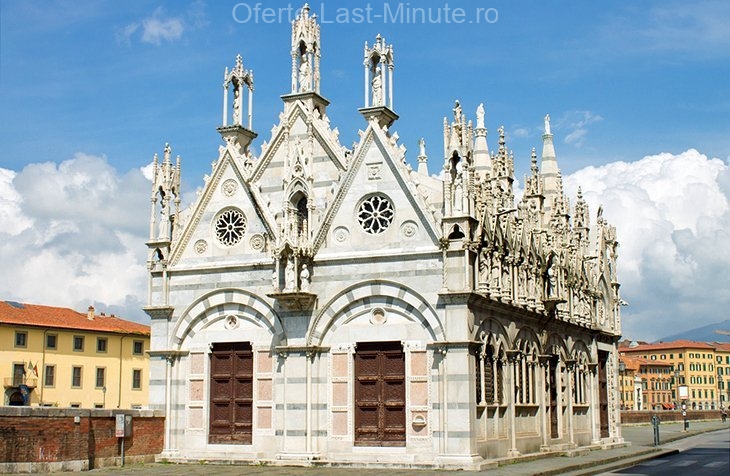 The Church of Santa Maria della Spina, on the left bank of Arno, is probably the best known of the smaller churches in Pisa and, of course, one of the most beautiful churches in Pisa.Initially, a small oratorical session right on the river, suffered serious damage to the foundation, and in 1871 was drawn by stone and was rebuilt above.The rich gothic richness owes its name in the possession of a spina (spina) in the crown of thorns of Christ, brought to the Holy Country.The western front has two distinct doors and three gables, each with a small rose window.In the southern part of the church, a series of arches surround the doors and windows and, above, a niche with figures of Christ and the apostles.The building is crowned by tabernacles containing statues, some of them now being replaced with children and the originals displayed in the National Museum.The original Madonna del Latte version is also in the museum;The one inside the church is a reply.
 The church of Santo Stéfano, as well as the palaces around Piazza dei Cavalieri, was designed by vasari.It was initially built in 1565-69, and in 1594-1606 a marble facade, designed by Giovanni by 'Médici, was added.The two lateral wings of the seventeenth century were in shifts for the knights of St. Stephen, who wore their ceremonial costume.These rooms were later incorporated into the church as corridors, but because they are related to the nave only with two doors on each side, the first impression inside is a church without interruptions.In the panels of the stroller ceiling there are paintings that present the history of St. Stephen's order, whose role was to defend the city against enemy raids.On the walls there are trophies and enemy flags, reminiscent of the Turkish wars of Pisa.Make sure you see the high altar decorated rich (1709), with the throne of the martyr Pope Stefan I (254-257) and the Baroque organ.
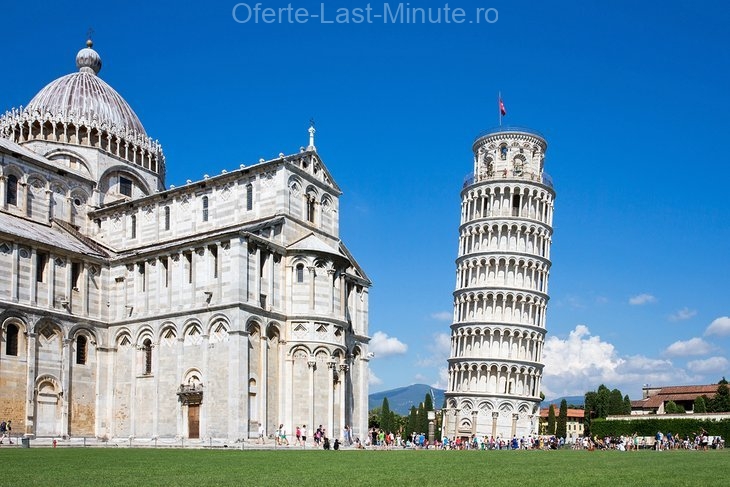 Each child has heard of her and every visitor from Pisa probably goes to what is undoubtedly the most famous tower in the world: in pendent torre, the inclined campaigns standing near the cathedral.The foundation stone was laid in 1173, when Pisa was the strongest maritime republic of Italy, and the loggia type levels were modeled after the Cathedral facade.Even before the end of the third story, the tower had begun to sink alarmingly on the southern side.When the northern part counterweight and easily increase the height of the southern walls proved to be inefficient, the construction was stopped.About 100 years later, the works were resumed, trying to counteract the inclination, making the upper to vertical stories.The open bell camera was added to the White Marble Tower in 1350-72, by Tommaso Pisano.Detected, increased risk, the tower was closed in 1990 to allow an expensive restoration program.When the tower was reopened in 2001, the 5.5 degree inclination was modified to about 3.99 degrees, leaving the upper part outside the line by 3.9 meters.You will also notice a slight curve in the tower, which results from the attempts of the different architects to correct the inclination during the construction.

