
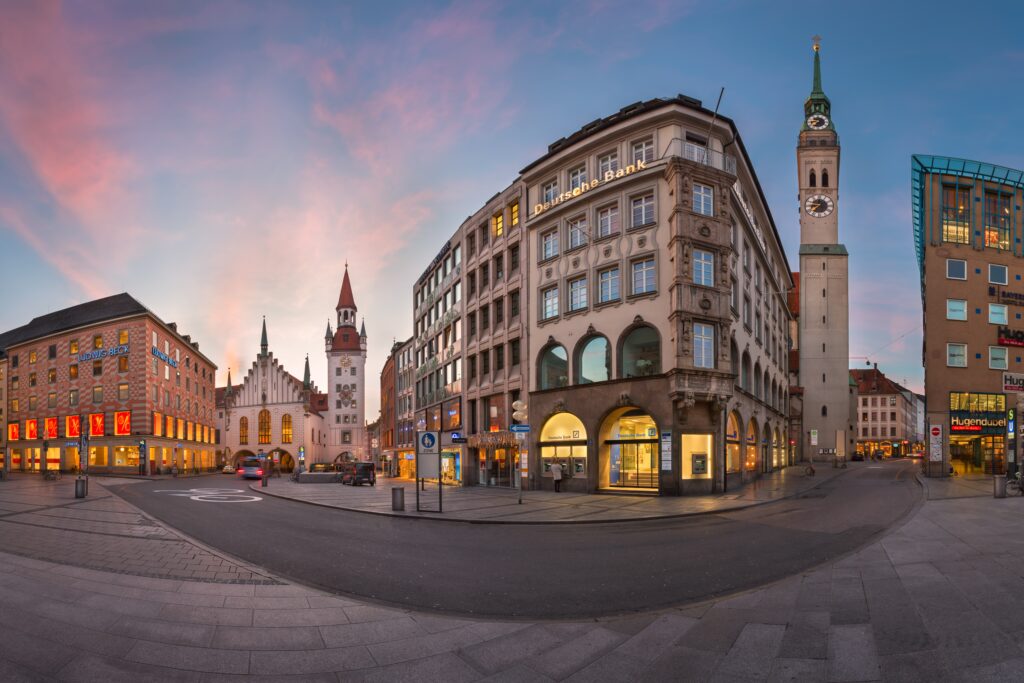
Munich, the capital of Bavaria and the third largest city in Germany, is on the Isar River, on the edge of the Bavarian Alps.It started as a monastery, becoming a settlement when the Duke of Bavaria allowed the monks to set up a market at the crossing of Salzburg and River.
About
Best period
The best months for good weather in Munich are more, July, August and September
On average the hottest months are June, July and August
January is the coldest month of the year
Tourist Attractions
 The theater church of St. Cajetan (Theatinerkirche St. Kajetan), a basilica built in the style of the Italian high baroque, was completed in 1690, with an amazing facade, twin towers, a massive 71 -meter high and richly decorated interior.The external attraction points include numerous marble statues of the saints and the lantern with a lion palette above the dome.Other inner attractions include the great altar, with the image of the Virgin with angels from 1646 by Crayer Caspar (a student of Rubens) and the altar of the Virgin, with a painting of the Holy King of 1676. In the Ducal Seif of Funeral, you will see the graves of the members of the Witelsbach House, for a long time.
 The Deutsches Museum is the largest technology museum in the world, and its 17,000 artifacts illustrate exhibits ranging from polished wood and brass of early astronomical tools to the latest science on global warming.The museum is a constant journey in time between early technology and high technology, as you follow the development of each scientific and technical discipline from its beginning to the present.You can see a replica of the Biplan of the Red Baron in the First World War, you can examine almost a Venetian gondola and look inside a 19th-century wooden fishing boat.Something is always happening, from dramatic demonstrations to concerts that show how musical instruments work.It is the most popular museum in Germany and a favorite place to visit for families.
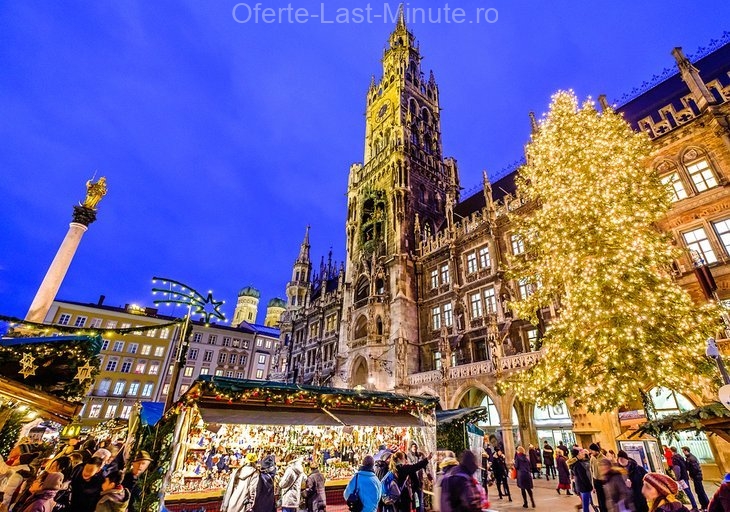 From the last week from November to December 24, the parks and markets in Munich turns into a colorful, bright Christmas extravagance, with colorful lights, forever green branches and holiday music.The colorful hearts of sweet frozen cake decorate small booths filled with candy, cakes, wooden toys, fir ornaments and holiday bouquets, as well as locally handicrafts in all environments.Two streets away, at Rindermarkt, the market is full of figures and accessories for nursery scenes.The miniature shepherds, the wisdom, the angels, the animals and the holy family are in all the imaginable means: delicate sculptures in alpine in oberammergau nearby, ceramics, ceramics of terracotta, wax and plastic.attraction.Not far away, a whole market turns into a medi market, where the craftsmen and crafts dressed in the Middle Ages demonstrate and sell authentic vintage goods.
 The beautiful Rococo Asam church, dedicated to Saint John of Nepomuk, was completed in 1746 by the brothers Cosmas and Egid Asam and is richly decorated with stucco figures, frescoes and oil paintings.Although its exterior is impressive enough, especially the large flanked door of massive columns and crowned by a figure of Saint John kneeled in prayer, the interior is the most memorable.On the cornice designed under the ceiling is a fresco magnificent depicting the life of Saint John.However, the most notable characteristic of the interior is the large altar, closed by four twisted columns and on which is a glass altar containing a wax figure of the Holy Patron of the Church.
 The huge fraud brick in Munich - the Church of the Cathedral of the Virgin - was completed in 1488, a late Gothic church that owes its large dimensions.100 -meter high massive twin towers, with characteristic Renaissance domes, rise over a 109 -meter high building on 40 meters wide.and the Baroque red marble font of Baptister with the painful Christ from the beginning of the fourteenth century.So excited was that the windows seemed to be forgotten (the column string hides them when the church is viewed from the entrance), stamped its foot, leaving the mark that can be seen today.You can climb to the top to admire the city's views to the Bavarian Alps.
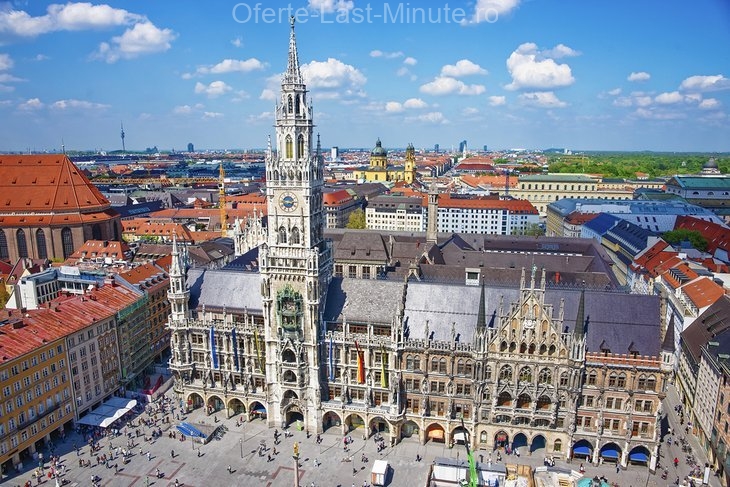 Marienplatz has been the central market in Munich since the establishment of the city;the website of medi tournaments of Joste;and until 1807, where markets were held.In addition to the Massif Neues Rathaus (the new City Hall) that fills a whole part of the market, you will find Along Rathaus (the old town hall) forming a gateway at the distant end.anterior from the 19th century.Popular among buyers for its shops, boutiques and restaurants, Marienplatz is the central point of festivals and the scene of a large Christmas market, one of several in the city.During the fasching carnival, Narren-Lindwurm (Dragon) dances over the market.It is one of the most beloved traditions of the city and something you do not have to miss.Allow some time to appreciate the complicated stone works on the neo-Gothic facade.The tourist information center is in Rathaus, and in the back of the building is a restaurant that serves traditional Bavarian dishes.
 For centuries, the headquarters of the Dukes, voters and kings of Bavaria, Munich Residenz is one of the most spectacular palaces in Europe.Located around seven large courts, the vast complex Residenz comprises three main sections: Königsbau, oriented towards Max-Joseph-Platz;Other Residenz, which Residenzstrasse is facing;And Festsaalbau (the banquet room), overlooking Hofgarten. In the oldest section of this huge complex was the magnificent Antiquarium, built in 1579 and now part of the remarkable Residenz Museum.Other Residenz, a masterpiece of the late Renaissance and testimony of the increasing power of Bavaria, followed shortly, and the final components - Königsbau neoclassic, festsaalbau and the Church of the Court - were completed in 1848.Saints (Allerheiligen-Hofkirche) and Cuvilliés-Theatre.Make sure you explore the land of the palace, with its many wonderful old courts -including the beautiful garden of the Court -as well as numerous wells, ponds and gardens.
 Königsplatz was arranged in a neoclassical style in 1862, and in the art neighborhood around it you will find one of the best groups of art museums from anywhere in Europe.First of all, they are the three Pinakothek art galleries: Old Picture Gallery (other Pinakothek), with its fine collections of Dutch paintings, Flemish, Italian, French, German, Spanish and medi;New Pinacoteca (Neue Pinakothek), with its art display ranging from Rococo to Art Nouveau;and the State Gallery of Modern Art (Pinakothek der Modern), which includes Picasso and Warhol works. In tall notable museums are Glyptothek and the State Antiques Collection (Statliche Antikensmlung), with their large compilations of ancient sculptures and antiquities.Lenbachhaus, an Italian villa that was the house and studio of artist Franz von Lenbach.The villa and its new extension host the most important collection in the world of Blue Rider movement, a group of expressions painters led by Vasili Kandinsky and Franz Marc.
 Near the headquarters and BMW factories in the Olympic Park there is a modern round building, with a metal housing, which houses the BMW Museum.Here, the fans of the car will find examples of almost all the models the company has made, including sports cars, racing models and motorcycles.Those who believe that cars are just to move from point A to point B might want to give up, but for fans of car things, it is a necessity.
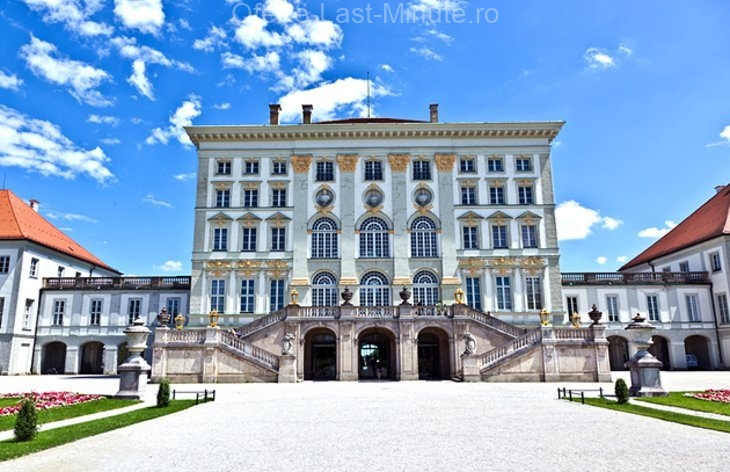 The Great Baroque Palace in Nymphenburg, in the northwestern periphery of the city, was initially the summer residence of Wittelsbach voters in the seventeenth century.Extending more than 600 meters from the wing to the wing, this vast palace is surrounded by each side by the Nymphenburg channel, which separates as it passes around the main buildings before meeting again in a pool adorned with wells in front of the main facade.1674 and hosting the three -storey stone room (Steinerner Saal) and a series of private rooms with fine furniture and art work.In the chapel of the palace, observe the expressive painting in the ceiling that illustrate the life of Maria Magdalena.Near the palace in the former stables of the court, Marstallmuseum presents a collection of beautiful state coaches.Otherwise, there is a labyrinth with Heckentheater (Hedge Theater);marble statues of the Greek gods;a large fountain;And a number of greenhouses, including Palm House, which has the first hot water heating system in Germany.
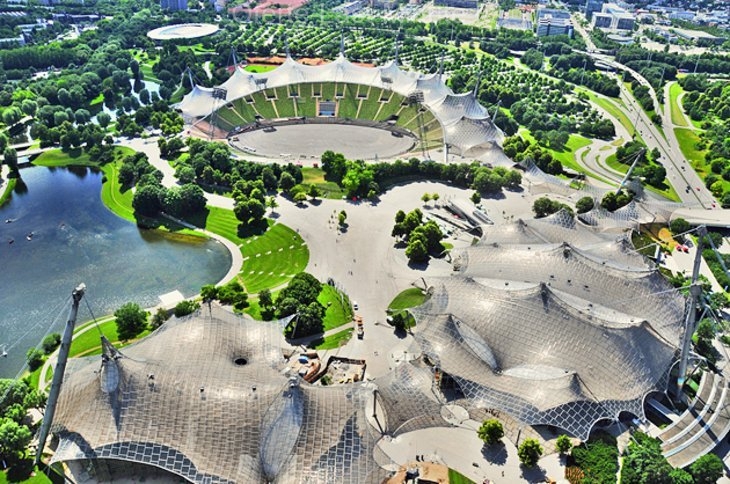 At home at the 1972 Summer Olympics, the spectacular Munich Olympic Park covers an area of about 2.7 million square meters on Oberwiesenfeld, a former training ground for the Bavarian Royal Army.Now an important recreation center, this huge installation hosts a variety of major concerts and events, including the Tollwood Summer Festival (Tollwood winter is held at Theresienhöhe, Oktoberfest).the splendid architecture and design of the facility.The Olympic Tower, a 290 -meter tower of television built in 1968, which was renamed in honor of games, viewing platforms in Aussichtskorb views offering impressive on the city.
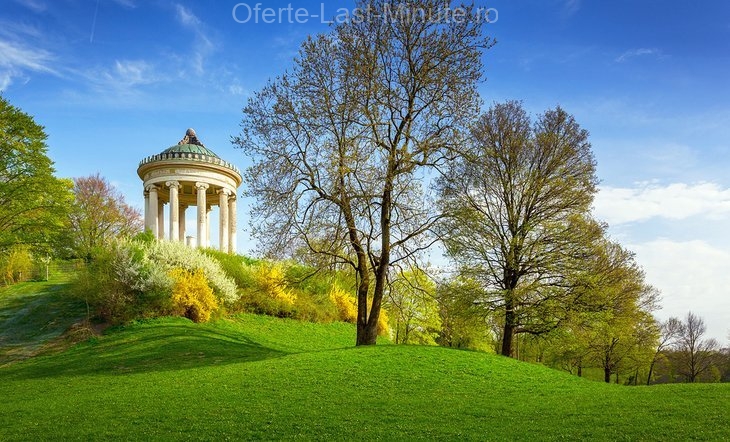 The Munich English garden is not just the largest park in Germany - it covers an area of 910 sour - it is also one of the most beautiful.Naturally arranged trees and plants offer constantly changing views, and nine kilometers of snake streams and an artificial lake complete the impression of a natural landscape.It is also a pleasant place for the beach and picnic and you can stop for a snack or a drink at the Chinese Chinese (the Chinese Tower), a 25 -meter high pagoda.The Bavarian National Museum, with its fine collection of sculptures and medi German tapestries, and the Bavarian state archaeological collection, which presents local prehistoric artifacts.The crowds gather to follow the surfer's stunts;Except for experienced surfers, it is a sport of spectators and not for beginners.
 On the east side of the Residenz hotel in Munich, the Cuvilliés Theater was built in 1755 and is the best example of Rococo theater with levels in Germany.The magnificent carved wood work of the auditor, with the four levels of boxes, including one built specially for voters, was securely stored during World War II, thus allowing its reconstruction in 1958.To Mozart, who premiered here in 1781 and who, along with many other works during the late Baroque period, is still occasionally interpreted..You can visit the theater separately or on a ticket combined with Residenz and its museums.
 In 1807, when the farmers market exceeded Marienplatz, it was moved to the nearby market, where it has prospered and expanded, to this day it covers 22,000 square meters and includes a slaughter hall, a bakery, a fish room and a flower market, besides the sellers of fruits and vegetables.Bread and fresh pastry products, cheese wheels and sausages are good for picnic, and tables and banks offer a place to buyers and visitors to stay while eating hot sausages, hot donuts and other foods prepared in mobile kitchens.trades that were practiced in this part of the city.
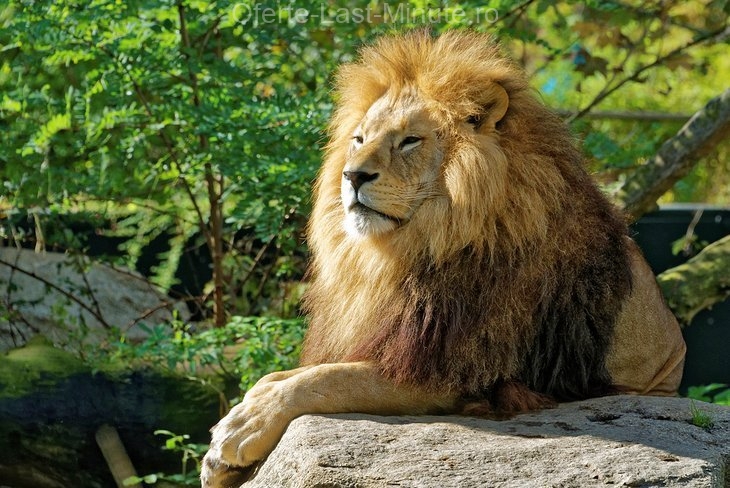 Spread on 89 acres, the Hellabrunn zoo is constantly among the best zoos in Europe.Located in 1911, it was the first zoo in the world that grouped animals according to where they come from.cataloged), the huge 5,000 square meters of free flight, polarium and monkeys' houses.Located adjacent to the Isar River in a designated conservation area, the zoo has many delightful paths, playgrounds and picnic places.

