
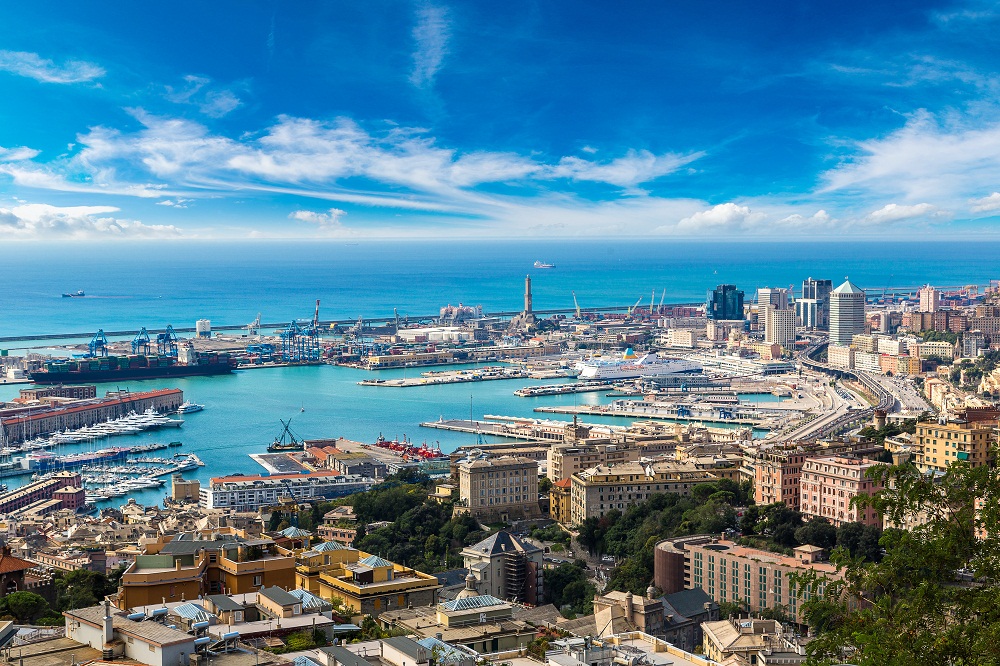
Today, Genoa (Genóva in Italian) is the main port of Italy, with a long history of maritime power that began when it defeated Pisa rival in the tenth century.The riches that spilled the city in the 16th and seventeenth centuries are still in the marble palaces that have won the nickname.
About
Best period
The best months for good weather in Genoa are April, May, June, July, August, September and October
On average the hottest months are July and August
January is the coldest month of the year
November is the rainy month
The best months for swimming are June, July, August and September
Tourist Attractions
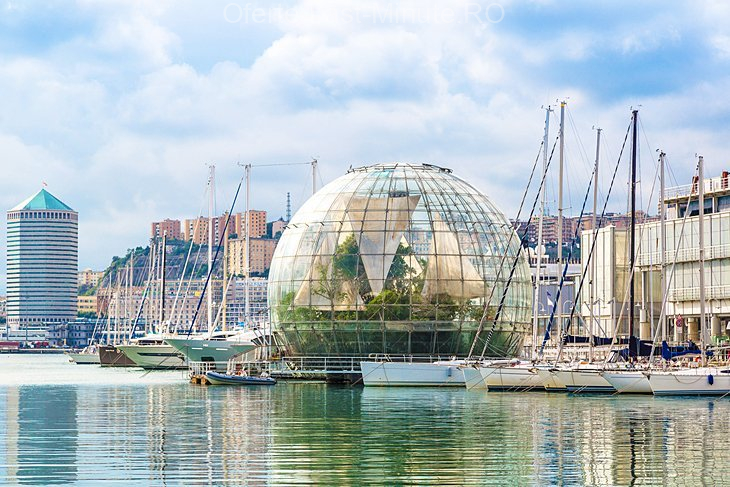 The largest aquarium in Italy and one of the largest in Europe, Genova is part of a massive "edutainment" center on the water's edge, which could take several days to fully explore.Built in 1992 to celebrate the 500th anniversary of the journey of the native son Cristofor Columbus, the aquarium learns about marine animals of all kinds, presenting them in largely natural environments.In the garden there are exhibits that talk about these fragile and endangered ecosystems.
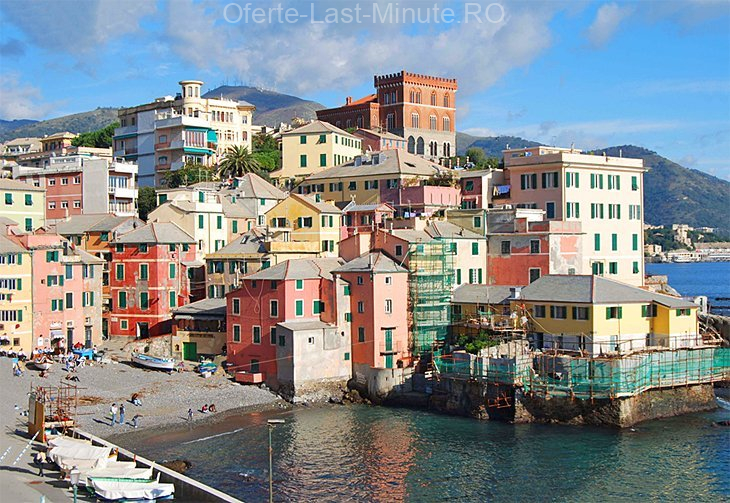 There are no real beaches in Genoa, but its location on the Mediterranean is between two major beach regions of the Italian Riviera.You will find a small beach in Boccadasse, a village of old and picturesque fishermen, which is now a neighborhood of Genovai.There are a lot of restaurants from whose terraces you can enjoy the view but are crowded on the weekends when the weather is good
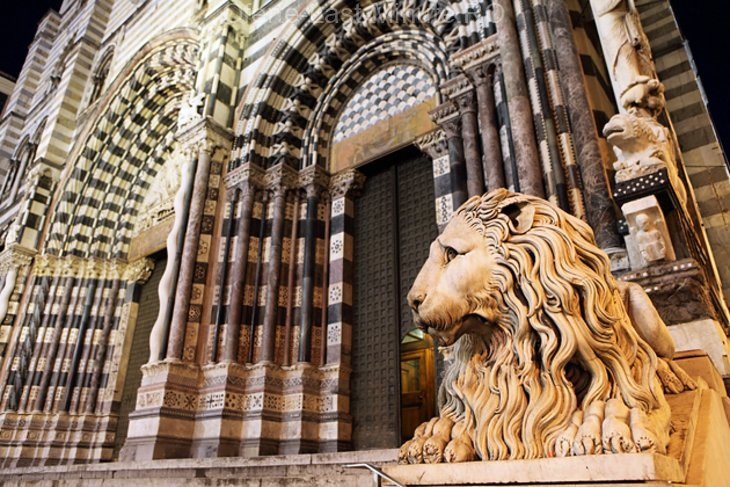 From Piazza Matteotti, crowded via San Lorenzo goes northwest to the port.You cannot miss the dramatic Cathedral San Lorenzo, initially built as a Romanesque basilic in the 1100s, remodeled in Gothic style in 1307 and completed with a Renaissance Dom in 1557. In the interior there are several pieces of architectural history: Cappella San Giovanni Battista from the 15th century is the latest century.Genoa, built to keep the remains of St. John the Baptist.The ashes of the saint, the plateau that is said to have presented Salomee's head and a bowl considered for a long time to be the Holy Grail are all in Tesoro della Cattedrale (Trezoreria) below.
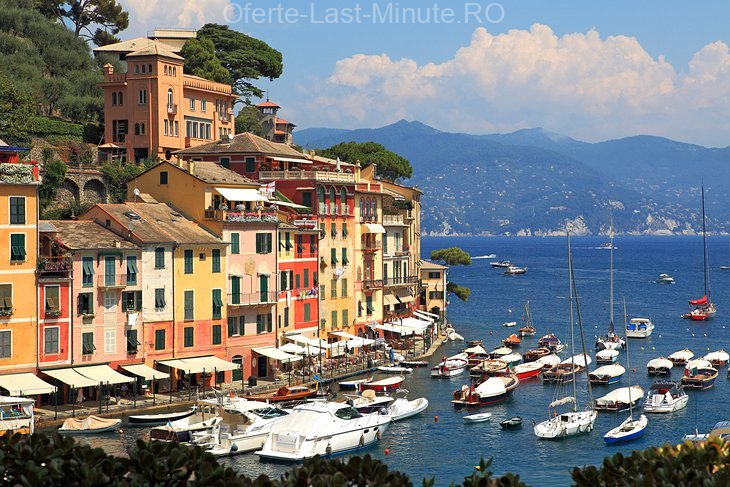 The perfect Portofino postcard village, a circle of buildings of the candy -colored buildings around a port full of elegant yachts (and a few colorful fishing boats), is probably the most photographed in Italy.It is also a favorite of the rich, the glitter and the observers of the celebrities who follow them.Once you get here, you can pay a revolting price for a coffee in one of its cafes, you can visit little Castello Brown on top on its rock or you can hike along the steep shore to the wonderful San Frutuoso Monastery in Capodimonte for amazing views.
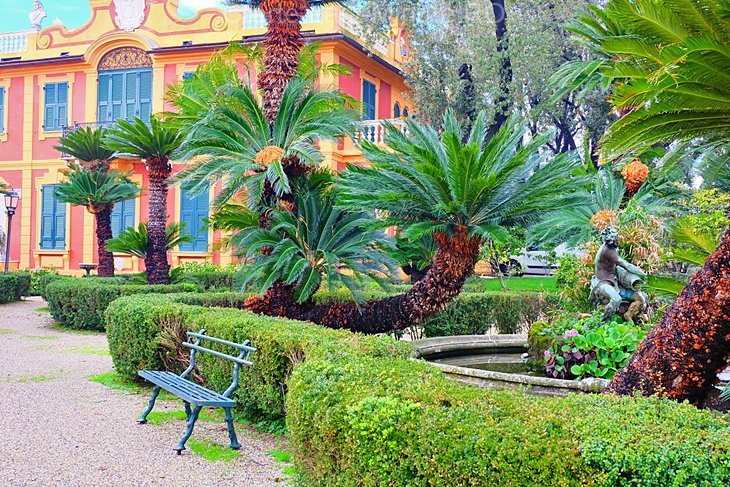 After the crowded streets and the port of Genoa, the small city resort on the coast Santa Margherita Ligure will seem even quieter than it is, with its promenade back over time and its old hotels for a century.Durazzo.This pink confection of a villa was built in the seventeenth century, and its land is now a public park with palm trees, wells and statues.Santuario di Nostra Signora della Rosa is a baroque church, decorated with frescoes and sculptures adorned with gold.From here you can take a ferry to Portofino
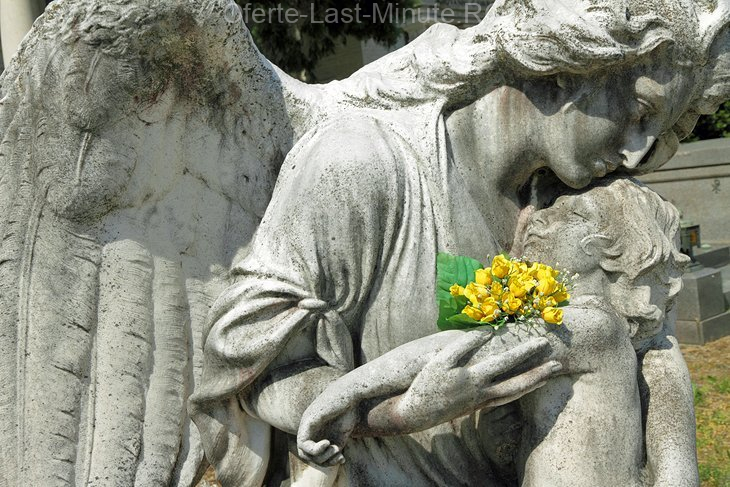 One of the most unusual things to see in Genoa is the beautiful Campo Santo or Cimitero di Staglieno, among the most famous cemetery in Italy.Little to the north along the Bisago Valley, it is accessible by car or bus in the city.At the top, in Boschetto Dei Mille, is the tomb of Giuseppe Mazzini, hero of Italy's independence and originally from Genoa. N nadresa: Piazzale Resasco, Genoa
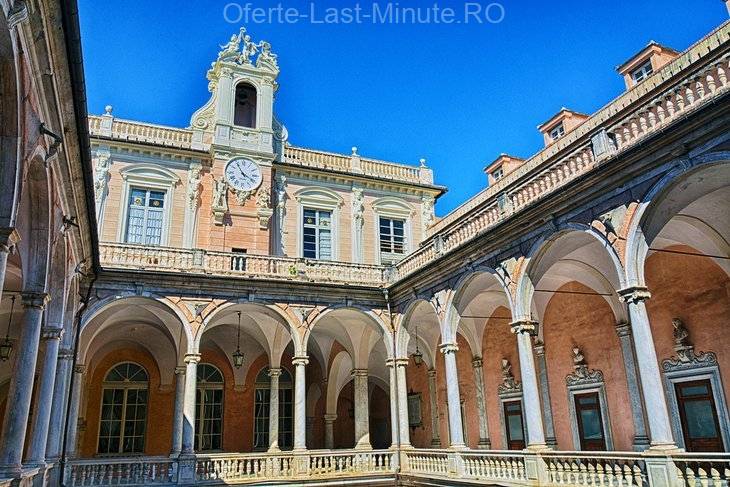 You may expect a street arranged in the sixteenth and seventeenth centuries as a decoration for the richest and most powerful families in Genoa to be a great boulevard, but via Garibaldi is a little more than an alley.It seems even narrower, because it is surrounded by both sides by the great facades of the palaces next to each other.Its facades present a succession of carved and painted ornaments, frescoes, great arches and loggias, balconies, courtyards and coastal entrances of the noble families whose houses were.You can visit three of these - Palazzo Rosso, Palazzo Bianco and Palazzo Tursi - with a single ticket to see their gorgeous arts and collections.
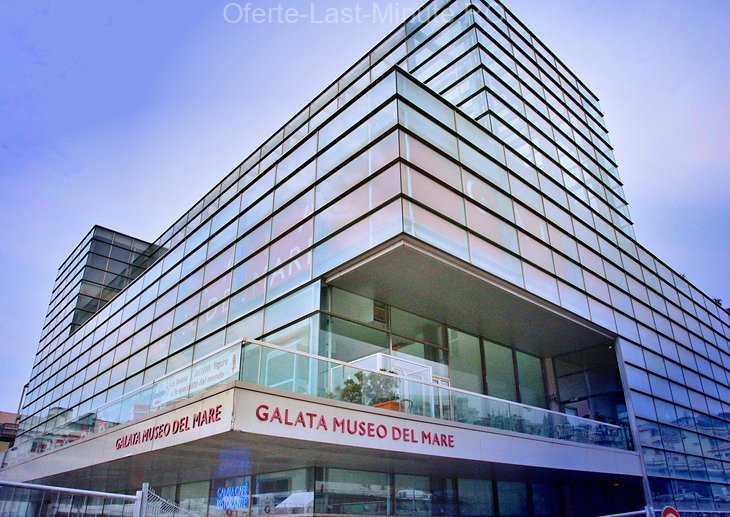 Genoa was a great Mediterranean naval power, especially from the 16th-19th centuries, so its old port is a suitable place for the largest maritime museum.Occupying a part of Darsena where the Republic of Genoa has built its own fleet, the four floors of captivating exhibits offer a good image of ships and navigation from the era of discoveries to Transatlan and submarines.Families can share the feeling of sailors in a saving boat thrown by the storm;climb on board a Genoa gallery from the seventeenth century to explore the interiors;And he discovers life on board, interacting with the crew members. There are visitors here, visitors enter the era of oceanic lines to explore the deck of a steam ship, original timonia, map and backpack for first -class passengers.This is the largest maritime museum in the Mediterranean and an exceptional experience, especially for families with children.
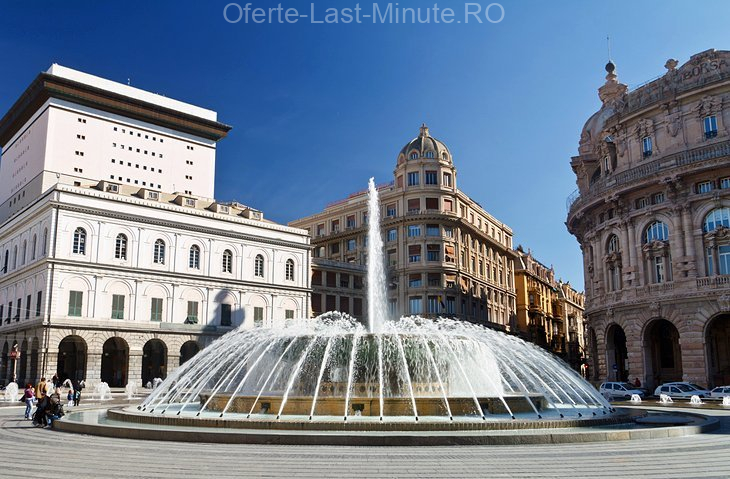 The center of the city of Genoa is Piazza de Ferrari, its sprinkler surrounded by great buildings and with the busiest streets that radiate from it in all directions.Go on the main street in Genoa, Via XX Settembre, and on the adjacent streets to see the remarkable art facades.The imposing neo-Burocul building from the 19th century is the Eastern part (Borsa), and the Ligustica di Belle Accadem has sculptures from Genoa and Liguria, along with another art.Among the best and largest opera theaters in Italy, this new last generation place has an impeccable acoustics and hosts concerts and jazz together with the opera.
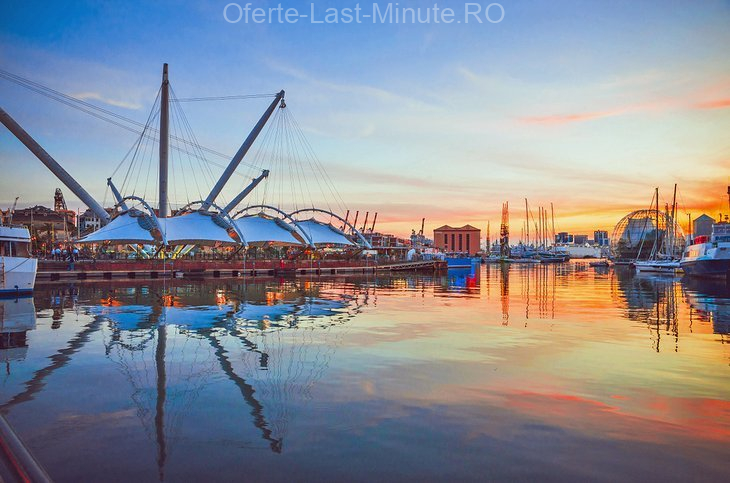 To feel best the enormity and activity of the port, as well as to see the big ships and the little Porticciolo Duca Degli Abrudi, used by yachts and boats with sails, climb into one of the many port cruises.As a bonus, you will get the best view of the city itself, spread in a huge bowl at the foot of the mountains.Cruises of half a day and a whole day at Portofino give the chance to see that legendary coast of the water
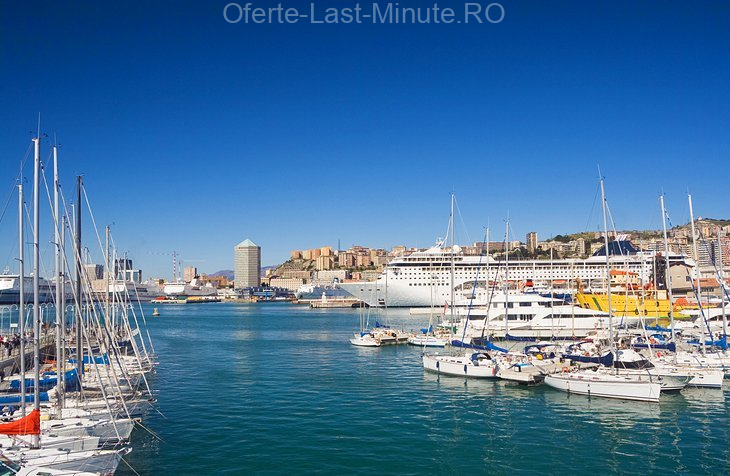 In the port of Genoa, about 22 kilometers of keys host cruise, leisure and transport vessels in one of the two largest ports of the Mediterranean (the other is Marseille).As the traffic exceeded Porto Antico (also called Porto Vecchio - Old Port), a number of new facilities and a maritime station for maritime trade were built, to receive cruise passengers and host a maritime museum and an aquarium.But the historical section remains and can still be seen Darsena, where the Admiral Gallers Andrea Doria were built.The highway passes near the area of the International Fair on a recovered land from the sea, ending at Piazza della Vittoria
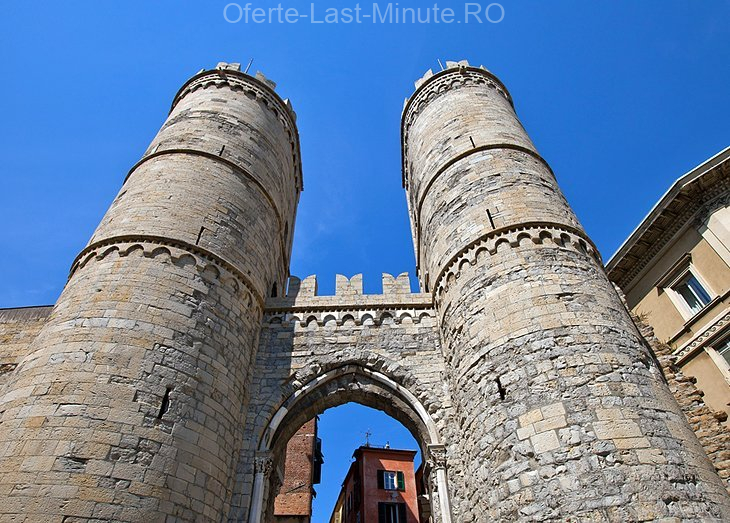 The short via Dante leads south from Piazza de Ferrari to Piazza Dante, where you will see the two well-preserved towers of Porta Soprana, bearing it in the walls of the city, built in 1155. n ncistofor Columbus has spent his childhood in the stone house much restored near the beautiful monastery, with its columns, with its columns.There is not much to see in the museum inside, but the combination of the house, gate and monastery makes this short detour deserves, because you visit Genoa.
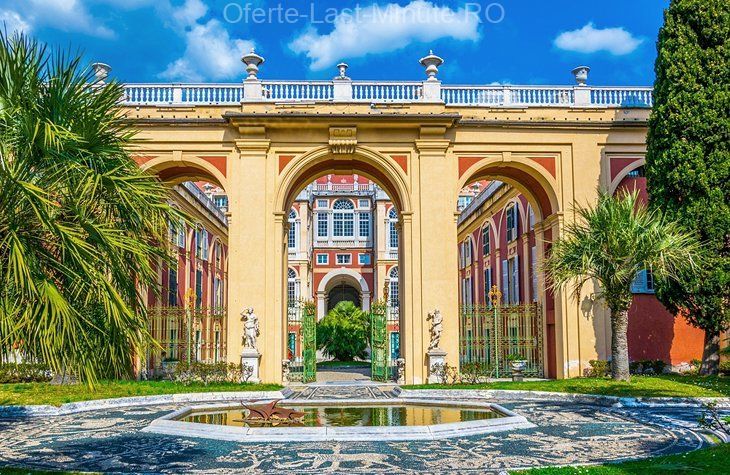 To the west of the magnificent church Santissima Annunzatata is the beginning of via Balbi, another street arranged at the beginning of the seventeenth century and bordered by splendid palaces.Wider than Via Garibaldi, but less amazing in grandeur and more punctuated with shops and daily life, has its part of palaces.4 is Palazzo Balbi-Senarega, and at no.5 is Palazzo dell 'Università, with the most beautiful yard and gardens in Genoa.Opposite Palazzo dell 'University is the real palazzo of the seventeenth century, which is worth seeing for its great stairs;balconies;interior decorated sumptuously;And art collection, which includes more by Van Dyck, who lived and worked in Genoa for six years.Step on the beautiful garden terrace for Port and Piazza Statuto. N Nadresa: via Balbi 10, Genoa
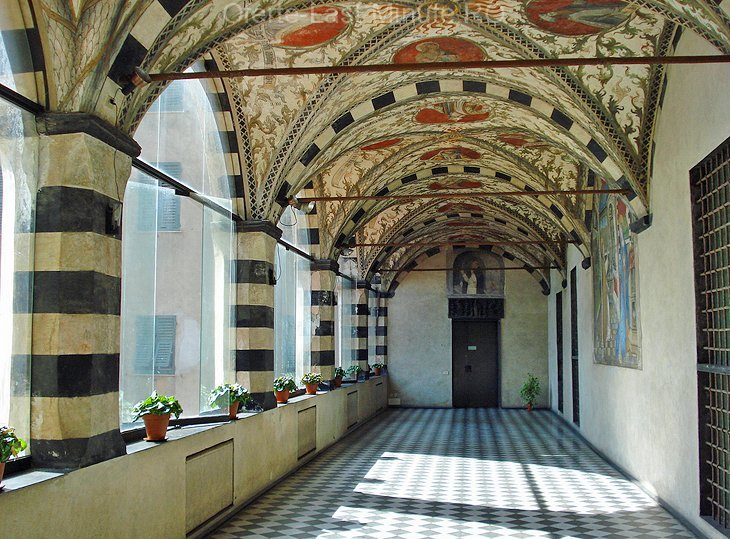 There is evidence that Castello Hill is one of the oldest sites in Genoa, in use when the early tribes trade with the Phoenicians and the Etruscans.Between the 12th and 16th centuries, a succession of churches and monasteries were built.These loggias have sea views and have beautiful ceilings with frescoes.
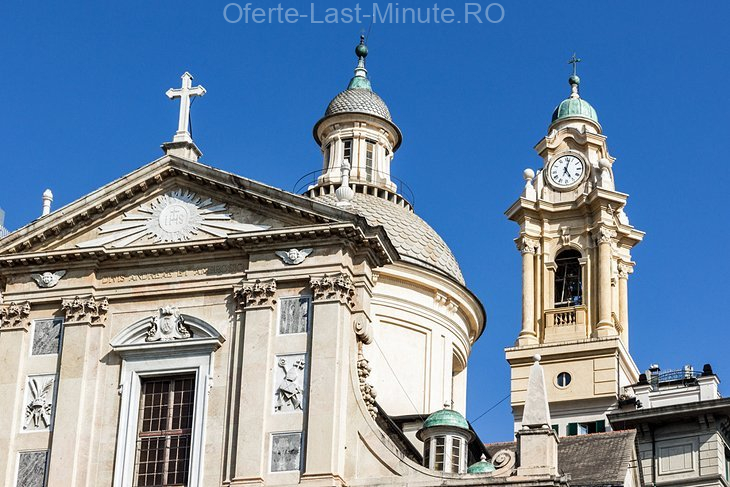 The highlight of Matteotti Square is the Jesuit church Santi Ambrogio E Andrea, built between 1588-1637 by the architect and the Renaissance artist Domenico Tibaldi (1541-1583).For many, this is the most beautiful church interior in Genoa, in a high baroque, marble, golden stucco, fresco and two paintings by Peter Rubens.Although the facade was not added until the 1800s, it is based on drawings of Rubens.But if you bypass the palace to the left along Via Tommaso Reggio, you will find the Gothic church with white and black stripes (1278).Inside there are many relics of the noble family Genoveze Doria.In the crypt is the tomb of Andrea Doria, the Admiral who restored Genoa Independence in the 1500s, and near the church is a beautiful monastery from the beginning of the fourteenth century.

