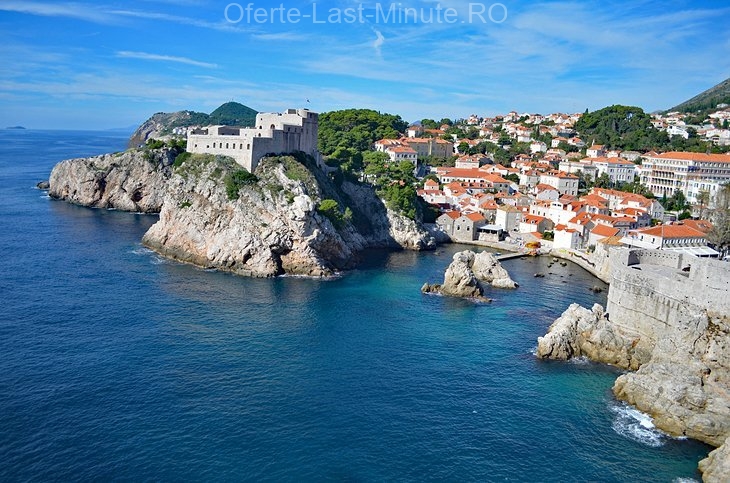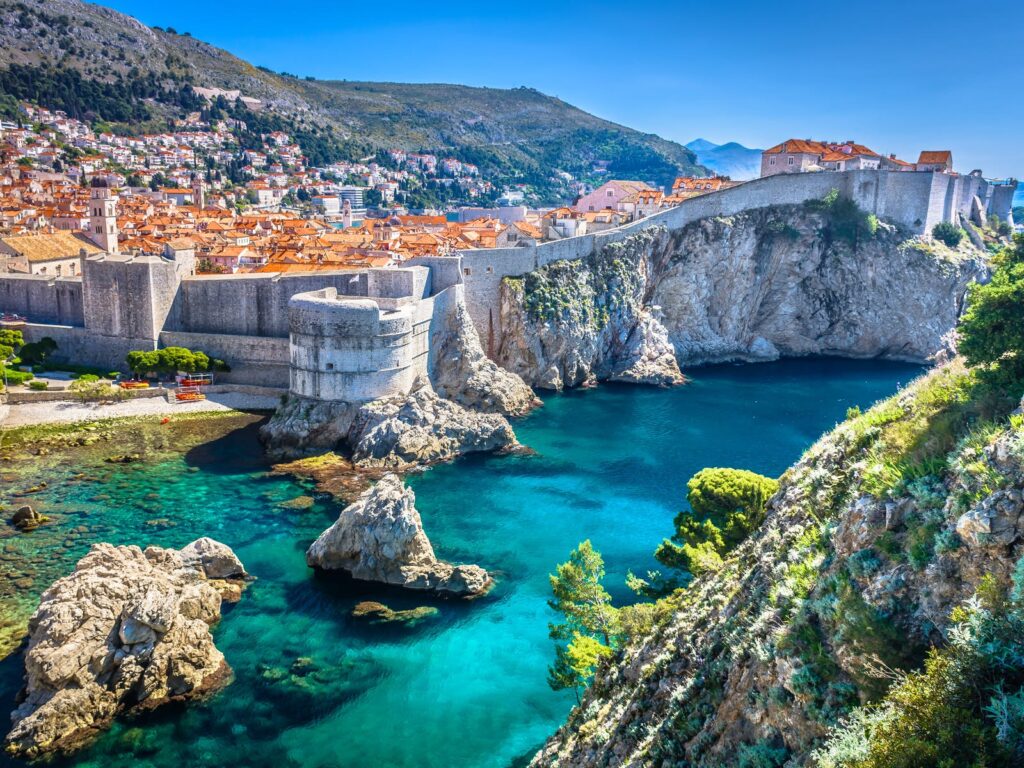
nicknamed “Adriatic Pearl”, the beautiful Dubrovnik offers a multitude of attractions for visitors.Renowned for the spectacular location on the seafront, on the Dalmatian coast, together with the evocative and historical center of the city, Dubrovnik was founded in the 7th century and was run over the centuries by Venetians and Hungarians, each of which has left his mark.
About
Best period
The best months for good weather in Dubrovnik are April, May, June, July, August, September, October and November
January is the coldest month of the year
November is the rainy month
Tourist Attractions
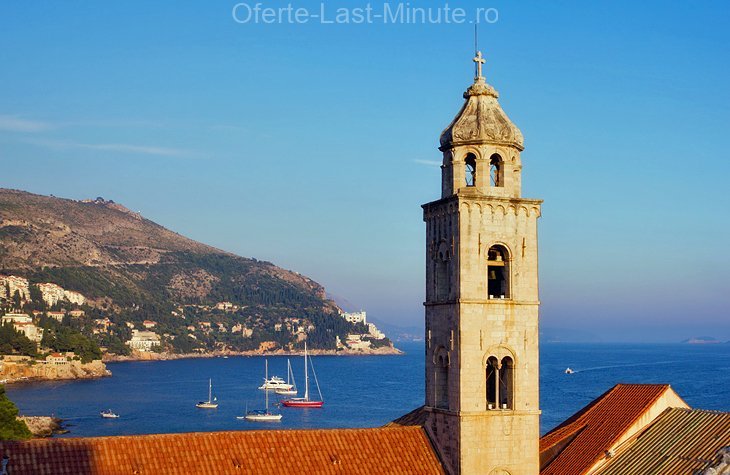 Built in the early 1300s, the Dominican Monastery in Dubrovnik was so great that the construction required the moving parts of the city walls just to host it.Strongly damaged in the earthquake of 1667, the monastery was completely rebuilt in its current form, paying special attention to keeping features such as its late Gothic greatness (the original was designed by Michelozzo di Bartolomeo in Florence in the fifteenth century).A culminating point is to visit the monastery museum, with numerous religious paintings from the fifteenth and sixteenth century, in the style of the school in Dubrovnik (also known as Venice), along with interesting gold and silver objects and other relics.Make sure you visit the Franciscan monastery of the city, which houses one of the most valuable libraries in Croatia and a medi fascinating with old decorated jars, measurement and mortar devices (the pharmacy was in use of 1317).There is also a museum inside that contains elements of historical interest and a collection of plastic art.
 The Loggia Square in Dubrovnik has long been a central gathering point for both citizens and visitors.Having some of the most famous public buildings and monuments in Dubrovnik, the Loggia market is located in the northeast of the Old City Center.The important aspects include Orlando's column, built and designed by the sculptor Antonio Ragusino, as well as the famous bell logia dating from 1480 and used as an early warning system by inhabitants of anxiety.Here you will find the church of St. Blaise, of interest to his Baroque facade and his collection of invaluable works of art.Also, of interest in the market are a 15th-century clock tower, the main guard and the Little Fountain in Onofrio.
 The old walls of Dubrovnik are the best known features.Built in the tenth century and modified in the 13th and 14th centuries, these formidable walls-up to six meters and up to six thick meters-offered a solid defense against the invaders.With a length of almost two kilometers, the walls of Dubrovnik make an extraordinary place for a casual walk and offer numerous excellent views on the Adriatic and inward to the Old Center of the city.Other important elements include its two towers the Tower of Linta and the Bokar Tower, together with two forts, the fortress of Lovrjenac and Revelin Fort.The access to the walls is made through the main entrance to the left the pile (admission is perceived).
 Standing on the site of an old cathedral dating from the 6th century and destroyed by earthquakes, the beautiful Cathedral of Dubrovnik - also called the Cathedral of the Assumption of the Virgin (his complete name is the Cathedral of the Assumption of the Virgin) - was designed in Baroque style by Andrea Buffalini from Rome.Notable for the three corridors, three apses and an interior splendid decor, the cathedral includes topics such as paintings of some Italian and Dalmite artists from the 16th-15th centuries, including the Virgo from Raphael from the early 1600s. We must see that it is the cathedral treasury with many important relics, the most famous being a portion of the cross.crucified.Other famous relics include the head, foot and arm of St. Blaise, dating from the 13th century, as well as a splendid show of 138 gold and silver relics from all over the world.
 For centuries, the famous Gate of the Dubrovnik pile has served as the main entrance and is still the most interesting access point in this fabulous old city.He was surrounded by a complete ditch with a levat bridge built in 1537, the pile -two pedestrian gate - one of the two inputs in the Lapad area - also has a pleasant garden in the old ditch. In high attractions include a statue of Saint Blaise located in a niche and carved by the famous artist,It dates from 1460. In no other gate to be seen is the ploce gate from the fourteenth century, just behind the Asimov tower.Designed as a "double defense" system, it proved effective in times of trouble.Also, imposing and located right over the ditch at Ploce Gate is Revelin Fortress, built in 1580.
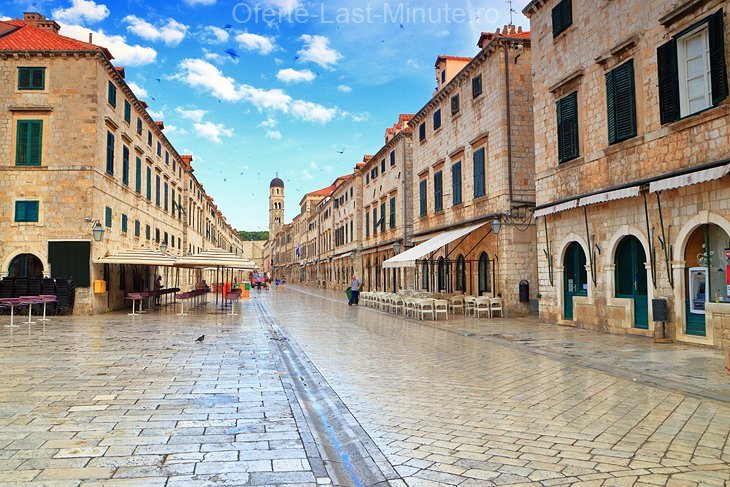 The spectacular Stradun is a place where locals and visitors gather day and night to look at the world.Undoubtedly, one of the most picturesque pedestrian arteries in Europe, Stradun offers numerous cafes and restaurants and is a good place to rest tired legs after a day of visiting Dubrovnik.With a length of 300 meters and famous for the white limestone pavement, the street dates from 1468, although many of the surrounding buildings were built in the seventeenth century after the devastating earthquake of 1667, when the majority of Dubrovnik was strongly damaged.Stradun's unique houses are designed to allow the top house and business activities at the main level and are remarkable by having the main doors and windows under the same arc.
 On the eastern edge of the old city is the fort of St. John, known by the locals as the fort of St. Ivan.Once an important part of Dubrovnik's defense, this imposing structure now hosts a few modern attractions to keep the visitors fun.In the upper area is the Dubrovnik maritime museum that presents exposures of the Dubrovnik maritime past through boats and naval artifacts, while the lower area contains the Dubrovnik aquarium with its numerous interesting local and exotic fish exhibitions, as well as a superb collection of sea skids.It is also worth a visit near Bokar Fort, designed and built by Michelozzo di Bartolomeo Michelozzi and a wonderful place to visit for his excellent views on the city and Adriatic.
 Nicknamed "Gibraltarul Dubrovnik" for its location on a rocky promontory right outside the western wall of the city, Fort Lovrijenac - also known as the fortress of Saint Laurentiu - was long one of the most important cities of Croatia.the numerous sieges undertaken by the Venetians since its completion in the eleventh century.The legend, in fact, says that the Venetians themselves planned to build a fort here, but were beaten by him by the hard -working people.As a tourist attraction, the fort is also used as a place and background for the famous Summer Festival in Dubrovnik and its numerous theatrical and musical shows.
 Designed by Onofrio from Cava in 1435, the Palace of the Rector (Kne?A beautiful mixture of late Gothic and Renaissance styles, this splendid old palace was strongly damaged by an explosion of rifle dust, later, a fire and then again in 1667, when an earthquake took place.If possible, try to schedule the visit to coincide with one of his regular classical summer music shows.The culminating points of the museum collection of 15,000 pieces include many interesting exhibits that detail life in the Ragusa Republic in the medi period, as well as numerous fine paintings of Venetian and Dalmatian artists. N Nadress: Opcina Dubrovnik, 2000
 Built between 1438 and 1444, the famous Great Fountain of Onofrio in Dubrovnik is probably the best known of the many historical monuments of the city.At an easy walk of the pile gate, this landmark structure is somewhat smaller than the original due to the damage caused by the 1667 earthquake. The fountain was an important part of the original water supply system (also designed by Onofrio from Cava) carrying water from the Dubrovacka river.(Crkva sv spas).Built at the beginning of the sixteenth century, thanks to what the elders thought it was a divine intervention after the city was spared during an earthquake a few years earlier, it is actually one of the few buildings that survived the devastating earthquake of 1667.RenaSCENTISTE.
 There is more to do in Dubrovnik than the simple visit of the tourist attractions.This historic city actually hosts Banje Beach, largely considered as one of the top beaches in Croatia.Located only a few steps from the historical center of the old city, it is a delightful place (if somewhat crowded) to relax and tighten your feet or to swim.Approach, a very fun thing to do at sunset (recommended reservations).For a light four kilometer walk or by bus from the Old Center, you will find three main beaches to explore and relax: Cava, Uvala Gulf and Tropical Copacabana.These beaches suitable for children are wonderful for those traveling in the family and, although an admission fee is required, it really is worth.
 Located just 600 meters from Dubrovnik, the island of Lokrum is quite difficult to miss.If you have time in your visiting the tourist goals in Dubrovnik, climb a short trip to this fascinating island.In addition to the gorgeous views over the old city of Dubrovnik, there are some interesting attractions that you will find here that are worth exploring (and usually with few crowds).It is an easy climb, and the views in all directions are spectacular. In high points of interest on this small island include a small interior salty lake, known as the Dead Sea, a popular place for selfies and diving;An old Benedictine monastery that is known to have existed since the eleventh century and who now hosts a museum about the island, as well as a restaurant;And a delightful botanical garden, which houses about 200 species of plants.
 Another fun thing to do when you visit Dubrovnik is to go to the hills - with the cable car.The Dubrovnik cable car heads on the visitors above the old city, on the SRD Hill, with the views that are becoming better as you climb (in serene days, you can see for about 50 kilometers).The trip lasts less than 10 minutes and, once deposited at the top, you are free to explore the area. N natives to be taken into account include the 19th-century imperial fortress, built by the French during the region and which now hosts a fascinating exhibition related to the 1991-1995 Patria war, when the city was defended.There is also a restaurant with spectacular views on the old city, along with unique shopping, including a traditional fascinating blacksmith shop.