
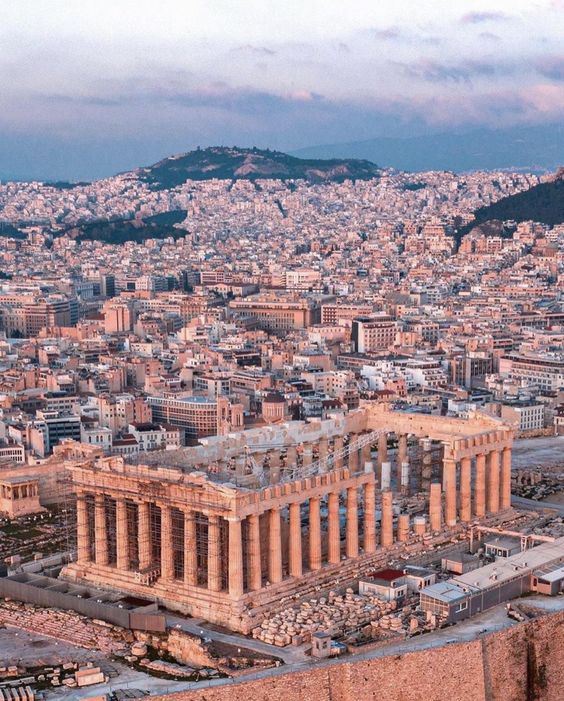
Athens is the capital of Greece.Athens has undergone a glorious evolution, especially in ancient Greece, being inhabited by people from the Bronze Age and governed until around 1000 BC.by Ionian kings
About
Best period
The best months for good weather in Athens are March, April, May, June, July, August, September, October and November
January is the coldest month of the year
Tourist Attractions
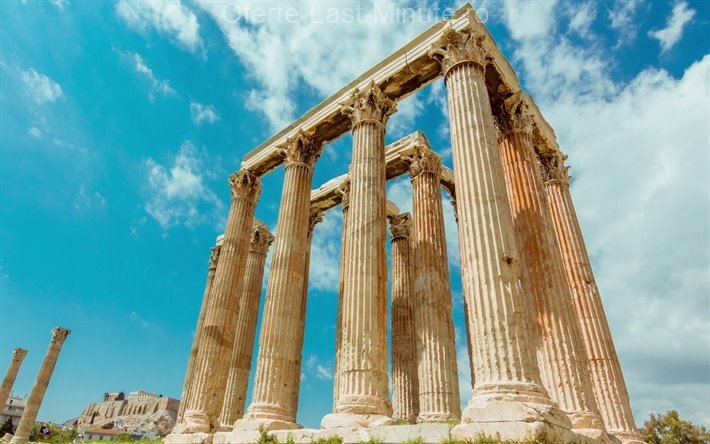 Although the Parthenon has been better preserved over the centuries, the Temple of Zeus has been a much more impressive structure in the past, which can be seen today.Tourists visiting the Temple will be able to admire only 15 columns of the one hundred, because only so many have left, while another column is lying on the ground.The exact date of destruction of the temple is not known, but it was most likely destroyed by earthquakes.
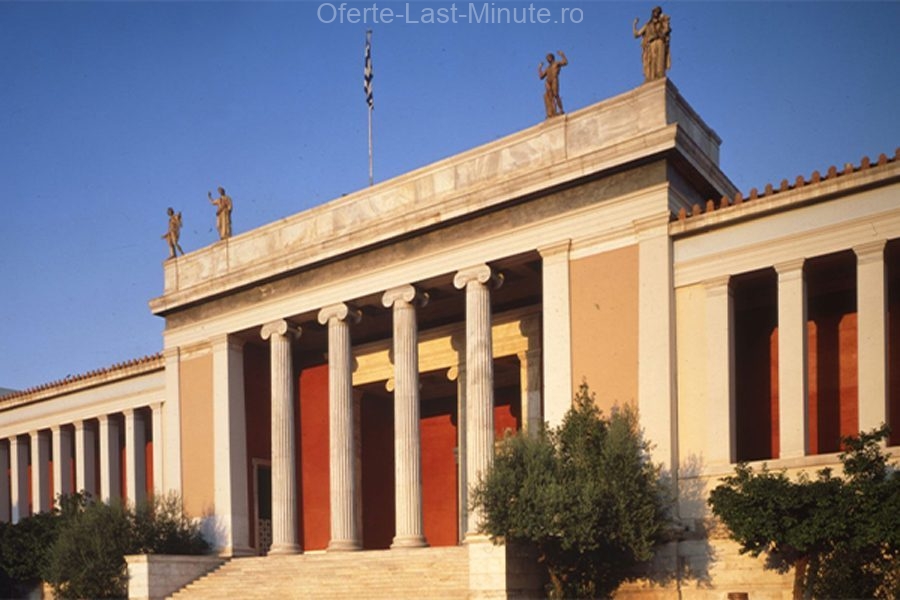 The museum has five permanent collections, comprising over 11,000 exhibits, which offers a general presentation of the civilization of Greece from the prehistoric period and until the ancient period.The prehistoric collection includes artifacts from the 6th millennium BC.and until 1050 BC, and the collection collection has statues from the 6th and 5th centuries, including rare works.The museum also has a collection of Egyptian artifacts.
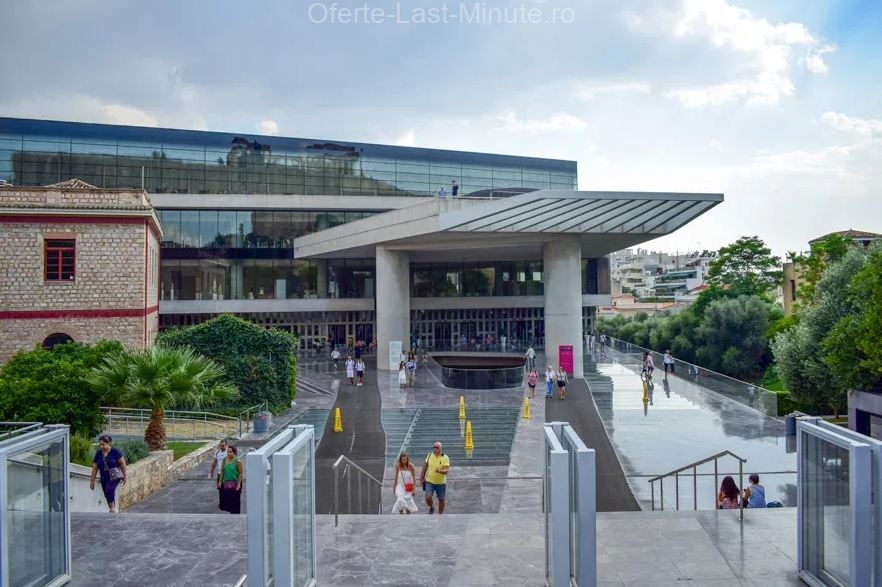 Located at the base of the Acropolis in Athens, on Dionysiou Areopagitou Street, at number 15, this Acropole Museum contains one of the most valuable and impressive collections of artifacts of ancient Greece.The museum was built to exhibit the vestiges found on the Acropolis in Athens and in the surroundings, from the Bronze Age of Greece and to Greece under Romanian and Byzantine domination.
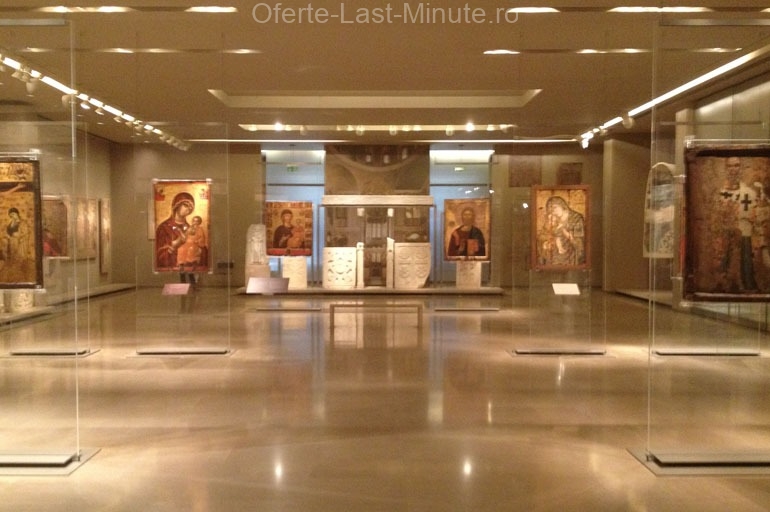 The Byzantine Museum is located on the Boulevard.Sofias, 22, and comprises over 25,000 artifacts from the Byzantine period of Greece.The Byzantine Museum includes religious artifacts from the Byzantine period, but also from the beginning period of Christianity, from the medi period and from the post-Byzantine periods.The collections of the museum offer icons, church vestments, sculptures and paintings, but also fragments of Christian basilics and Byzantine churches.The museum also has a reproduction of the fountain from the Dafni Monastery.
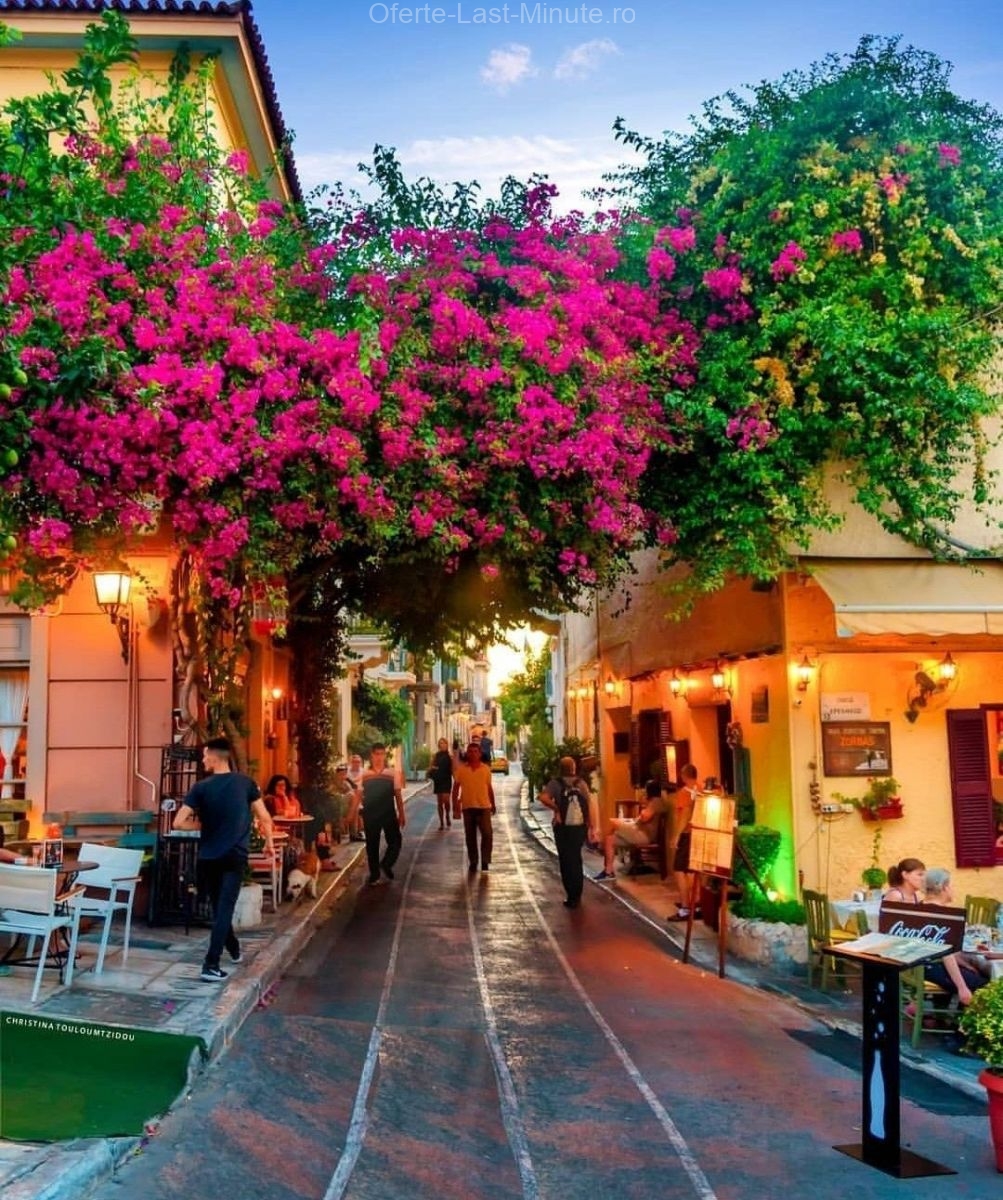 Between Acropola in Athens and Ermou street are the Plaka and Anafiotika neighborhoods, where two other archaeological sites can be found: Agora Romana and Hadrian's library.The main attraction of these neighborhoods is the ambience, generated by their narrow streets and small cheerful markets;Plaka and Anafiotika are the perfect places for a quiet walk for everyone who visits Athens.
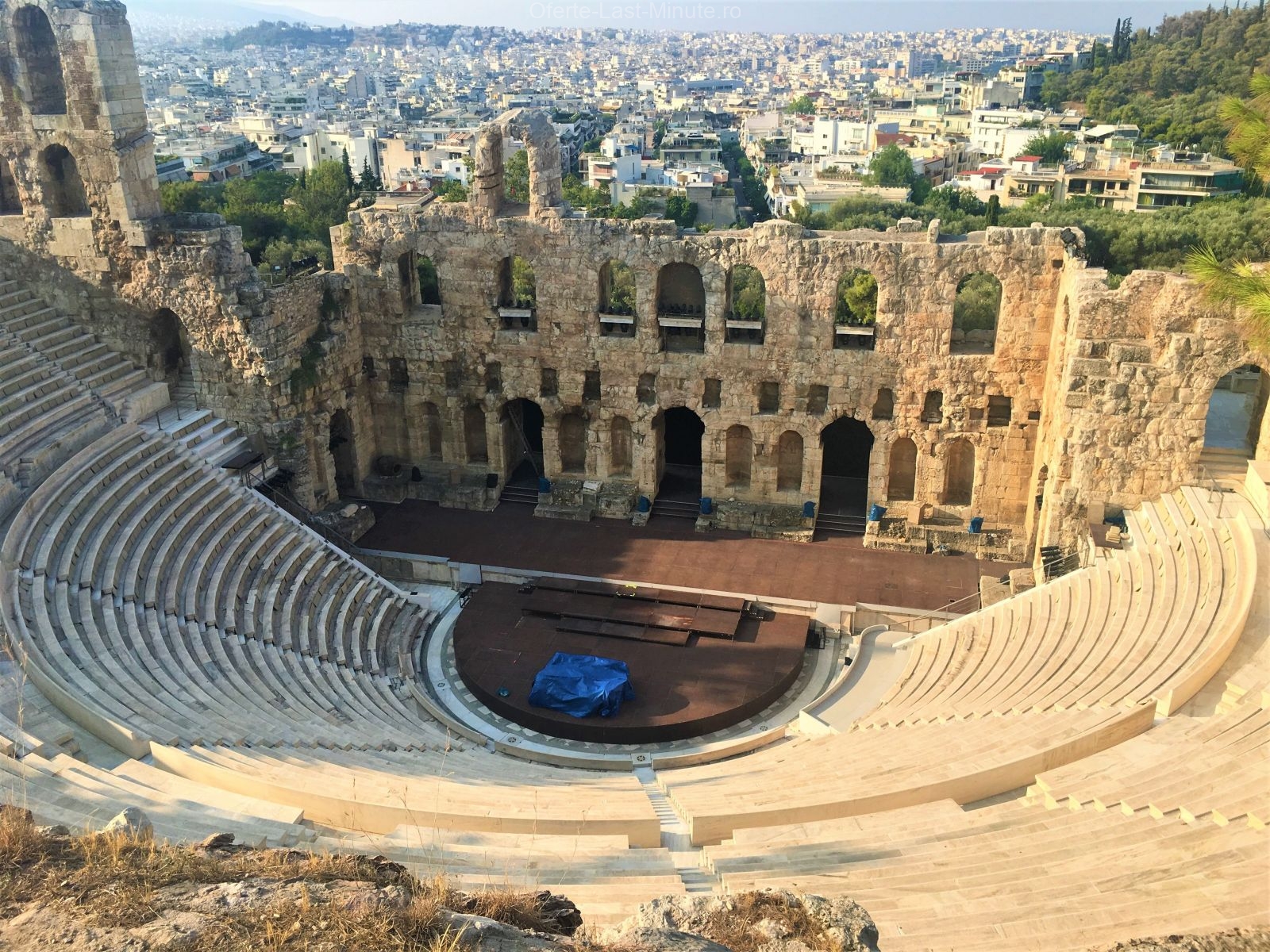 The area includes an impressive number of 21 vestiges, the main attraction being the Parthenon, which watches over the city for centuries.The temple is located right at the highest point of the hill and is the largest temple of the classic ancient period.Among the ruins that can be admired on this hill are the Temple of Athens, the sanctuary of the goddess Artemis or the temple of Dionysos, and at the foot of the hill are the two famous ancient tears: the Odeon of Herod?
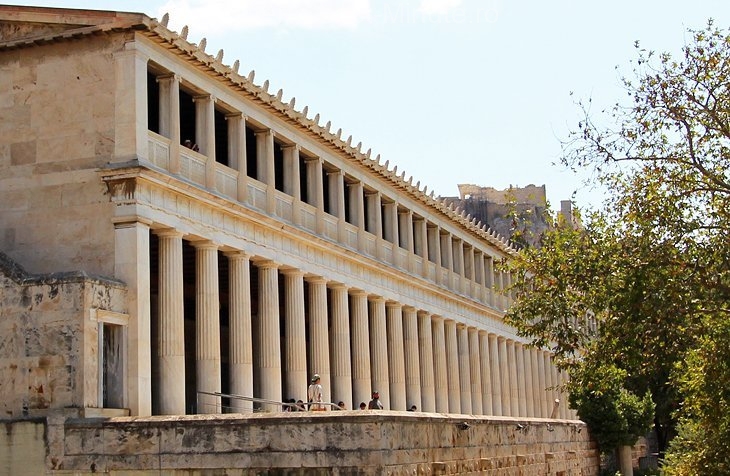 Antica Agora was the market and center of daily life in Ancient Athens.For an impressive view of Agora from afar, head to the northern wall of the acropolis or on the roads of Areopag.The Greek word "Agora" means "gather and discuss", indicating that this site was a place of speech in public.Agora was a place of administration and trade, as well as the meeting place of Agora Tou Dimou, a civic decision -making group.There were also sporting events and theater performances.You can reach it with a pleasant walk along the path leading to Agora Hill (Kolonos Agoraios).This Doric Temple from the 5th century BC.It is one of the best preserved ancient Greek temples, due to its transformation into a Christian church, which saved it from destruction.The temple was designed on a classic six rows of 13 columns, and the ionic frostbite seem to be molded on Partenon.
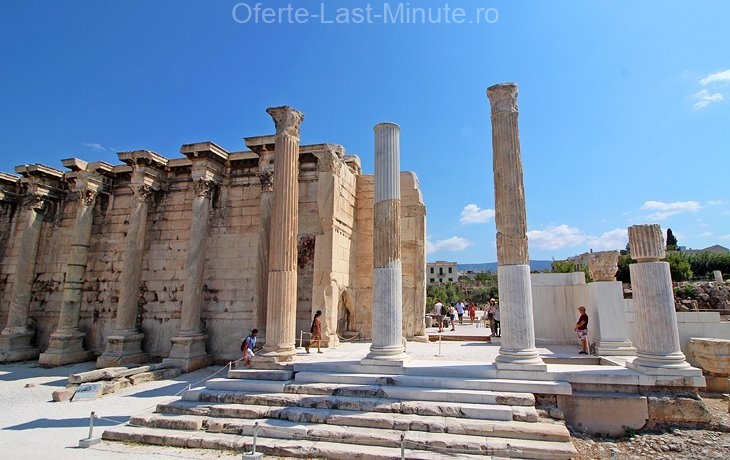 Adiacent ancient Agora is the Agora Roman website.Although all may seem a single place, these buildings were built later, and the construction eventually moved to the ancient Agora.One of the sites that are easy to recognize here is the wind tower. In the Roman Agora Margine, Hadrian's ancient library is located, founded by Emperor Hadrian in 13 AD.Even later, during the Byzantine period, three churches were built near the place of the library. See a wall of Hadrian's library and the Roman Agora ruins on the street, but if you want to explore, you can buy a ticket and you can walk through the ruins
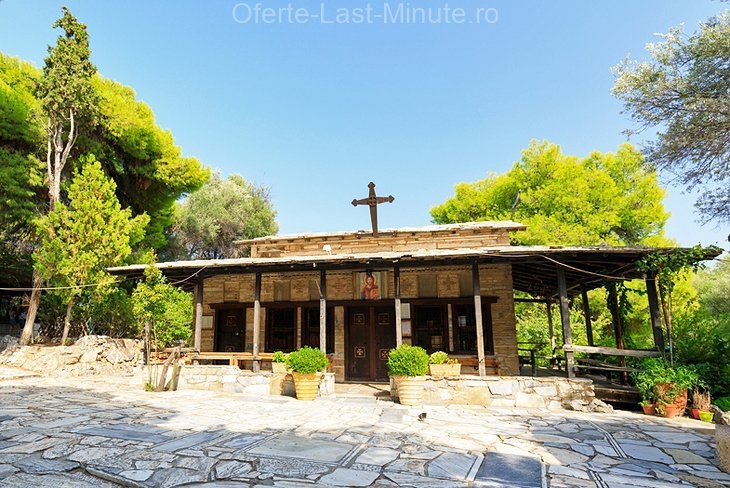 In a green setting on Philopappou Hill, this tiny Byzantine chapel of the 12th century offers an opportunity for a delightful spiritual experience.The building was built at the Diateichism Gate due to the ancient belief that the divinity protects the gates.Around 1650, when the Turkish commander of Acropolis, Yusuf, bombed the church.The church was restored in the 1960s by the architect D. Pikionis.Another culminating point in the visit of Philopappu hill is the chance to admire spectacular Parthenon views in this location
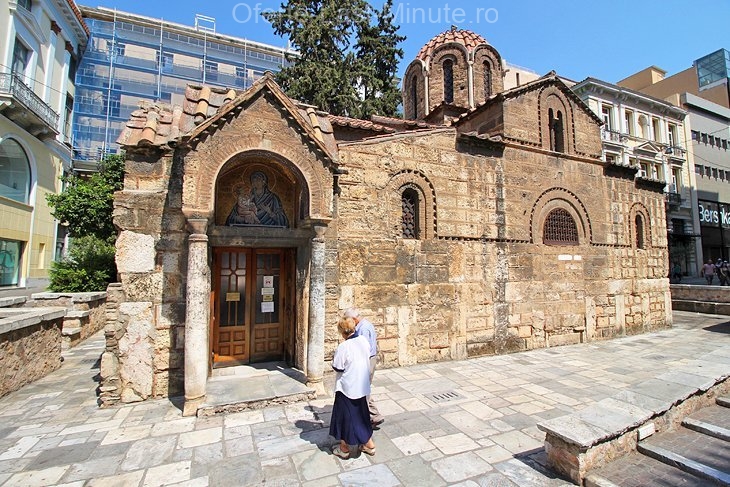 Arranging a small square that opens to a only pedestrian section of the Ermoú Street, the Panaghia Kapnikaréa church is a delightful place to visit and a place you will probably pass.This church is a splendid example of architecture from the 19th-century Byzantine era and a strong contrast with the modern architecture that surrounds it.It was saved from demolitions in the 19th century by the intervention of King Ludwig I of Bavaria.In the twelfth century, the church was improved with a graceful entrance porch and a four-pediment (built on the western end).Inside, the church is decorated with paintings from the 19th century created in the iconographic style of the middle Byzantine period
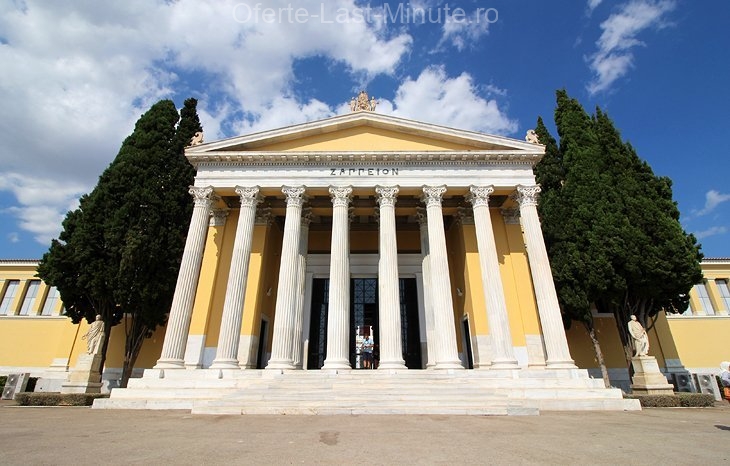 Located near the Greek Parliament, the National Garden is a large green space behind the Temple of the Olympic Zeus and houses Zappeion.If you had enough sun during the day of visiting the tourist goals, this is a quiet and shady place to relax and cool your.Inviting routes lead among tall trees and offer improvement from crowded streets.It is also a free attraction in Athens. In the edge of the garden is the Zappeion Hall, where you can enter for a look inside, if not used.It was built in the 1870s and is used for events.Inside the main entrance is an impressive round, outdoor, lined columns
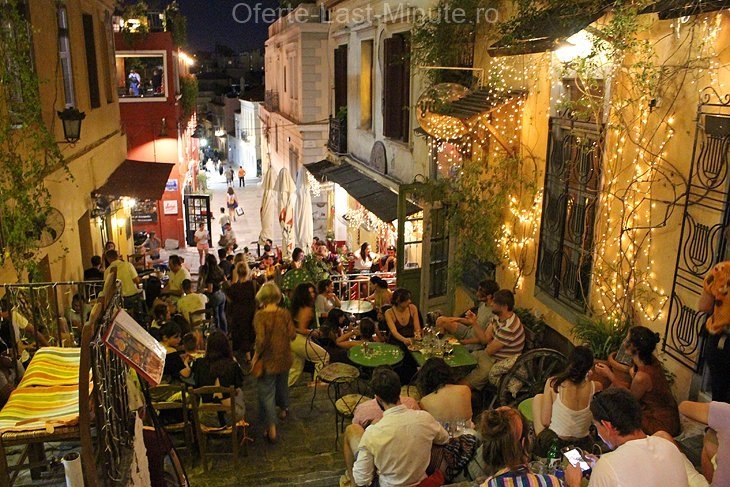 If you are looking for things to do at night in Athens, go to the stairs on Mnisikleous Street.The restaurants align this set of stairs in the upper end of the Mnisikleus Street, attracting a lot in the evening.It is extremely casual and relaxed.In fact, when the tables are full, people sit on the pillows on the stone stairs, and the small wooden banks are removed and placed on the stairs, creating an improvised table.People are often tight, which makes an intimate and friendly experience
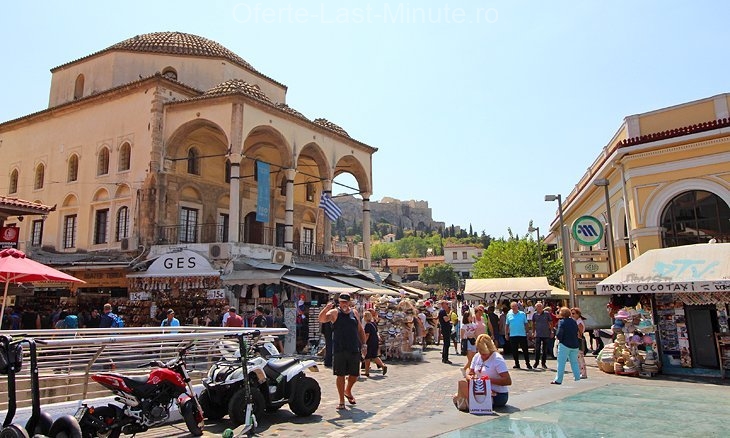 The narrow streets, lined with shops that sell everything, from jewelry and key chains and everyday items, is what you will find in the Athensiki seniority market.This is one of the main attractions of the neighborhood, but this area has a very unique atmosphere and is a nice place to relax in an outdoor patio or walk.Unlike the more luxurious Plaka neighborhood, this area is a little more informal. The monastiraki is an open area, surrounded by a mixture of old and new buildings.This is a good place to orient you.A sign on one side of the market marks the street to the market for old age.From the market, you can see the acropola up in the distance, and a short walk from the market takes you to Hadrian's library.
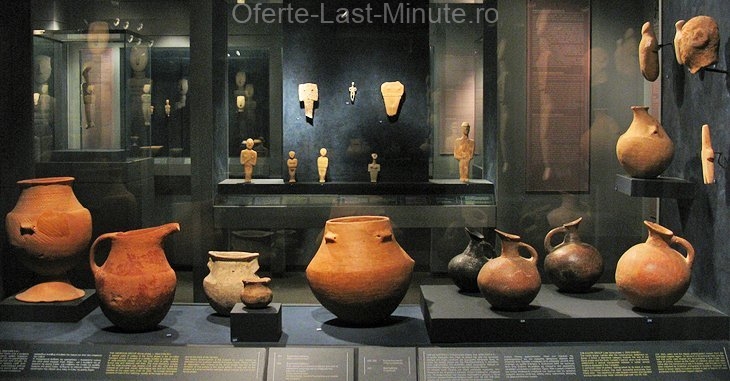 In the Kolonáki district, the Cycladic Art Museum was created in 1986 by the Nicholas Foundation and Dolly Goulandris.The shipowner Nikolas P. Goulandris was a well -known patron of the arts and cultural life in Athens.Gouulandris's own collection forms the nucleus of the exhibits of the museum. It is found in an elegant modern building, with marble and glass facade, the permanent collection of the museum comprises more than 3,000 objects.The collection represents the old Greek art, the old art of cyclades (the islands of the Aegean that surrounds the island of Delos near Mykonos) and the art of Cypriot (from Cyprus Island) dating from the 4th century BC.Until the 6th century AD, in the exhibited artifacts date from the 6th century BC.Temporary exhibitions are held at the elegant static mansion of the 19th century, accessible from the main building through a passage from the atrium.
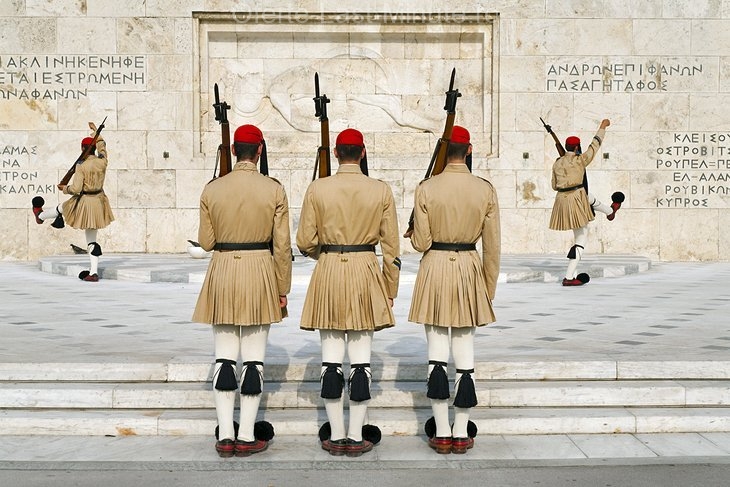 For many tourists, watching the change of guard in Syntagma Square is an interesting and memorable experience.The soldiers of the Presidential Guard stand in front of the Greek Parliament on the Syntagma market 24 hours a day, throughout the year.The guards wear traditional costumes, with pleated skirts, legs and shoes with pompon.This monument honors the anonymous soldiers who died fighting for the country.The monument presents a marble relief that mimics a warrior grave star from ancient times
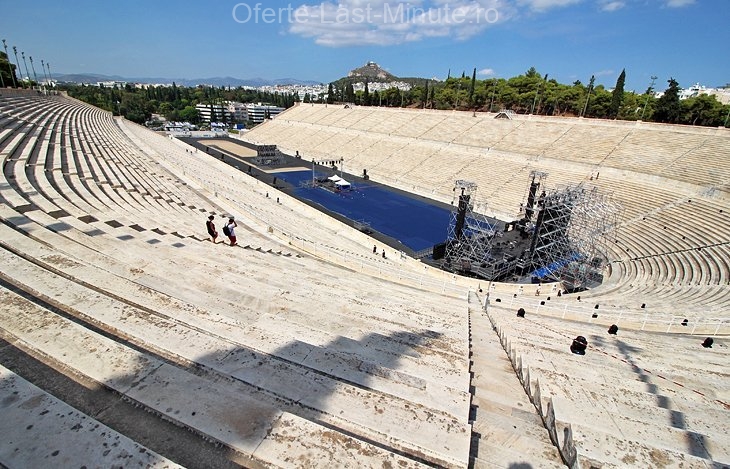 The largest building of ancient Athens, Panathenaic Stadium, has a capacity of 60,000 spectators.Built around 335 BC, in the time of Herodes Atticus, the place of development hosted the Panathenaic games, where the runners competed around the runway.The 204 -meter long runway was designed with four double hermetic, where the runners will come back in racing.The structure that tourists see today is a replica of the original stadium, which was rebuilt for the 1896 Olympics.This Olympic stadium in the modern era was created in the same way as the Panathenaic stadium, with 47 levels of chairs and a southeast round end.Participating in a show can be a nice way to spend an evening in Athens.

