
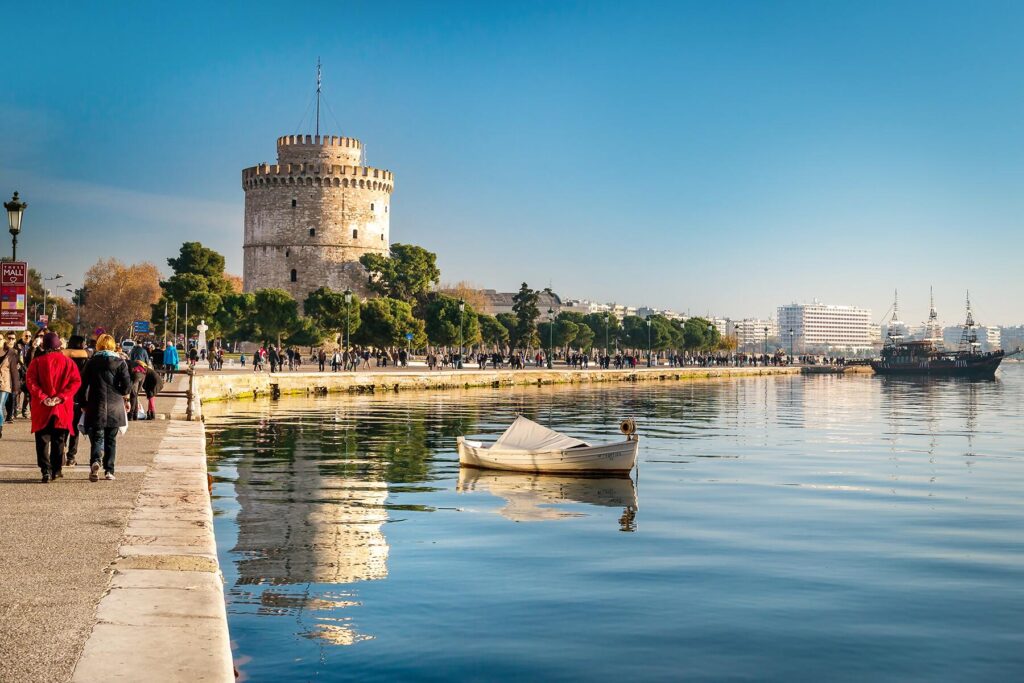
Saloniki (also known as Salonica) offers the cosmopolitan culture and the energy of a big city, with the friendly atmosphere and the charm of a smaller city.It is a wonderful destination to experience the true Greece without the crowds and agglomeration of Athens.
About
Best period
The best months for good weather in Thessaloniki are April, May, June, July, August, September, October and November
On average the hottest months are June, July and August
January is the coldest month of the year
Tourist Attractions
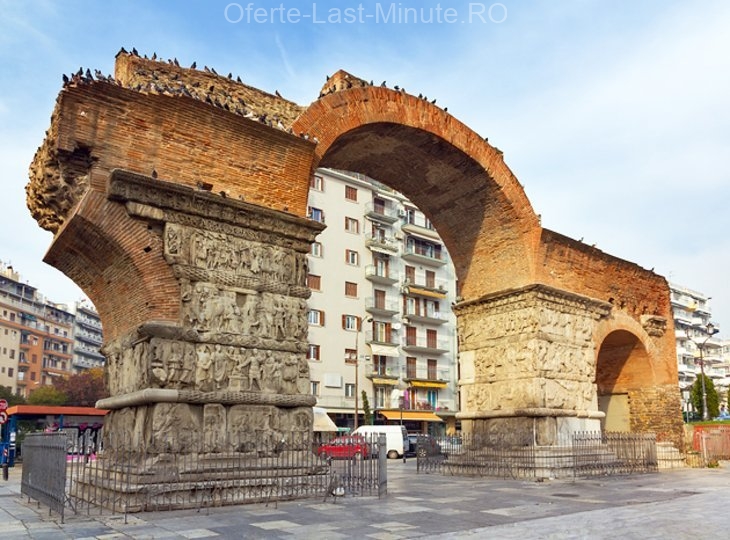 Going from Egnatia Street to the center of Thessaloniki, visitors will meet the Arc of Galerius (Apsa Galeríou), an ancient Roman monument dating around 297 AD.This arc was the main gateway to the ancient city.From the original structure, there are three pillars from the west.Two of the surviving dams, linked by an arc, has a marble facade decorated with elaborate reliefs.These ornamental carved reliefs are among the finest of its kind.Make sure you notice the animated scenes on the southern pier.Although they are the weather, the reliefs are much better preserved than the contemporary reliefs on Constantin's arch in Rome, dating from 315 AD.
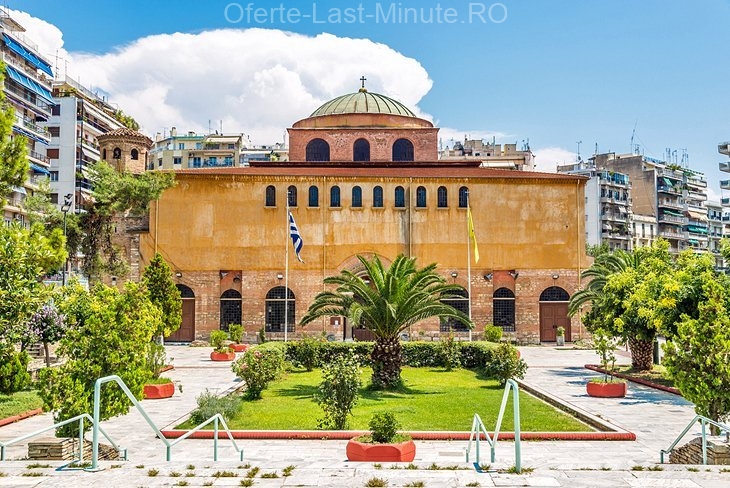 At the eastern end of Hermes Street (Odós Ermoú), the Church of Saint Sofia (Ayía Sofía) is one of the most important historical churches of the city.The dome church was built in the eighth century on a three-color cruciform plane.In the 9th and 10th centuries, after the iconoclastic conflict, the church was decorated with expressive figurative mosaics, including the Mosaic of the Virgin in the apse and a magnificent representation of the mosaic in the dom.From 1204 to 1430, the Church of Saint Sofia was the Metropolitan Church of the city (Cathedral).During the Turkish period, she was transformed into a mosque, Aya Sofya Cami.The building was restored after a fire from 1890 and survived the great fire of 1917.
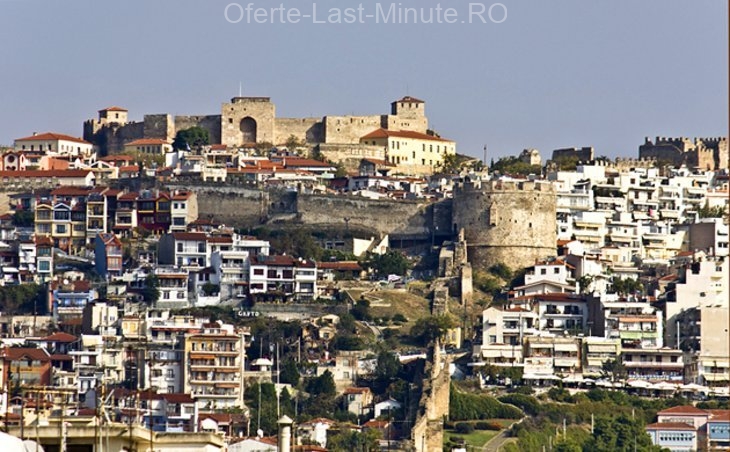 Ano Poli is the old historical city, known as the city of above due to its location on the hill.The upper city can be accessed from Odós Olympíados, the curved street that connects the lower city of the north to the walls of the old city and fortress.This atmospheric neighborhood is characterized by its steep and sinuous streets and pedestrian alleys.Numerous wells from the Ottoman era reveals the Turkish influence of the neighborhood. In Nano Poli has many historical churches worth noting, including the Holy Church of Ecaterina, the Church of the Prophet Elijah, the Church of the Taxiarchs (Archangels), the Church of the Holy Apostles and the mandatory Church of Osios Davíd and the VI was built in VIhis mosaic that describes the vision of the prophet Ezekiel.Another famous site in this area is the Consulate of Turkey on Odós Apóstolou Pávlou, which is the house in which Mustafa Kemal Pasha (Atatürk), the first president of the Turkish Republic, in 1881 was born.
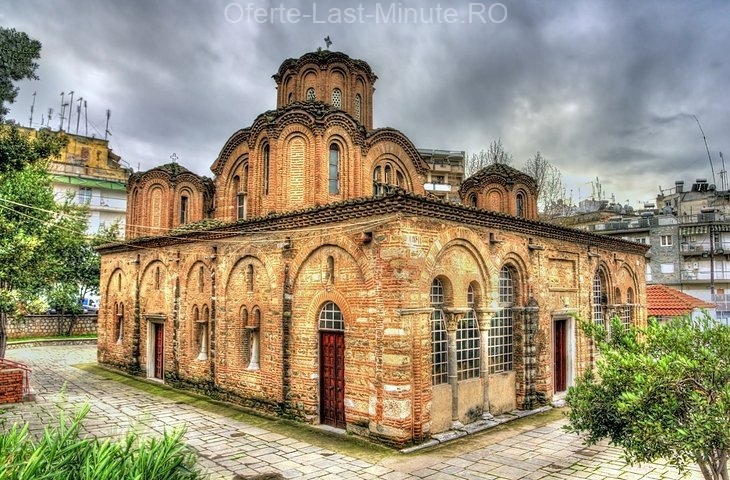 The Church of the Holy Apostles (Áyii Apóstoli) is located on the outskirts of the old city, near the Byzantine walls.This beautiful Byzantine church of the fourteenth century was designed on a cruciform plane, with five domes and brick with elaborate models.A characteristic feature of the late Byzantine architecture is the main dome that rises above the barrel of the cross with the other dome over the corners of the portico.The church is proud of refined frescoes and mosaics from the Paleologist period, which were discovered during the restoration work of 1940. On the northern part of the church there is a tank that belonged to the former monastery of the Holy Apostle
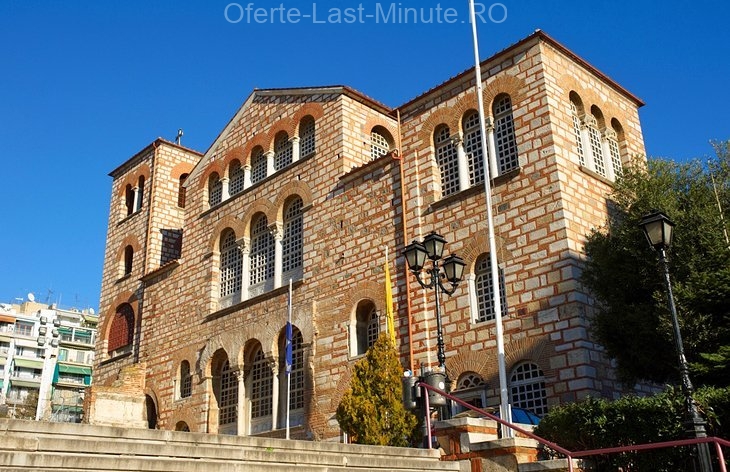 The Church of Saint Dimitrie (Ayios Dimírios) is an unforgettable spiritual vision in Thessaloniki, the main church of the city.During the Turkish period, she was transformed into a mosque, Kasimiye Cami.To the north of the Roman Agora, this splendid Byzantine basilica with five color was built in the 5th century on the site of an anterior Christian Church, near the old Roman bath.(The remains of the bathroom are visible on the northern part of the church.) The crypt also contains relics of an ancient Roman road.iconostasis.The glorious sanctuary is 43 meters long, the largest in Greece and is richly beautified.The ornaments include finely carved capitals on the varicolated marble columns, a dazzling chandelier in the central corridor and small mosaics on the apse pillars
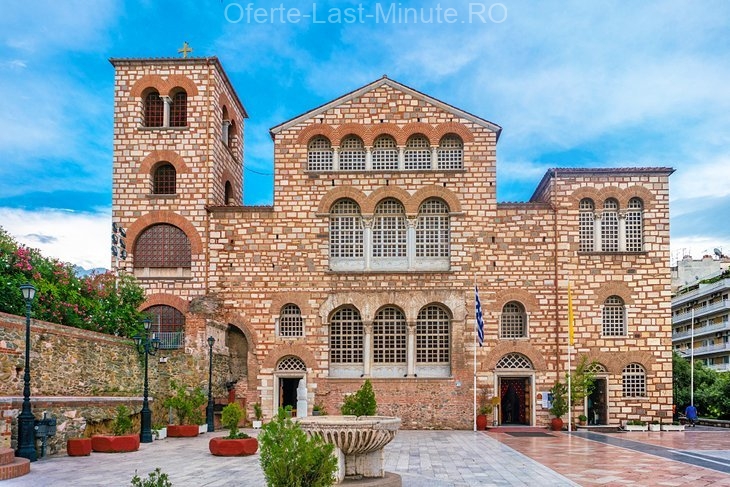 Another top attraction is the Church of Agios Dimitrios, who was built in honor of the city owner, Dimitrios, a Roman soldier who was killed some time around 306 AD.At that time, it was a place of Roman baths, and the crime was ordered by Emperor Galerius, who was ruthless in his persecution towards the Christians.Many of the original frescoes were damaged in the 1917 fire that crossed Thessaloniki, but five were saved and can be seen today.
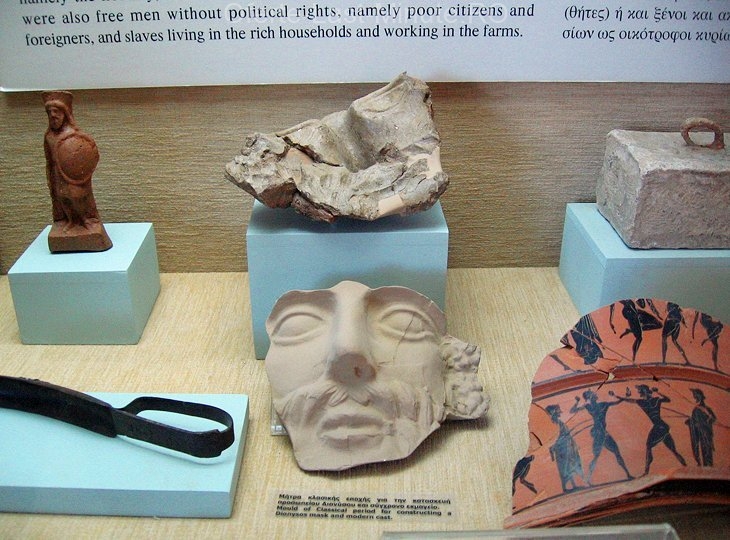 About 69 kilometers from Thessaloniki, the charming Polygyros city is located at the foot of the Chalkidiki region.The city has retained a traditional Greek character, with its picturesque neighborhoods, which are a pleasure to explore. The top tourist nation of Polygyros is the archaeological museum, an extensive collection of archaeological discoveries in the Halkidiki region.The collection covers the Bronze Age, the archaic era, the classic period and the ancient Roman era.Sculptures, reliefs, ceramics, weapons and jewelry are exposed. In the re-entering the exhibits from the archaic period, the jewelry from the late and classic archaic period and the sculptures from the fourth century BC.Until the 1st century BC.Make sure you see Dionysos's marble bust and serious statues from Heroön to Stratoni.The assortment of objects discovered in the city and cemetery near Olynthus are particularly interesting, because it offers a feeling of daily life at that time.
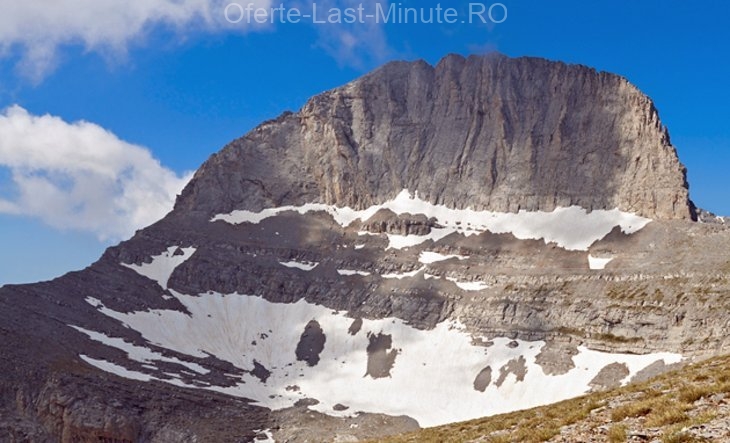 About 80 kilometers southwest of Thessaloniki, Mount Olympus is the highest mountain in Greece.It appears in Homer's Iliad as the house of the gods, who were known as the Olympians.This strong massif covers an area of about 20 kilometers and climbs steeply to the top, reaching the highest point in Mítikas, 2917 meters.The best starting point for an ascent of Olympus is the city of Lithoro, at the eastern foot of the mountain.From here, hikers can drive to Prionia, where there are routes for some of the most popular routes, including easy hiking through the beautiful Enipeas gorge.To the south of Mount Olympus, Valea Tempe is the place where the Piniós (Peneios) river flows to the sea and is the main route to the northern Greece center.This important area of the wetland attracts actual migratory birds and is excellent for observing birds, with over 300 different species recorded here
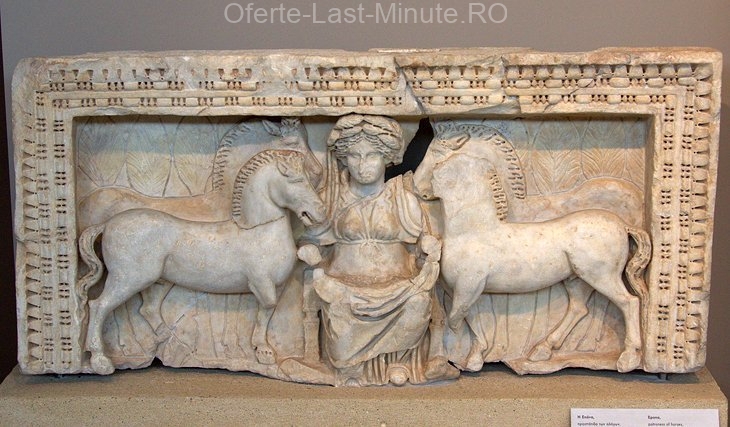 This famous museum presents a superb collection of artifacts that have been discovered in Thessaloniki, as well as in all ancient Macedonia.The collection extends from prehistory to late antiquity.Make sure you see the sculptures from the archaic era to the late Roman era.Several rooms present architectural elements of a ionic temple from the 6th century BC, in high exhibits show the discoveries of the excavations in a Neolithic settlement in Makriyalo, artifacts from the ancient palace built by Emperor Galerius and the reconstruction of a Macedonian tomb in Ayia Paraskevi.The archaeological museum also hosts temporary exhibitions on various topics, such as Macedonia coins.A showcase in the hall of the museum presents the discoveries of a Neolithic site, accompanied by information about the excavation progress. N Nadresa: Manolis Andronikos Street no.6, Hanth Square, Thessaloniki
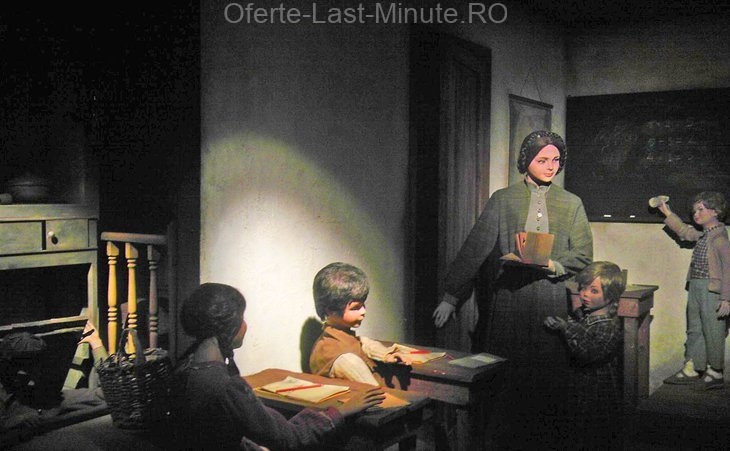 Hosted in a 19th-century neoclassical building, this museum educates visitors about the Macedonian struggle.The collection includes artifacts and photographs from 1900 to 1912. The most interesting exhibits are the armaments, uniforms, souvenirs and personal effects of the leaders of the Macedonian struggle that took place between 1904 and 1908. In extended photographs includes 1,350 contemporary photos.Also, explanatory maps, books, newspapers and paintings of the Macedonian landscape from the end of the 19th century and the beginning of the 20th century are exhibited: Nadresa: Proxenou Koromila street no.23, Thessaloniki in the official nitite: http://www.imma.gr/imma/index.html
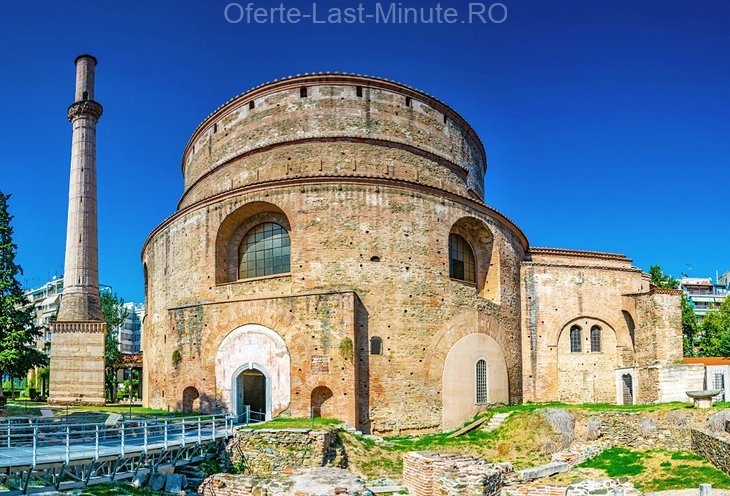 The Roman Rotunda is the most magnificent ancient monument in Thessaloniki.Built at the beginning of the fourth century, it was most likely intended to be the Mausoleum of Emperor Galerius (although it was not buried here) and was part of the complex that included the Galerius Palace and the Arc of Galerius.In the X-XII centuries, the round was used as the Cathedral in Thessaloniki.Under the Ottoman rule, the building was transformed into a mosque;The minaret is a relic of the Islamic era.After the release from the Turks in 1912, the round was transformed into the church of Saint George (Áyios Yeóryios).More than 24 meters in diameter and 30 meters high, the round has a cylindrical bombed architecture similar to the Panteon in Rome.Inside, beautiful mosaics decorate the dome and the vaulted depths.The mosaic in the center of the dome is missing, but underneath there are charming figures of the angels and the architectural facades on a golden background.Rotunda hosts a sculpture museum and is open to the public daily for visits.
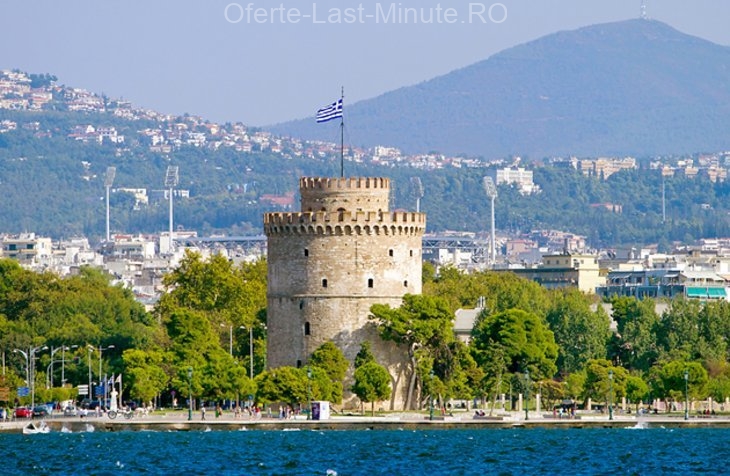 The most recognized landmark in Thessaloniki, the White Tower can be reached by taking a picturesque walk along the promenade on the seafront.In a small public garden at the southern end of the Promenade, the White Tower (Lefkós Pyrgos) once did part of the old cities of the city.The circuit of the fortification walls does not remain completely intact;The White Tower is the only relic of defense towards the sea.Built by the Ottoman Turks around 1530, this imposing tower was used mainly as prison.The White Tower also hosts the permanent collection of the Byzantine Culture Museum.Exponatele muzeului îi educă pe vizitatori despre istoria și arta bizantină din Salonic de la aproximativ 300 d.Hr.until the Turks capture in 1430. The collection includes a wide range of artifacts, such as early Christian coins, vases, mosaics, wall paintings and liturgical objects.
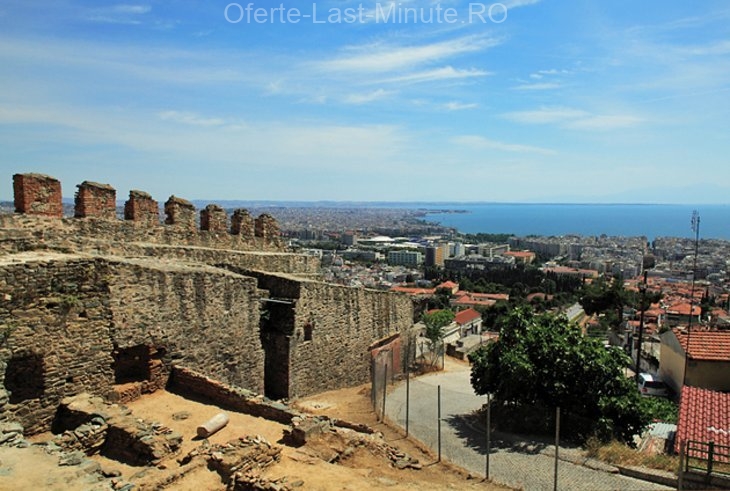 Shortly after Thessaloniki was founded in 315 BC, the city was surrounded by defense walls to withstand the attacks of King Pirru of Epirus in 285 and the Celts in 279. Constantine the Great strengthened the fortifications, and under the Byzantine Empire, the walls were frequent.improved.In the 14th and 15th centuries, the Turkish authorities built additional defensive structures and towers, often using Venetian military engineers.Unfortunately, the Ottoman government has torn down the old walls to modernize and "beautify" the city.However, recently the walls were restored in sections.From there, you go outside the walls to the 15th century Massive Tower known as the Trigonion (or the Alysos Tower).At the highest point there is a fortress, Heptapygion ("seven towers"), used previously as prison. In the fortress, tourists can continue to the west along the walls, either inside or out, to the Letter Gate near the Church of the Holy Apostles and then to the Democracy Square (Platía Dimokratías).From there, the walls continue down to the port, reaching the Vardar fort.
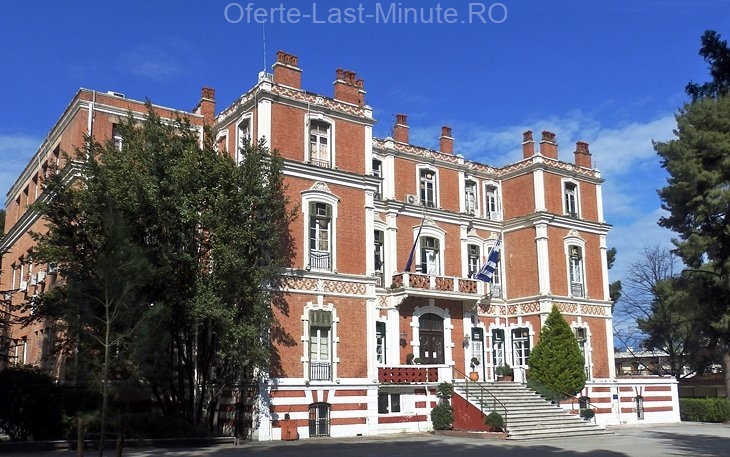 In the South-Western suburb of Kalamaria, visitors will discover many wonderful villas and mansions of the 19th century.Many of these villas were designed by Italian architects in neoclassical style.A house with a special historical interest is Villa Allatini, created by the Italian architect Vitaliano Poselli in 1896. In a picturesque land, this imposing villa was originally owned by a rich Jewish family, which is part of the Flying Jewish community in Thessaloniki.Since 1926, Villa Allatini has served as a university building and is currently hosting the offices of the Prefecture of Thessaloniki. N Nadresa: 26 Vasileos Iraqleiou, Thessaloniki

