
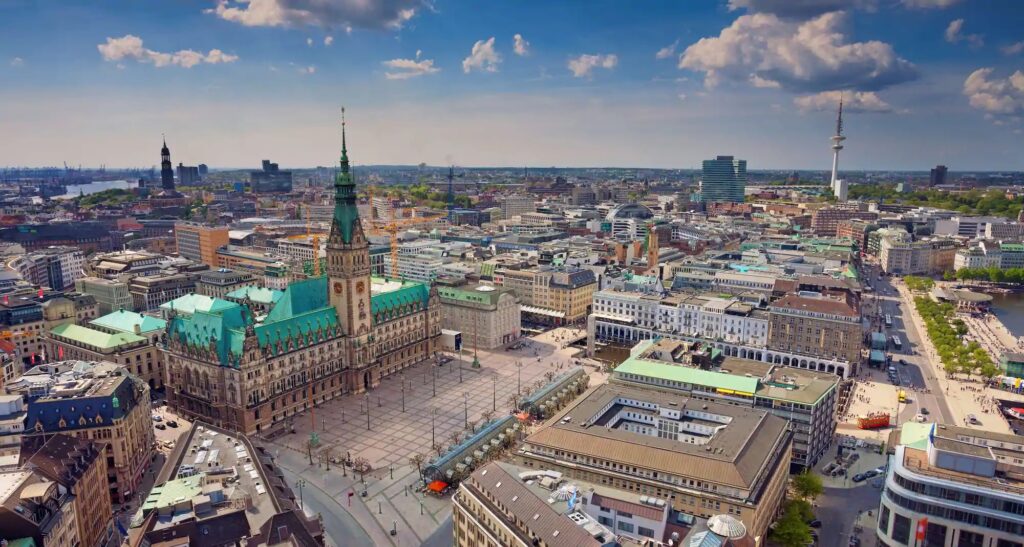
Hamburg, the largest city in Germany after the capital of Berlin, is located on the head of the long -shaped estuary of the Elba river.Its location makes it an important connection between the sea and the German network of inner waterways and numerous islands.The city is known mainly for its famous port area, Hamburg port.In addition to being an important transportation, Hamburg has become one of the most important cultural and commercial centers in Europe, as well as a major tourist destination.
About
Best period
The best months for good weather in Hamburg are May, June, July, August and September
January is the coldest month of the year
Tourist Attractions
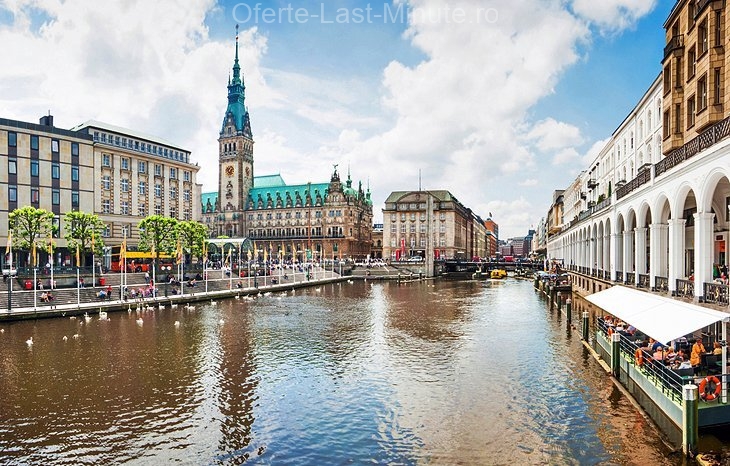 The focal points in the inner area of Hamburg are Inner Alster (Binnenalter) and Oster Alster (Aussenalster), two artificial lakes related to the Alster and Elba rivers.Here you will find the most picturesque markets of Hamburg and historical boulevards, as well as its famous pedestrian, passenger areas.The best routes are taken in the elegant Jungercieg, with the cafes and landings used by the tourism boats, and Ballindamm, with the largest shopping center. N n are also popular for navigation and kayak in summer and skating in winter and are lined with many parks and gardens.The area is also popular among cyclists. In the same popular, it is the Pöseldorf area, with its galleries, boutiques and cafes, along with the channels or "fleets", which connect the lakes to Elba.If you visit at the end of the summer, make sure you participate in altervergnügen annually, a street fair organized around the lakes, with excellent entertainment, including numerous concerts
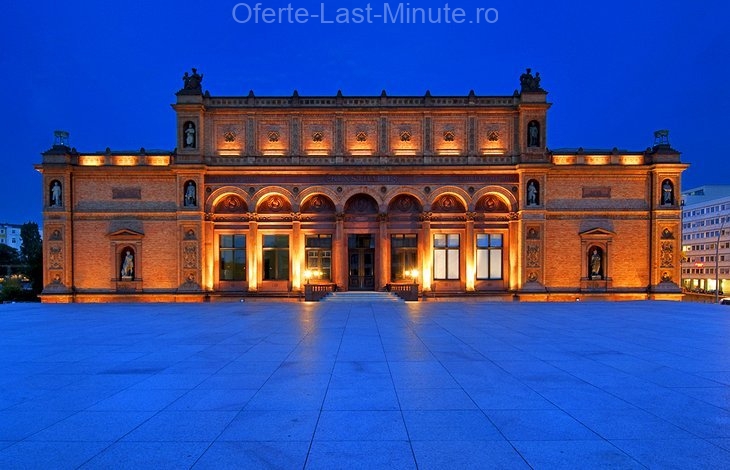 Occupying three separate, but connected buildings, on Glockengießerwall, Kunsthalle Hamburger - Literally translated as "Hamburg Art Hall" - is one of the most important art galleries in Germany.The landmarks include numerous altars, works of the fourteenth-century local artists and the Dutch masters from the sixteenth and seventeenth centuries.It is also worth noting his fine collections of German and French paintings from the 19th century, plus substantial collections of modern and contemporary art.Fun tours and programs for children are available. In no other notable art collection is hosted at Deichtorhalen, one of the largest contemporary art and photography galleries
 Above the high bank of Elbe is the Vibrant Altona neighborhood of Hamburg.It is popular for visiting the tourist objectives due to its many attractive neoclassical houses, many of them protected as historical monuments. In naici you will also find Museumstrasse, which goes north of the end of Palmaille, and the Altonaar Museum, with exhibits related to geology, landscape, settlement and economy of Schleswig-Holstein and Elba de Jos.Other attractions include display of marine artifacts, including old models and ships of the ship.
 Not far from the new Elba tunnel, in the Klein Flottbek district of Hamburg, is the beautiful 110 acri Jenischpark, one of the largest and most attractive open spaces in the city.Here you will find the gorgeous Jenisch House neoclassical (Jenisch-Haus) in the 19th century, with its rooms that reflect the taste of the medium-sized middle class varying from Louis XVI to Art Nouveau, all kept in the museum in the enclosure, a branch of the altona museum.of sculptures, drawings and printed graphic art.
 Known locally as "Elphi", imposing elbphilharmonia (Elbe Philharmonic Hall) is the jewel of the Crown of the Revitalized Port in Hamburg.Located at the point of the Grasbrook peninsula, this new building has become the major landmark of the city and is considered one of the largest - and the most pleasant acoustic - concert halls in the world.of curved and bright glass. In the largest of the three concert halls it has a capacity of 2,150 and has 10,000 plates specially designed to adjust sound waves.The building also hosts a major hotel, residential apartments, restaurants and other features, including parking.His rich opera and excellent acoustics.
 The most famous of the numerous churches in Hamburg, St. Michael (Hauptkirche St. Mickt) was built in Baroque style between 1750 and 1762 and is one of the most important landmarks of the city.One of the most important things to do when you visit this Catholic church is to climb into its 132 -meter high tower, known as "Michel".Accessible on the stairs and an elevator, the viewing platforms of the tower offer excellent panoramic views on the city and the port, a special treatment during their regular evening openings.It is also worth noting the crypt of the church, the last place of rest of about 2,425 people and one of the most interesting concerts of the city.(Hauptkirche St. Jacobi), a splendid building from the fourteenth century that houses medi altars and a blind Arp Schnitger.
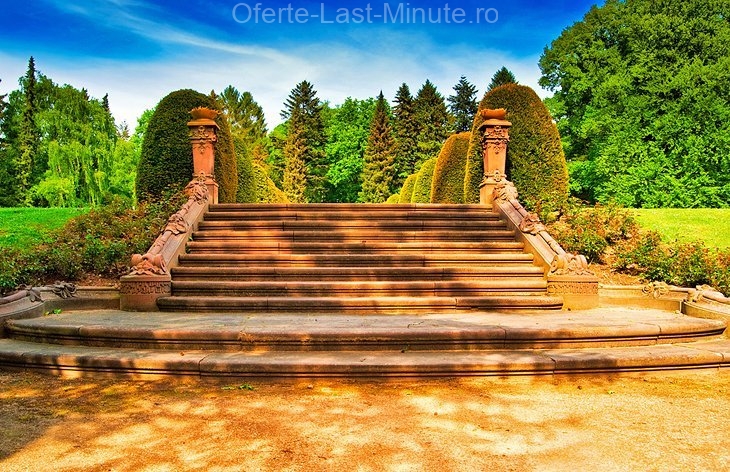 The Ohlsdorf (Ohlsdorfer Friedhof) cemetery is not only the largest rural cemetery in the world, but one of the most important.Covering 961 acres and having 12 chapels, there were over 1.5 million burials in about 280,000 burial places. In the building is also the place where you will find the Commission Commission Cemetery in the Hamburg Commonwealth, where over 400 prisoners are buried withGerman.Other remarkable memories include those dedicated to victims of Nazi persecution, Hamburg storm in World War II and members of the city's anti-Nazi resistance.Over two million people visit their memorials, monuments and museums every year as they walk through the pleasant gardens over the 17 kilometers of streets and paths.Another important memorial in Hamburg is the Bismarck Monument, the best known of the numerous German towers that commemorate the country's most revered politician.Fascinating tours are available in English and are highly recommended.
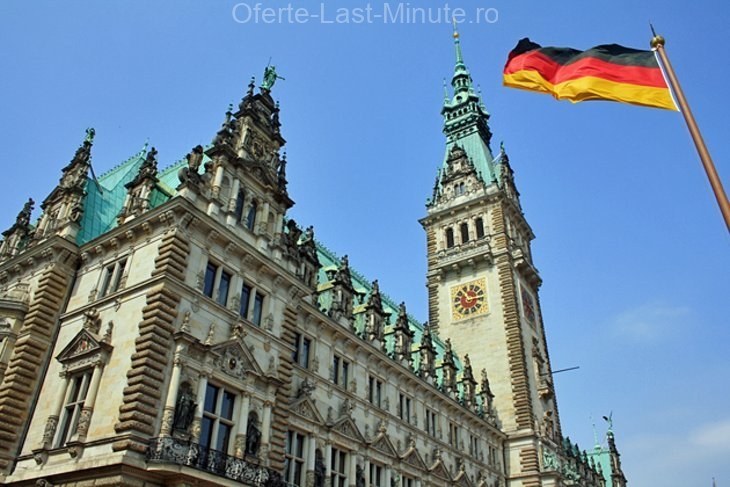 In the center of Rathausmarkt in Hamburg is the majestic mayor or Rathaus.This big neo-Renaissance building, decorated elaborately, adjacent to the stock exchange (Börse), was completed in 1897 and consists of 647 rooms, many open to the public for the annual event of the new museums in the city.The notable characteristics include the spectacular painted ceiling in Kaisersaal, which describes the importance of German maritime transport.Guide tours are available, as well as opportunities to observe the local government in action. It is in Rathaus, the Larg Mönckebergstraße, the main commercial and business neighborhood in Hamburg, passes by St. Peter's Church in the fourteenth century, a cathedral and an excellent example of architecture Hansa from the remarkable brick for 133 meters.South of the church bears a painting called Christmas 1813, which commemorates the citizens who were imprisoned in the church that year for the refusal to provide food to Napoleon's troops.Continue Mönckebergstraße to the Central Station and the Schauspielhaus Theater.
 Although it is considered the largest railway model in the world, Miniatur Wundirand in Hamburg is really more than the mere arrangement of a toy train.This is definitely one of the best places to visit in the historical district of the Speicherstadt warehouse.It is the largest railway model in the world, with over 15,400 meters of railway and 1,040 trains (so expect to spend a lot of time here, especially if you travel with children).Attraction points include US, Scandinavia and Germany, as well as an airport with airplanes that effectively take off, plus about 100,000 vehicles moving, all being illuminated by over 500,000 lights and containing about 400,000 (and unique)).Online.There are available guided trips behind the scenes, which are highly recommended.The hotel offers tables and snacks, including a children's restaurant.
 The popular Oevelgonne neighborhood in Hamburg contains the new Elba tunnel, a 3.5 -kilometer long tunnel running under the Elba river.Here, near the Feribot Neumühlen station on the main shipping channel in Elba, you will find Museumshafen (Port of the Museum), which houses about 20 historical vessels from 1880 to 1960, each carefully restored by a private organization.Barje, fishing boats and steam tugs, some of them open to the public.One of the larger ships is SS Stettin, a former icebreaker built in 1933, which is now used for pleasure travelers.Also, the numerous houses of the pilots on Elbferweg and Oevelgonner Seekiste, a small museum with a variety of maritime exhibitions and artifacts, are of interest.
 Museum am Rothenbaum: Kulturen und Künste der Welt (or simply Markk) - the former Hamburg Ethnology Museum - was founded in 1879 and is one of the largest such museums.With an emphasis on the "cultures and arts of the world", this fascinating museum is proud of over 350,000 artifacts and documents.The landmarks include a binder used to cover a torah, dating from 1711;an African exhibition with traditional cultural and religious objects;and fun practical exhibits, such as football, xylophones and cameras.Most of the 45 exposed vehicles are related to races and motor sports and are accompanied by exhibits related to their history and pilots.Porsche fans will also want to try their hand at the driving simulator.The property also has a cafe.
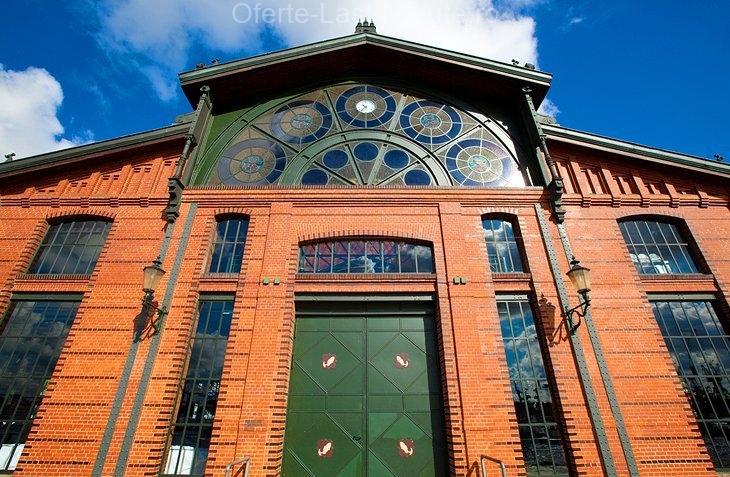
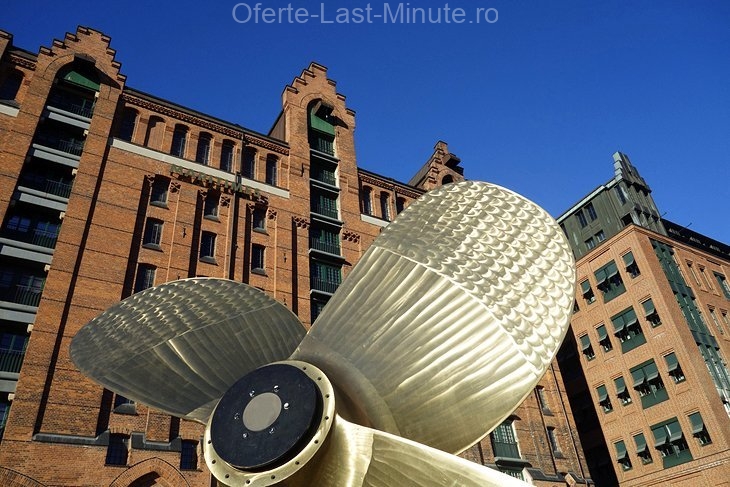 The International Maritime Museum (Internationals Maritimes Museum Hamburg or IMMH) is a wonderful place to discover more about the rich maritime history in Hamburg and all things related to the sea.Hosted in the oldest warehouse in the city, a massive red brick heritage building in the Hafencity area, the fascinating exhibits of the museum cover more than 3,000 years of human connection with water.The oldest displayed artifact is a drainage boat, hollow out of a tree trunk thousands of years ago, which was recovered from Elba. In the way it shows how the shipping has progressed, from the Phoenician galleries to the long Viking ships to the Caravele of the Golden Age of the discovery.An entire floor (said 10) is dedicated to the latest marine research, with films made by diving robots and submarine sound records.Another gallery is full of maritime art.A variety of trips and workshops are available and here there is an excellent little bistro called "the day capture".
 At the desert St.Pauli in Hamburg is WallringPark, a large leisure area that includes some of the most popular open spaces in the city, such as the old botanical garden and Kleine and Grosse Wallanlagen, the gardens located on the old fortifications line.The best of these excellent parks is Planten a blonde - quite literally translated as "plants and flowers" - an 116 acres park founded in 1821 with planting a Platanus tree that can be seen here.From Wallringpark, you are just a few minutes away from the Heinrich Hertz telecommunications tower, 272 meters high, popular as "Tele-Michel";Although now it is closed to the public, it remains a striking view.
 The port of Hamburg, Hamburger Hafen - also known as "Hafencity" - includes 100 square kilometers of tidal port and is known as the entrance gate to Germany.You will also find many of the most visited tourist attractions of the city, and in the summer and weekend evenings, it is full of residents that relax.Built from 1883 to 1927, it is considered the largest warehouse neighborhood in the world and was designated in 2015 UNESCO World Heritage.The newest and most spectacular addition to the area on the water's edge is, however, Elbphilharmonia, the most important cultural place of the city (see more about this attraction in # 3 below).The adjacent port of traditionionschiffhafen / Sandtorhafen stretches on the peninsula and is a wonderful place to see old old ships at their docks.
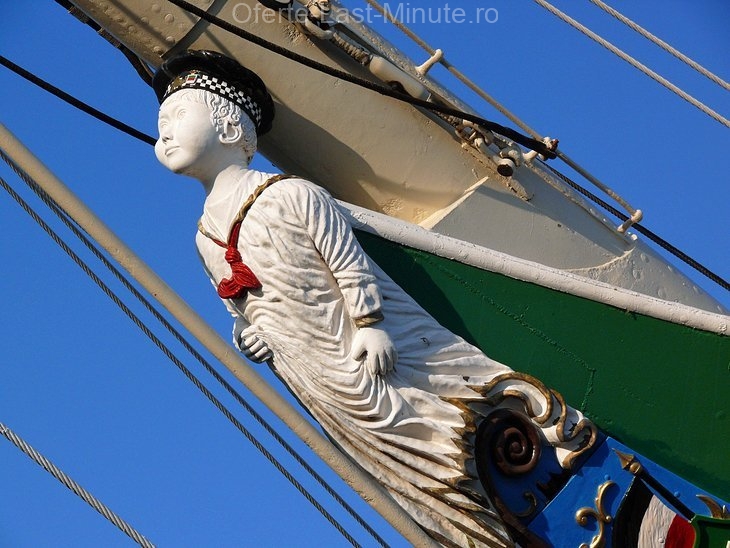 Located along the river in Landungsbrücken, Rickmer Rickmers is a three-mailed high and colorful history.Built in 1896, the ship returned to Hamburg in 1983 and, after four years of restoration, is now a museum focused on the commercial navy of the 19th and early 20th centuries (there is even a restaurant on board).(Funings of fun overnight are also available) for. n n No other vision on the Cold War is available in the former Soviet submarine, B-515, now open as a museum and anchored at St.Pauli Fischmarkt 10. For those interested in maritime themed art, a visit to the Altonaer Museum is well worth and present numerous paintings, sculptures and cultural artifacts related to maritime transport.
 About 23 kilometers northeast of Hamburg is the city of Ahrensburg, famous for its old mansion, Schloss Ahrensburg (Ahrensburg Palace).Now, the castle was built in 1595 and many of the interiors and its original furniture remain intact, offering a fascinating perspective on the life of the country.The mansion also offers an excellent background at the usual concerts and events organized in its attractive ground.
 Tierpark Hagenbeck, the city's zoo, was established in the Stellingen suburb of northwestern Hamburg, in 1907, to host a collection of exotic animals owned by a local fisherman transformed into exotic, named Carl Hagenbeck.The zoo is still led by its descendants. In this excellent facility was the first in the world to use open enclosures surrounded by ditches, unlike cages, increasing the free surface of animals.It was also the first zoo to grouped animals by species, ideas that inspired the owners of other zoo to adopt. In high attractions of family worthy to visit is the Hamburg planetarium, located in an old water tower, and the Chocoversum chocolate Museum, an interactive museum with a fun display.And yes, you can create your own chocolate sticks!

