
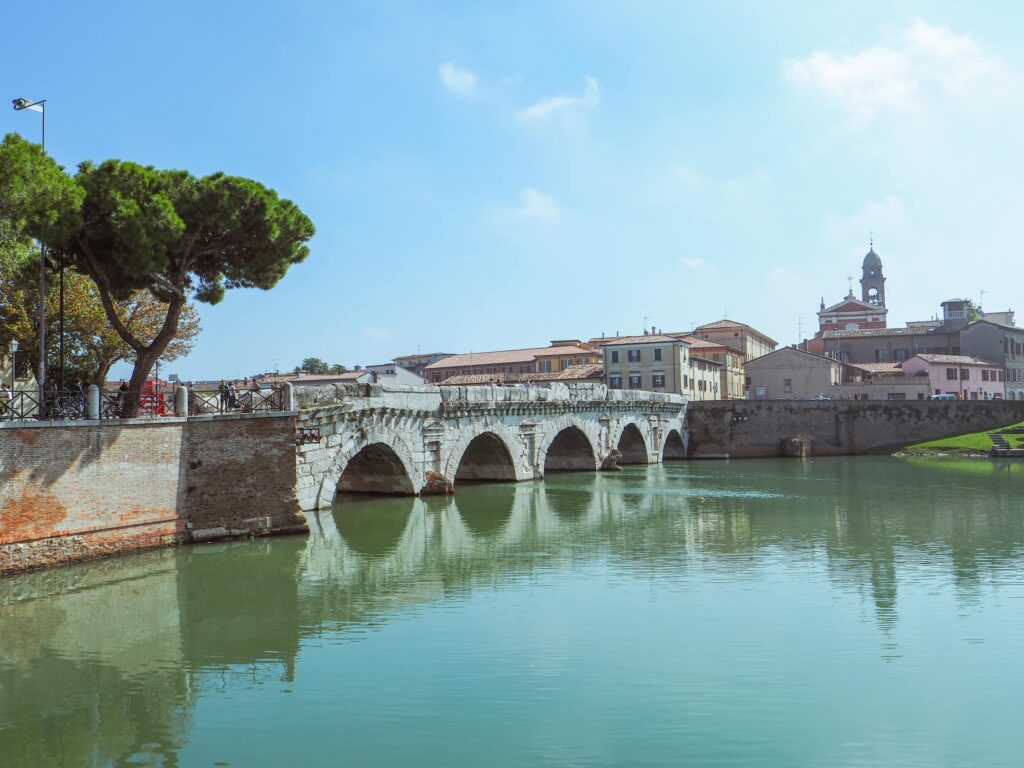
The ancient settlement of Ariminum increased where two important ancient roads, via Aemilia and via Flaminia, met about 150 kilometers south of Venice, on the banks of the Adriatic.It became the Roman colony of Rimini in 268 BC.And it became a busy port and, in the late 1800s, a popular beach resort.
About
Best period
The best months for good weather in Rimini are April, May, June, July, August, September and October
January is the coldest month of the year
The best months for swimming are June, July, August and September
Tourist Attractions
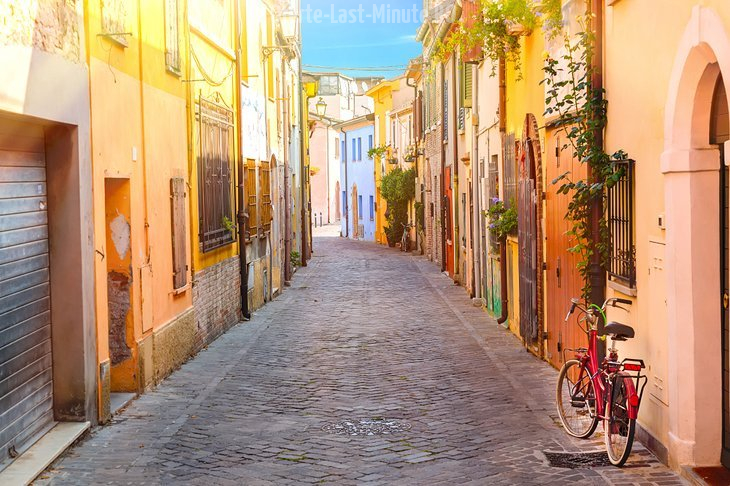 Not far from Ponte di Tiberio is the colorful Borgo San Giuliano, with paved streets bordered by small houses painted alive.Some of these are based on Federico Fellini's films, which was born and grew up in Rimini.Others describe scenes and events in the lives of fishermen.It is a charming area to walk, especially in the evening and during the lively festival from mid -July
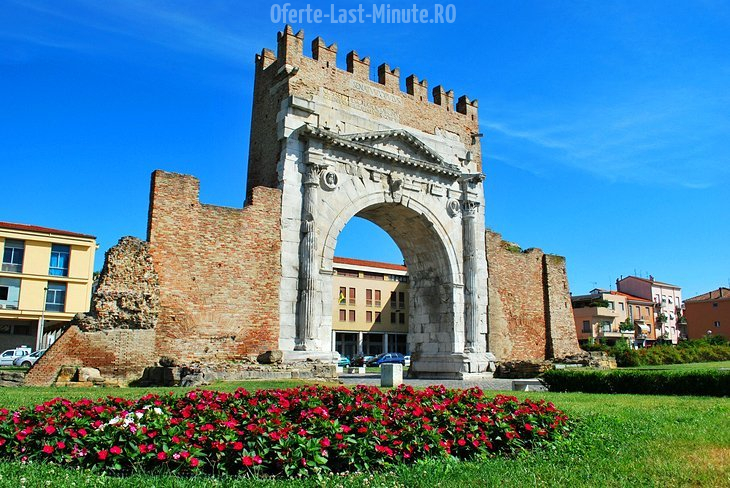 At the southern end of Corso di Augusto, the main street in Rimini, is the oldest Roman triumph arch in northern Italy, built in 27 BC.In order to commemorate the construction of Via Flaminia. It is part of a ring of defense walls that were demolished in the 1930s, the arch is unusual by the fact that its very wide opening cannot be closed by the doors, signifying the new peace reached after a long period of wars.The crenelat tip is a medi addition, replacing a crown that was probably covered by a statue of Cezar Augustus, which the arch honored
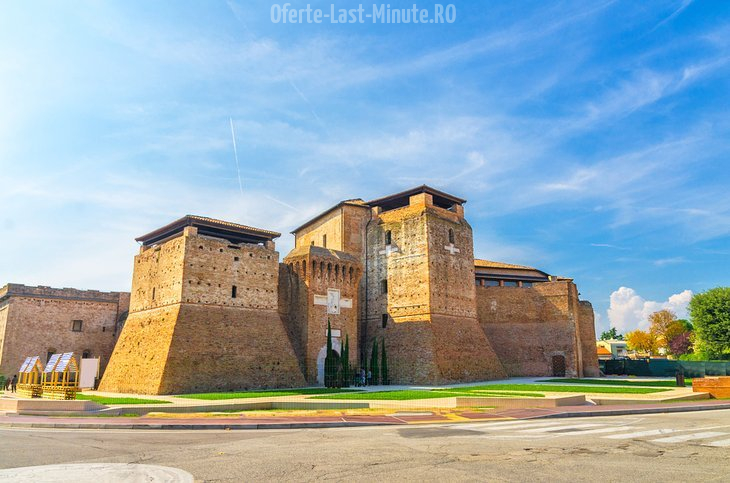 Only the central portions of the castle, built by Sigismondo Pandolfo Malatesta, in the 1400s remained today;Initially it was surrounded by thick defense walls and a ditch.The remaining interior, similar to a fortress, was the Residence, richly decorated with tiles, frescoes and tapisari, as they are portrayed in contemporary paintings with courtyards.You can see one of these in Tempio Malatestiano.The panels indicate the story of the castle and the powerful Malatesta family, and the interior is often used for art and other cultural exhibitions
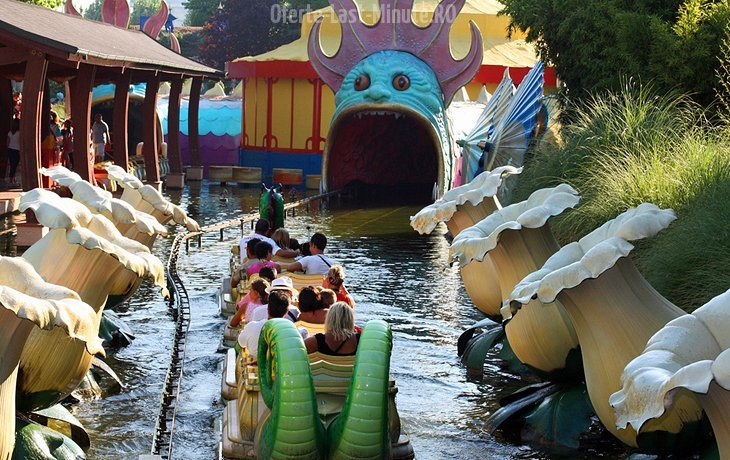 When children who do not speak Italian are tired of not understanding what is said around them, take them to a place that speaks a universal language: fun.This amusement park has walks and activities for all ages, with a magic village, Gnomilor Valley, carousel and a "base" of plastic balls in which very young children swim.
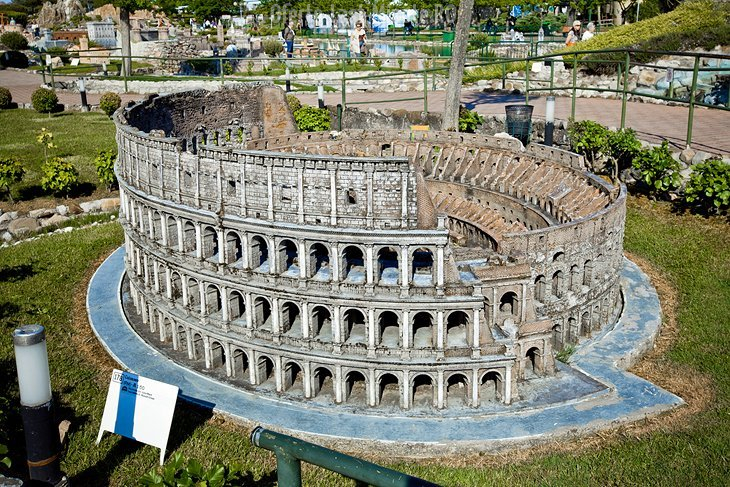 The children like the mini-excursion through the miracles of Italy in Italy in miniature, because they feel like huge in the village of Liliputian with over 200 of the most famous Italy attractions reproduced widely.Other attractions include the pleasure of children, such as a scientific fun fair and an interactive driver's school, as well as a panoramic tower and a monorail.
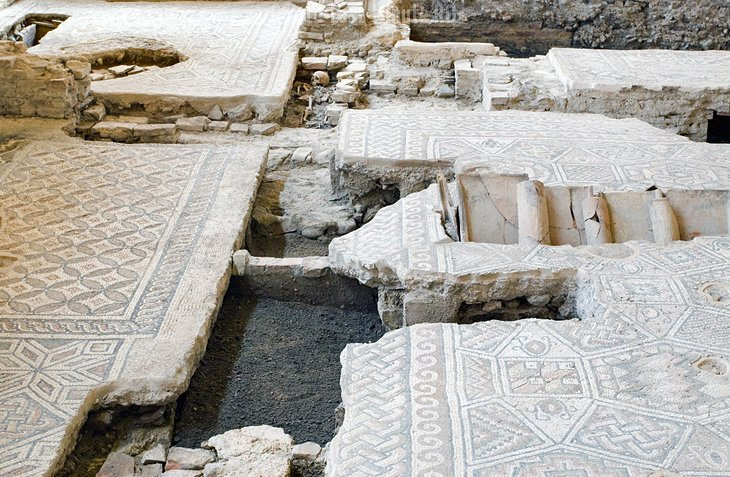 Hosted in a former Jesuit monastery, the city museum has over 1500 prehistory works so far and is known in particular for its collection of Roman mosaics and for one of the best collections of surgical and pharmaceutical equipment from ancient times.Surgical from Domus del Chirurgo, the doctor of the doctor who was dug in Piazza Ferrari.Domus of the surgeon, visible under a glass cover.In addition to this Roman house, the site presents subsequent foundations in layers that reveal more than 2,000 years in the history of Rimini. N Nadresa: via L. Tonini 1, Rimini
 To the southeast of Rimini, another set of white sand beaches are popular stops on Riviera del Sole.The first one you will arrive in is RICCIONI, one of the most popular holiday resorts in Italy, with thermal springs.Shortly beyond this is the little spa and the resort on the coastal Misano Adriatico, and beyond that, the largest of them, Cattolic.In addition to the long beach, the city offers a range of active sports: sailing, wind-surfing, water skiing, tennis and riding
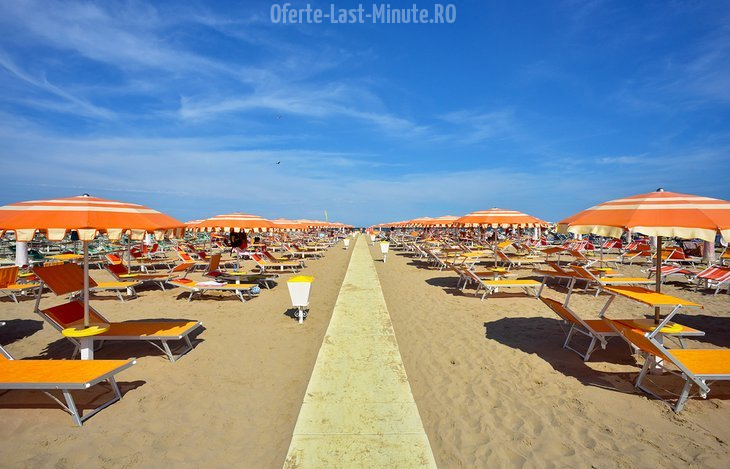
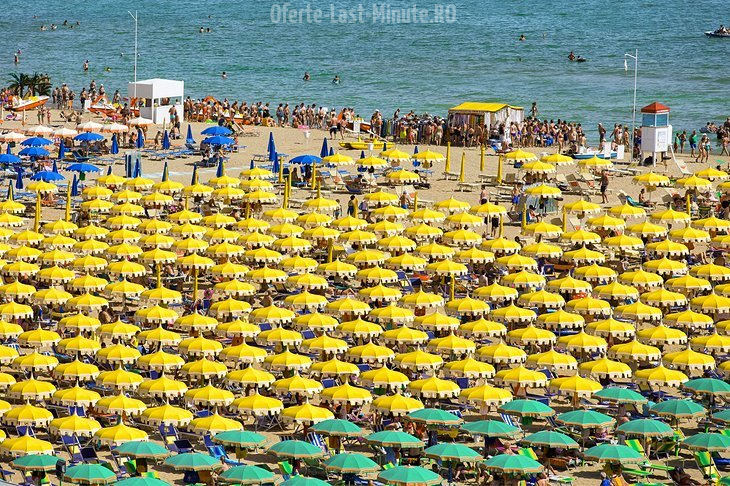 Along the Adriatic coast to the northeast city of the Old City is the popular resort of beach Rimini, a long stretch of white sand with gentle waves and rows of loungers covered by the umbrellas from the edge to the edge.For those who are looking for sand and sun, this Italian beach culture may seem strange, but you will find this on almost all the Adriatic and Mediterranean beaches.Most are rented weekly, but you will find some available for a day or a few hours, except the middle of August, when all beaches are at full capacity. By the back of the beach are hotels, villas, pensions and restaurants.The neighboring beaches Rivabella, Viserba and Torre Pedrera are also popular resorts.Rimini Ruotota is a huge wheel that rises above the sea, near the port.
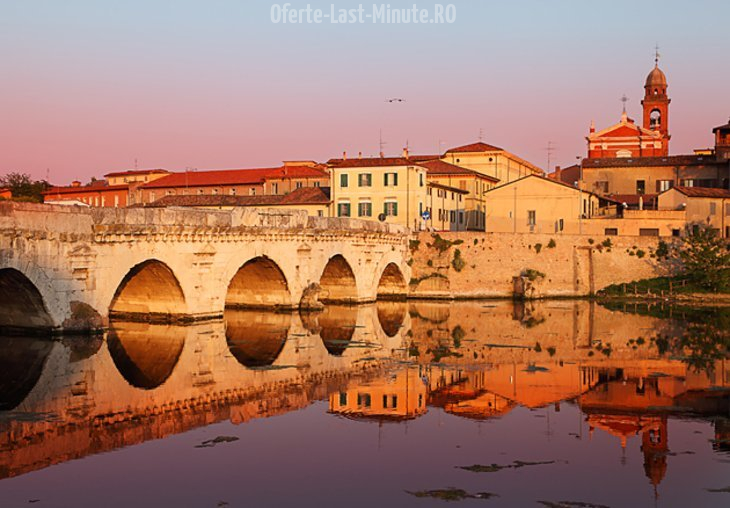 Corso di Augusto from Rimini passes straight through the center of the old city, as it did from the Roman era, from Arco D 'Augusto, through the forum (now Piazza Tre Martiri) and to Ponte di Tiberio, a Roman bridge..His five arches are spreading on the Marecchia River, known in antiquity as Ariminus.It is the only bridge over Marecchia that survived the destruction by the German army in 1944.
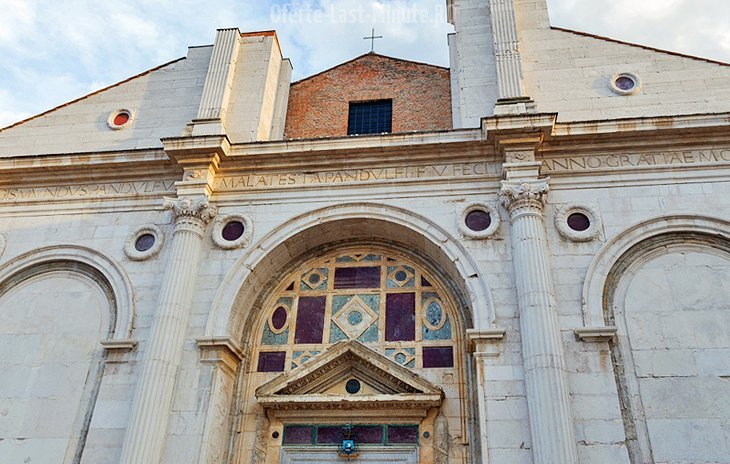 Constructed to shelter the graves of the Malasta family members, who led Rimini from the 13th century, Tempio Malatestiano was built on an anterior medi church and completed in the style of the early Renaissance between 1447 and 1460.The Renaissance. N ninener is decorated with frescoes by Piero della Francesca, which shows Sigismondo Malatesta kneeling in front of Saint Sigismondo.The crucifixion from the early 1300s by Giotto is his only work in Rimini, although he lived and worked here and was a major inspiration for the Rimini School of Artists.The marble faces of the six side chapels are carved so fine that they seem almost monochrome paintings.

