About

with the turquoise waters of the Mediterranean who revolve on his sandy shores, Alicante is understood a popular summer and winter destination on Costa Blanca.The sunny location was called Lucentum (“Light of Light”) by the old Romanians who settled here.Visitors are still attracted to the pleasant climate and the decor on the coast.From any angle, the coastal views are sensational, especially from the top of the Castillo hill that presides over the city.

£ 53
30 October – 7 November 2025

£ 164
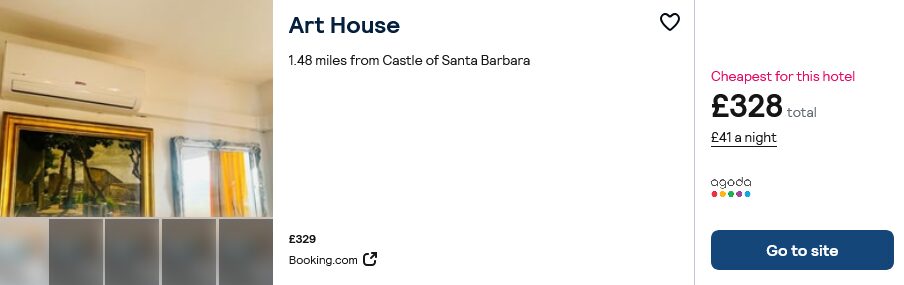
£328/room | £ 164/pp
£ 232
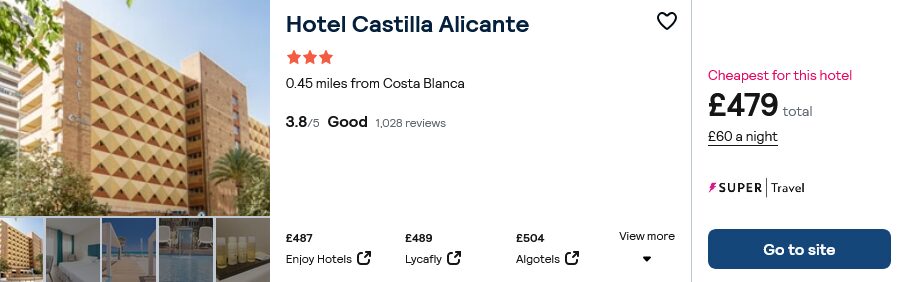
£463/room | £ 232/pp

£ 322
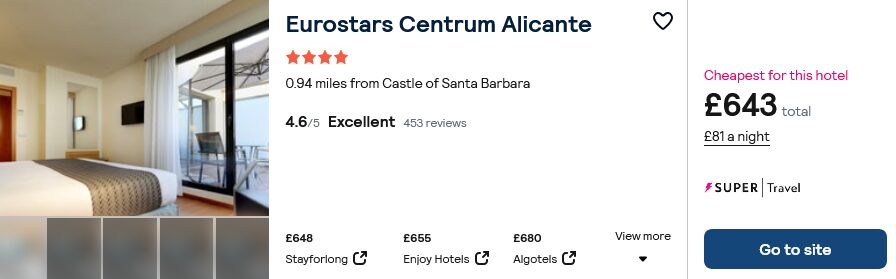
£643/room | £ 322/pp

Holiday price per person (Flight + Accommodation)
* The price is calculated as: flight ticket + accommodation/2 (per person)
What does it mean and how to book a DIY (do it yourself) holiday?

217 £/person (flight and accommodation Art House )

285 £/person (flight and accommodation Hotel Castilla Alicante )

375 £/person (flight and accommodation Eurostars Centrum Alicante )

Other periods – Departing from London:

Other periods – Departing from Edinburgh:
Other periods – Departing from Manchester:
Other periods – Departing from Birmingham:
Other periods – Departing from Belfast:
Other periods – Departing from Liverpool:
Other periods – Departing from Exeter:
Other periods – Departing from Nottingham:
Other periods – Departing from Newquay:
Other periods – Departing from Glasgow:
Other periods – Departing from Leeds:
Other periods – Departing from Southampton:
Other periods:

Look for another accommodation
Rent a car (Optional)

Tourist Attractions

Alicante Archeological Museum (Marq)
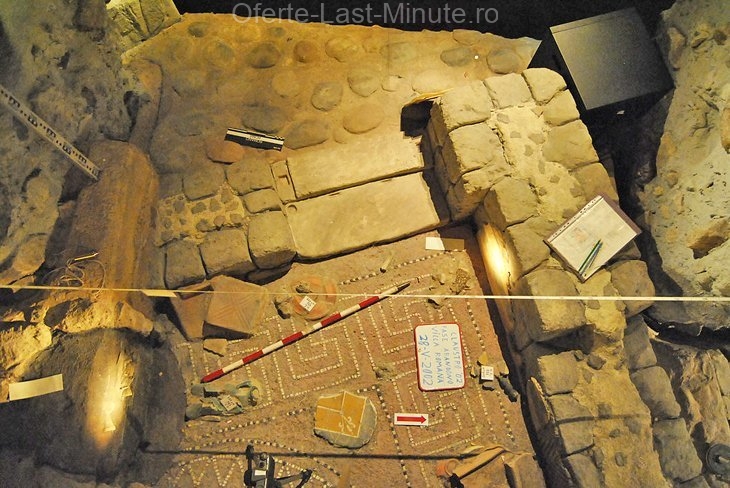
Image 10 of 12

This superb archaeological museum takes visitors on a journey through 100,000 years of history.The collection covers prehistory;The classic period of antiquity with Greek, Roman and Iberian artifacts;and the Middle Ages.The thematic galleries include those dedicated to the Iberian culture, the Roman civilization and the medi period.The culminating points of the collection include the assortment of ancient currencies, a figure of the tanite goddess and the Iberian ceramics.Another interesting feature of the museum is a display that recreates a scene of the Romanian daily life.The museum also presents educational information about Lucentum and Illeta archaeological sites, as well as the sanctuary in Pla de Petracos, where many of the artifacts were discovered.urban and land archeology.The exhibits also show the ways in which the researchers can learn more about the past from the objects they find, as well as the rest of the scientific process.